Why Is My Solder Balling Up? A Troubleshooting Guide
Urgent guide to diagnose why solder is balling up, with clear steps for tip cleaning, flux choice, temperature control, and joint prep across electronics, jewelry, and plumbing projects.


The most likely reason solder balls form is poor wetting caused by oxidized tips, contaminated flux, or wrong temperature. Start by cleaning and tinning the tip, then verify your iron is within the recommended temperature range and apply fresh flux. If the problem persists, re-tin the tip and inspect pads for cleanliness before resoldering.
Why Solder Balling Up Happens
Why is my solder balling up? In soldering, balling happens when the solder cannot wet the surface properly. Oxidation on the tip, contaminated flux, or using an improper temperature range exacerbate surface tension, causing spherical droplets rather than a smooth fillet. Solder balls can damage pads and obscure joints, so quick, disciplined troubleshooting is essential. According to SolderInfo, effective wetting relies on a clean, properly heated tip, fresh flux compatible with the alloy, and clean surfaces on the PCB or metal part. When you observe balling, start by verifying these fundamentals before blaming your technique. This is especially critical in electronics SolderInfo analysis shows the problem often traces back to tool maintenance and flux hygiene across hobbyist projects.
Throughout this guide we’ll emphasize a structured approach: verify basics first, then progressively test variables, and keep safety at the forefront.
Common Causes to Check First
Before diving into complex fixes, run through a quick checklist of the most common culprits. - Oxidized or worn tip: a dull or corroded tip prevents good wetting. - Contaminated or expired flux: rosin can degrade, reducing tack and flow. - Incorrect temperature: too hot can cause balls; too cool can prevent wetting. - Dirty pads or residues on the board: oil, fingerprints, or cleaning solvents can hinder solder flow. - Wrong alloy for the job: lead-free solder or mismatched flux can behave unexpectedly. Start by clearing these basics; many balling issues vanish with clean tools and the right flux.
If you are troubleshooting a jewelry piece or plumbing joint, adapt the same principles with appropriate flux and compatible alloys, remembering that cleanliness and correct heat are universal keys.
Diagnostic Indicators: How to Spot the Root Cause
Observing when balling occurs helps locate the root cause. If balls form quickly after touching the pad, oxidation or a dirty tip is likely. If balls appear even with fresh flux, check the temperature and tip maintenance. If balls only form on certain pads or components, inspect the board for contaminants or overly oxidized copper. Document any consistency patterns: humidity, flux type, solder alloy, and tool condition. Understanding the symptom patterns reduces guesswork and speeds up repair. In jewelry work, balling often signals flux remnants or alloy mismatch; in electronics, pad contamination and improper heat are the usual suspects. SolderInfo recommends repeating tests on a scrap area to prevent harming the actual workpiece.
Step-By-Step Fix for the Most Likely Cause
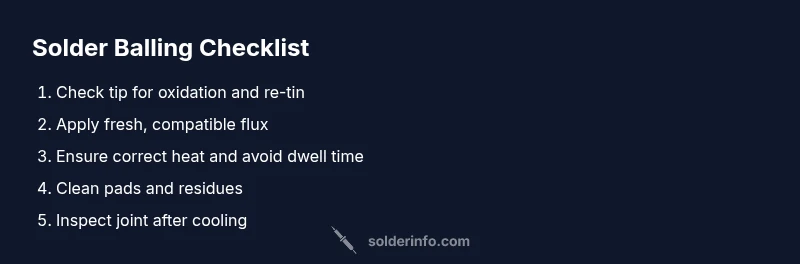
This section tackles the most common scenario: an oxidized/dull tip with degraded flux. 1) Power down, unplug, and clean the workspace. 2) Wipe the tip on a damp sponge, then scrub with a brass or copper tip cleaner. 3) Re-tin the tip with fresh solder and inspect for bright, even shine. 4) Apply fresh flux suitable for the alloy and wipe away excess unfinished flux. 5) Reheat the joint with a steady touch, letting the solder flow and form a fillet rather than a ball. 6) Inspect the pad after cooling; re-clean if any residue remains. Tip: avoid dwelling too long on a single spot to reduce heat damage. Estimated time: 15-25 minutes.
When to Rethink Flux, Solder Type, and Tooling
If the initial fixes don’t solve balling, consider the flux type, alloy, and tool setup. Flux matters more than most hobbyists realize: use no-clean or rosin flux compatible with lead-free solder, and avoid expired containers. Solder choice impacts wetting: leaded solder wets surfaces more readily at lower temperatures, while lead-free often requires higher heat and different flux chemistry. Tooling matters as well: a worn or broad-tipped iron can cause poor wetting; swap to a fine-tipped, properly rated iron for small pads. Pad prep is critical—pre-tin copper traces and rinse away residues before attempting reflow. Environmental factors (humidity, static) can also affect solder flow. If you keep seeing balling despite these adjustments, the issue may lie with the board or component quality, and you should consult a pro for a focused assessment.
Safety and Best Practices During Troubleshooting
Always unplug equipment before inspecting or cleaning. Work in a well-ventilated area and use a fume extractor or mask when melting flux. Wear eye protection and heat-resistant gloves when handling hot tools. Keep children and pets away from the workbench. Use a heat sink or chip quik clamps on sensitive components, and avoid prolonged dwell times on any one joint to minimize pad lift. Dispose of spent flux and tips properly and store chemicals in a cool, dry place. If you notice unusual smells, smoke, or damaged boards, stop immediately and seek professional help.
Prevention: Keeping Joints Clean and Reliable
Prevention starts with the basics: keep your tip clean and properly tinned, use fresh flux appropriate for the solder alloy, and never apply excessive solder. Maintain a consistent iron temperature and avoid quickly alternating between hot and cold joints. Clean the PCB pads with isopropyl alcohol before soldering, and use a fiberglass pen to remove stubborn oxidation on copper pads. Store flux in a sealed container away from heat and moisture, and replace worn tips before attempting complex work. Regular maintenance, organized workflow, and a clean workspace dramatically reduce balling incidents over time.
Real-World Scenarios: Electronics, Jewelry, and Plumbing
In electronics, tiny SMD pads are especially prone to balling if flux spreads under components or if tips wear unevenly. For jewelry soldering, flux compatibility with metal alloys and controlled heat are critical to prevent balling that mars delicate joints. Plumbing joints require flux appropriate for copper alloys and higher heat handling; contamination from cleaners or oils on pipes can trigger balling when heat is applied. The universal lesson across these domains is consistent: a clean tip, proper flux, correct temperature, and clean surfaces dramatically reduce balling occurrences. Practice on scraps to develop a reliable flow before working on your actual project.
Steps
Estimated time: 15-25 minutes
- 1
Inspect workspace and tool condition
Power down, unplug, and visually inspect the tip for oxidation. Ensure the workspace is clean and free of contaminants that could transfer to pads.
Tip: A clean, dry sponge helps remove oxidized deposits quickly. - 2
Clean and re-tin the tip
Wipe the tip on a damp sponge, then scrub with a brass or copper cleaner. Apply a fresh bead of solder to tin the tip evenly and bright.
Tip: Bright, shiny tip surface indicates good wetting potential. - 3
Check and adjust temperature
Verify the iron is within the recommended range for the solder you're using. If unsure, start lower and gradually increase while watching wetting behavior.
Tip: Too hot can cause balling; too cool prevents wetting. - 4
Prepare the joint with flux
Apply a thin, even layer of fresh flux to the pad and/or component lead. Avoid pooling flux near surrounding areas that could spread unexpectedly.
Tip: No-clean flux reduces post-work residue, but ensure compatibility. - 5
Reflow the joint with a steady hand
Contact the pad and lead with the tip and move in a single smooth motion to form a fillet, avoiding a ball. Lift the iron promptly after the solder wets the surface.
Tip: Use a contact time of a second or less per joint. - 6
Inspect and clean post-work
Let the joint cool and inspect for uniform fillet without balls. If needed, wipe residue and reflow with a tiny amount of flux.
Tip: A magnifier helps catch subtle balls or bridges.
Diagnosis: Solder balling up on pads/leads during hand-soldering or rework
Possible Causes
- highOxidized or tarnished tip
- highContaminated or expired flux
- highTemperature out of range (too hot or too cool)
- mediumDirty pads or residues on board
- lowIncompatible solder alloy for the job
Fixes
- easyClean and re-tin the tip; replace if worn
- easyApply fresh flux and ensure proper wipe-off
- easySet iron temperature appropriate for the solder and substrate
- easyClean pads with isopropyl alcohol and a non-abrasive pad
- mediumRework joints with controlled heat and brief dwell time
Quick Answers
What is solder balling and why does it happen?
Solder balling describes small spherical droplets that form instead of a smooth joint. It happens when surface wetting is poor due to tip oxidation, flux degradation, or improper heat control.
Solder balling is when droplets form instead of a clean joint, usually from a dirty tip, bad flux, or the wrong heat.
Can lead-free solder cause more balling?
Lead-free solder can be more challenging to wet and may require different flux and higher temperatures. Ensure you’re using the right flux and adjust your technique accordingly.
Lead-free solder often needs higher heat and proper flux to wet surfaces effectively.
How do I fix balling on a stubborn joint?
Clean and re-tin the tip, apply fresh flux, and reflow with a steady motion. If unresolved, try a different tip or pad cleaning method and verify temperature accuracy.
Re-tin the tip, use fresh flux, and reflow with a steady touch to rewet the joint.
Is flux residue dangerous or should I remove it?
Most modern fluxes are no-clean or water-soluble and leave minimal residue. It’s best to remove residual flux after long sessions to prevent corrosion or conduction issues.
Flux residue isn’t usually harmful in the short term, but it’s best to clean it off after finishing.
When should I replace my soldering tip?
Replace the tip when it’s pitted, corroded, or no longer accepts tin evenly. A worn tip nearly always causes poor wetting and balling.
Replace a worn tip if it’s damaged or can’t be tin-coated evenly.
Watch Video
Top Takeaways
- Start with a clean, tinned tip
- Use fresh, compatible flux
- Set the correct heat for your solder
- Keep pads and surfaces clean
- Reflow with controlled, brief dwell times