How to Keep Solder from Balling Up: Practical Prevention Guide
Learn proven steps to prevent solder from balling up, with flux choices, temperature control, and surface prep for electronics, jewelry, and plumbing soldering tasks.


Goal: keep solder from balling up by optimizing flux, temperature, and surface prep. Start with clean boards, use the right flux and alloy, and maintain a stable iron temperature to encourage proper wetting. With these steps, you’ll reduce balling, improve joint quality, and achieve reliable results across electronics, jewelry, and plumbing projects. This quick guide highlights proven tactics and quick checks you can perform during setup and soldering.
Why Solder Balling Happens
Balling occurs when solder beads up into spheres rather than wetting the joint. It is driven by surface tension, insufficient heat, contamination, or improper flux. When the pad and component lead are not sufficiently clean or when flux is old or too thick, the surface resists wetting and the molten solder forms balls. Temperature extremes can also cause balling: too cool and solder clumps, too hot and it splashes away. In short, balling is a sign the solder is not effectively spreading across the joint. To keep solder from balling up, you must manage heat, cleanliness, flux chemistry, and alloy selection. The phrase how to keep solder from balling up is a common goal in electronics repair, jewelry, and plumbing soldering alike; by understanding the fundamentals you can anticipate and prevent balling before it starts. Brand note: According to SolderInfo, mastering surface interactions is foundational to reliable solder joints across disciplines.
Surface Preparation and Cleanliness
Cleanliness is the first line of defense against balling. Oxidation on copper, brass, or PCB pads creates a barrier to wetting. Before you apply heat, wipe surfaces with isopropyl alcohol and a lint-free wipe, then inspect for residues from previous soldering or flux. If stubborn tarnish remains, use a soft brush or a small amount of flux to help lift it away without introducing excessive moisture. For electronics, remove rosin residues and dust with a blower or compressed air. In jewelry and plumbing, degrease joints and wire before tinning. A meticulous prep routine dramatically lowers the chance of balling and gives flux a clean canvas to activate wetting.
Flux Choices and Application
Flux is the lifeblood of successful wetting. The best option depends on the task: electronics typically benefit from rosin-core or no-clean flux, while plumbing may require water-soluble flux for copper pipes. Apply a thin, even coat to the joint and leads; avoid over-fluxing, which can flood the joint and create solder dams that encourage balling. For quick fixes, a flux pen lets you target small joints with precision. Remember to store flux properly; aged flux can lose activity and promote balling despite other good practices. The goal is to create a low-resistance path for solder to spread, not a pool that forms spheres.
Temperature Control and Heat Management
Temperature is the most controllable factor in preventing balling. Maintain a steady, appropriate temperature for the alloy you’re using. If your iron is too cool, solder won’t wet and will ball up; if it’s too hot, flux can burn and gas, creating surface tension changes that promote balling. A good starting point for common electronics lead-free solders is around 350°C with a stable tip, then adjust downward for tiny components and upward for larger pads. Use a heat sink on sensitive components to protect them from excessive heat. Practicing consistent dwell time and avoiding excessive reflow are essential strategies for reliable joints.
Wetting, Flux Activation, and Capillary Action
Wetting is the process of solder spreading across the joint surface. Flux activation lowers the oxide layer and helps solder flow via capillary action. If you see balling, reflow the joint with a touch of flux rather than attempting to add more solder at once. Ensure your pad and lead tolerances are correct; gaps too wide can trap solder into droplets rather than forming a continuous fillet. By combining clean surfaces, the right flux chemistry, and controlled heat, you encourage uniform wetting and prevent spherical beads.
Solder Alloy Selection
Choose an alloy that aligns with your project. Leaded solders typically wet more readily than many lead-free variants, but health and environmental concerns favor lead-free options for many hobbyists. Tin-silver-copper (SAC) alloys are common for lead-free electronics, while pure tin or tin-copper blends can work well for jewelry and plumbing with appropriate flux. Regardless of alloy, ensure compatibility with the substrate and use the correct flux. The key is to maintain stable heat and consistent technique so that the solder can wet rather than ball.
Tip Maintenance and Tools
A clean, well-tinned tip is essential. Wipe the tip on a brass sponge or use tip tinner to remove oxidation before reflow. Always re-tin the tip after cleaning to prevent dulling and poor heat transfer. Use appropriate tools like fine-tip tweezers, magnification, and a steady hand to place components precisely. A dry, stable work surface reduces vibrations that can cause misalignment and balling. Regularly inspect your soldering iron for wear and replace worn tips promptly to maintain consistent heat transfer.
Techniques to Reduce Balling in Electronics
For electronics boards, adopt a practical workflow: pre-tin wires, apply a small amount of flux to the pad, place the component, bring the joint to temperature, and apply solder to the joint—not directly to the tip. Use flux pens for precision and a heat sink for large pads. Minimize dwell time and avoid wiggling components during soldering. If balling appears, reheat, reflux, and reflow the joint with a steady hand. Small joints benefit from a conical tip; larger joints may require a chisel tip for even heat distribution.
Techniques for Jewelry and Plumbing Soldering
Jewelers and plumbers face different constraints. For jewelry, ensure proper surface cleanliness and use a micro-flux with fine solder wire to avoid excessive capillary action that promotes balling. In plumbing, copper pipe joints demand flux-friendly heat management and thorough cleaning of both pipe and fitting before soldering. In both cases, practice with scrap pieces to dial in heat, flux, and joint geometry. Balling is often a symptom of poor heat control or contamination, so patient, incremental heating yields the best results.
Troubleshooting On-The-Fly Fixes
If you observe balling midway, stop adding heat and re-evaluate the tip temperature and flux. Wipe the joint lightly, clean it with alcohol, re-apply flux, and re-solder with a light touch. For stubborn balling, apply a tiny amount of fresh flux and reflow with a steady, brief dwell. If oxidation persists, re-tin the tip and clean pads before attempting another pass. Document what worked for future reference; a consistent setup reduces recurrent balling across projects.
Practical Workflow Example
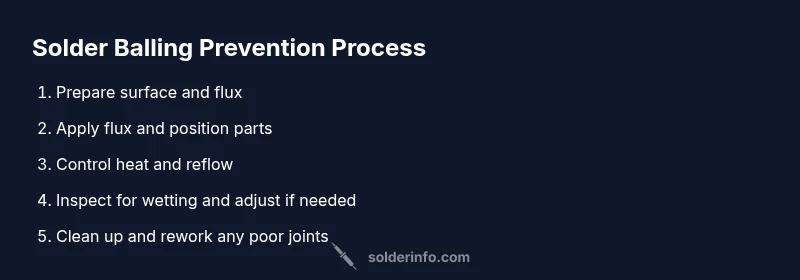
A practical electronics workflow begins with clean, prepped boards and surfaces, then flux application, precise component placement, and measured soldering. Start with a small amount of flux on the pad, place the component, and apply heat evenly to the joint. Pull heat away as soon as the solder flows to the joint, avoiding heat soak that can burn flux and promote balling. Inspect each joint under magnification; rework any that show signs of balling. Over time, you’ll recognize the tolerances that minimize balling for your specific components and boards.
Authority Sources
- National Institute of Standards and Technology (https://www.nist.gov)
- Occupational Safety and Health Administration (https://www.osha.gov)
- IEEE (https://www.ieee.org)
Tools & Materials
- Solder (lead-free or leaded)(Choose alloy appropriate to project; lead-free preferred.)
- Flux (rosin-core or liquid flux)(Rosin-core flux for electronics; water-soluble flux for plumbing.)
- Flux brush or flux pen(Apply flux thinly and precisely.)
- Soldering iron or station(Stable temperature control and clean tip.)
- Soldering tip cleaner or brass sponge(Regular cleaning and occasional tinning.)
- Solder wick (desolder braid)(For removing excess solder or correcting joints.)
- Isopropyl alcohol (70-90%)(Clean surfaces and remove flux residues.)
- Lint-free wipes or microfiber cloth(Dry, residue-free cleaning.)
- Tweezers or hemostats(Handle small components precisely.)
- Heat sink or clip-on stabilizers(Protect sensitive parts on larger joints.)
- Magnification (loupe or microscope)(Inspect small joints for balling.)
- Safety glasses(Protect eyes from splashes and fumes.)
Steps
Estimated time: 60-75 minutes
- 1
Prepare workspace and materials
Clear the work area, organize tools, and verify all materials are at hand. Ensure good ventilation and a clean, dry surface to minimize contamination. This setup reduces the chance of balling from unexpected debris.
Tip: Place a heat-resistant mat and a dedicated container for used flux and tips. - 2
Clean the joints and surfaces
Wipe pads, leads, and joints with isopropyl alcohol and a lint-free wipe. If oxidation remains, gently brush the area with a clean brush or a fresh flux layer to prepare for wetting.
Tip: Avoid touching cleaned surfaces with bare fingers to prevent oils from recontaminating the joint. - 3
Apply flux precisely
Apply a thin, even coating of flux to the joint and contact areas. For larger joints, place flux on both sides to ensure even wetting. Too much flux can pool and hinder proper wetting.
Tip: Use a flux pen for small joints to minimize waste. - 4
Pre-tin the tip and pads
Lightly tin the soldering iron tip and the pad/lead surfaces. This prepares the surface for quick, even heat transfer and reduces the chance of balling due to delayed wetting.
Tip: Keep the tip clean; dirty tips heat unevenly and promote balling. - 5
Position components accurately
Place components with minimal handling to avoid oils. Ensure leads are aligned and flush with pads to promote even solder flow.
Tip: Clips or small jigs help hold parts in place during soldering. - 6
Apply heat and solder to the joint
Touch the joint with the hot tip and apply solder to the joint—not the tip—until the fillet forms. Remove heat as soon as wetting occurs to prevent overheating.
Tip: Use a light, quick touch instead of long dwell times. - 7
Inspect and reflow if needed
Check for a shiny, smooth fillet. If balling appears, reapply flux, reheat, and reflow with a steady motion. Avoid adding multiple layers of solder to minimize balling.
Tip: Magnification helps detect early signs of poor wetting. - 8
Clean up and store properly
Wipe excess flux with isopropyl alcohol, cool the board, and store tools in a dry, organized manner. Clean joints remain cleaner and more reliable over time.
Tip: Turn off the iron after the final pass and re-tin the tip for next use.
Quick Answers
What causes solder to ball up?
Balling happens when the solder surfaces don’t wet properly due to contamination, improper flux, or incorrect temperature. This prevents a smooth fillet and leaves spherical beads instead of a continuous joint.
Balling happens when the solder can’t wet the joint properly, usually because of contamination or wrong heat and flux.
Is lead-free solder more prone to balling?
Lead-free solders can be more challenging to wet initially, but with proper flux, temperature, and technique, you can achieve reliable joints. Leaded solders often wet more easily, but safety concerns push many projects toward lead-free options.
Lead-free solders can be trickier to wet, but with good flux and temperature control you can still get excellent joints.
Do I always need flux to prevent balling?
Flux is essential to reduce oxides and promote wetting. While some flux types work well enough on clean metal, flux generally prevents balling by enabling solder to spread smoothly across surfaces.
Flux helps the solder spread by reducing oxides, so it’s essential for preventing balling.
How do I fix a balling joint mid-rework?
Reflow the area with fresh flux, ensure the joint is clean, and apply a small amount of new solder. Avoid excessive heat and give the joint a brief, controlled dwell to re-wet the surface.
Reflow with fresh flux, clean the area, and re-solder with a light touch.
What temperatures are safe for common electronics soldering?
Typical electronics lead-free soldering is done around 320–360°C with a stable tip. For delicate components, lower the temperature and shorten contact time to avoid damage.
Aim for about 320 to 360 degrees Celsius, depending on the alloy and components.
Are flux fumes dangerous?
Flux fumes can irritate eyes and lungs, so work in a well-ventilated area and consider a fume extractor or fan. Use water-soluble flux where appropriate and avoid inhalation.
Flux fumes can irritate breathers, so ventilate your workspace.
Can cleaning solutions prevent balling in plumbing?
In plumbing, residue and oxidation on copper surfaces contribute to balling. Clean, dry, and use appropriate flux for copper joints; avoid cross-contamination with electronics flux.
Clean surfaces and use proper flux for copper joints.
Watch Video
Top Takeaways
- Master surface prep to prevent balling.
- Choose flux and alloy appropriate to the task.
- Maintain steady temperature and avoid excessive heat.
- Inspect joints with magnification to ensure proper wetting.