Solder Without Gun: Practical Alternatives
Learn practical methods to solder without a soldering gun. Compare irons, torches, and alternatives, with safety steps, materials lists, and a clear step-by-step guide.


With the right tools and technique, you can reliably solder without a gun. This guide shows practical methods using a soldering iron, butane torch, or conductive adhesive, plus safety steps, prep, and tips to avoid common mistakes. You'll learn setup, material choices, and step-by-step actions to join electronics, jewelry, or plumbing components without resorting to a soldering gun.
Why solder without gun matters
For many DIY projects, a flexible approach to joining metals and wires without a soldering gun is essential. The phrase solder without gun covers techniques that rely on a handheld heat source such as a traditional soldering iron, a small butane torch, or even other heat-activated methods. In electronics, jewelry, and plumbing alike, mastering these approaches expands your toolkit and reduces equipment clutter. SolderInfo observes that practitioners who learn to work without a gun report better heat control, faster setup, and fewer bulky tools on crowded workbenches. The key is understanding when a given heat source, flux, and material compatibility matter most, so you can choose the right method for your task. This article stays practical, focusing on safe, repeatable steps you can apply right away.
Choosing your method: iron, torch, or alternative
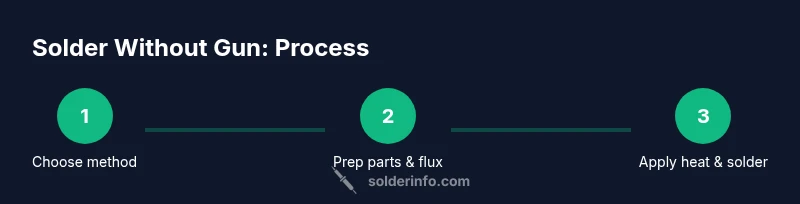
There are three common pathways to solder without a gun: using a traditional soldering iron, using a small handheld torch (such as a butane pen torch), or employing adhesive or mechanical alternatives for non-electronic joints. Each method has tradeoffs: irons offer precision but slower heat transfer and longer setup; torches provide rapid heating but carry a higher risk of overheating delicate parts; non-flame alternatives can join metals without flame but may not form a true metal-to-metal bond. When selecting a method, consult the material datasheets (copper, aluminum, steel), flux compatibility, and component heat tolerance. SolderInfo notes that starting with lead-free solders and rosin-based flux reduces fumes and improves reliability across common hobby applications.
Safety first: PPE and ventilation
Personal protective equipment (PPE) should be non-negotiable. Wear safety glasses or goggles, a heat-resistant glove for handling hot components, and a dust mask or respirator when fumes are present. Work in a well-ventilated area or near a fume extractor, especially if you’re using flux or solder with rosin core. Keep a fire extinguisher accessible and clear flammable materials away from the workspace. Solder without gun heat can still cause burns or ignite accidental deposits, so proceed with deliberate caution and keep your hands steady.
Materials and tools you'll need
To solder without a gun effectively, assemble a basic toolkit: lead-free solder or rosin-core solder, rosin flux, a temperature-controlled soldering iron or a small butane torch (if your project permits), flux brush, solder wick for cleanup, tweezers, a heat sink or shielding tape for sensitive parts, safety glasses, a dry sponge or brass cleaner for tip maintenance, and a silicone mat or fireproof work surface. Having a magnifier or loupe helps with tiny electronics work. Optional items include a small vacuum de-soldering pump and a needle-nose plier for precise handling.
Surface prep and flux basics
Cleanliness is critical. Use isopropyl alcohol to remove oils and residues from metal surfaces before heating. Apply flux to the joint to improve wetting and reduce the chance of cold solder joints. If you’re using a flux that’s not rosin-based, check compatibility with your solder type to avoid corrosion or poor bonding. For electronics, tinning pads and the soldering iron tip ensures a smooth transfer of heat and solder. Always ensure the flux is applied evenly and that the joint has a straightforward path for solder to flow.
Preparing joints for electronics
Electronic joints demand clean, flat surfaces for reliable connections. Start by removing old solder with wick if rework is needed. Lightly sand or abrade any oxidation from metal surfaces, then clean again. Apply a thin layer of flux and position the component so that it does not move as heat is applied. Use a heat sink to protect sensitive components, and heat gradually to avoid damage. The goal is a smooth, bright, concave fillet that indicates proper wetting and adhesion.
Jewelry soldering without an iron/gun
Jewelry work requires precise heat application and delicate control. For small links and beads, consider a micro-torch with careful flame control, keeping heat away from delicate settings. Secure the piece in a steady clamp or clamp-style third-hand, apply flux, and bring the joint to temperature only as long as necessary. After soldering, allow the metal to cool slowly to avoid stressing the joint. Always test the bond gently to confirm reliability before polishing or enclosing the piece.
Plumbing soldering without a torch
Non-flame heat methods in plumbing can involve specialized induction or thermal mastic compounds, but most household repairs rely on reliably heated joints. When using a torch-free approach, ensure that pipes are clean and dry, use lead-free solders approved for potable water, and follow local codes. If you must heat a pipe, use a heat sink to protect nearby plastics and install supports to keep the joint from moving during cooling. In all cases, verify the joint is watertight after cooling by applying pressure or a soap test.
Step-by-step example: electronics joint without gun
This example demonstrates a basic electronics joint without a soldering gun. Start with a clean PCB pad and component lead. Apply flux, position the lead, and apply heat with the iron or torch from the side so the joint wets evenly. Touch the solder to the joint, not the iron, and wait for a shiny, smooth fillet to form. Remove heat and allow to cool undisturbed. Inspect for a solid mechanical and electrical connection.
Common mistakes and how to avoid them
Avoid overheating the joint or component leads, which can cause damage or weakening of insulation. Don’t apply too much solder at once; build up a tiny fillet instead. Keep the tip clean and tinned to prevent oxidation. If a joint is dull or grainy, reheat and adjust flux or positioning for better wetting. Finally, keep your workspace organized to prevent accidental burns or knock-overs.
Troubleshooting common issues
If you see a cold joint, reheat with a bit more flux and ensure the joint is fully wetted. If there’s a crack in the enamel or insulation, stop and rework with better heat control or a heat sink. Oxidized surfaces can cause poor wetting; clean and reapply flux. If flux fumes irritate you, improve ventilation or switch to a milder flux.
Maintenance and storage of materials
Store solder and flux in a cool, dry place away from moisture and humidity. Keep your tools clean and dry; wipe the tip with a damp sponge or brass cleaner to prevent oxidation. Regularly inspect heat sources for leaks or clogs and replace worn tips when necessary. Maintaining your equipment ensures more reliable results over time.
Tools & Materials
- Solder (lead-free rosin-core)(Prefer no-lead solders for safety; rosin-core improves wetting in electronics.)
- Flux (rosin-based)(Choose flux compatible with your solder type.)
- Soldering iron (temperature-controlled)(Set to suitable range for electronics or small jewelry work.)
- Solder wick (desoldering braid)(For cleaning up excess solder or reversing joints.)
- Butane micro-torch (optional)(Use with caution on delicate parts; ideal for quick heat when a iron is not suitable.)
- Safety glasses(Protect eyes from splashes and fumes.)
- Ventilation or fume extractor(Keep air clear of flux fumes.)
- Wet sponge or brass tip cleaner(Maintain tip cleanliness.)
- Fireproof mat or silicone mat(Protect workspace from heat and sparks.)
- Tweezers(Handle small components precisely.)
- Magnifier or loupe (optional)(Helpful for tiny components.)
- Heat-resistant tape (optional)(Protect heat-sensitive areas.)
Steps
Estimated time: 60-120 minutes
- 1
Assess heat source
Evaluate whether a soldering iron, torch, or alternative method best suits the component and material. Consider heat tolerance, joint geometry, and nearby plastics.
Tip: Choose the lowest heat source that reliably wets the joint. - 2
Prepare workspace and safety
Clear the area, lay down a fireproof mat, and put on PPE. Ensure ventilation is active and flammables are outside reach.
Tip: Keep a clear escape path for emergencies. - 3
Clean and flux surfaces
Wipe surfaces with isopropyl alcohol, dry, then apply a thin layer of flux to the joint for improved wetting.
Tip: Only apply enough flux to cover the joint; excess flux can cause splatter. - 4
Tin the tip and pads
Lightly coat the iron tip and the pad with a small amount of solder to help heat transfer and bonding.
Tip: Tinned surfaces lead to quicker, more reliable joints. - 5
Position components securely
Place components, align leads, and use a tool to hold them steady while heating.
Tip: A third-hand tool reduces hand strain and improves precision. - 6
Apply heat and solder
Apply heat to the joint, not the solder directly. Feed solder into the joint once it has heated and wets the surfaces.
Tip: Avoid touching the solder with the iron; let the joint attract solder by melting into it. - 7
Inspect the joint
Look for a shiny, smooth fillet with no cracks. If dull or grainy, reheat and adjust flux or position.
Tip: If it looks dull, reheat and rework briefly to improve wetting. - 8
Cool and clean
Let the joint cool naturally. Wipe with flux-free cloth if needed and inspect for mechanical integrity.
Tip: Rapid cooling can stress joints; avoid forced cooling. - 9
Test and verify
Gently test for continuity and inspect visually for bridging or cold joints. Correct as necessary.
Tip: A multimeter helps confirm electrical integrity. - 10
Cleanup and storage
Turn off heat sources, safely store tools, and wipe the workspace. Keep solder and flux capped and dry.
Tip: Label storage to prevent moisture exposure.
Quick Answers
Can I solder without a soldering iron or gun for electronics?
Yes, you can use a traditional soldering iron or a small torch as alternatives, but you must control heat carefully and select materials compatible with non-gun methods. Start with electronics-friendly flux and lead-free solder, and practice on scrap parts first.
Yes, you can solder electronics without a gun by using a soldering iron or a small torch with careful heat control and proper materials. Practice on scrap parts first to build confidence.
Is a butane torch safe to use on electronics?
A butane torch can be used for some electronics joints, but it requires careful heat management and distance to protect sensitive components. Use heat sinks and work in a ventilated area to minimize fumes and risk.
A butane torch can work for some joints, but manage heat carefully and protect components with heat sinks. Work in a ventilated area.
Which joints are best for no-gun methods?
Joints in electronics with flat pads or wire-to-pad connections respond well to controlled heat and flux. Jewelry and plumbing joints require different heat management; for plumbing, lead-free solder and proper flux are essential, and for jewelry, precise heat control is critical.
Electronics pads respond well to careful heat; jewelry and plumbing need different heat control and materials.
Do I need flux core solder for these methods?
Flux core solder helps with wetting and reduces oxidation. For best results, pair flux core solder with appropriate flux and clean joints before and after heating to maintain bond quality.
Flux core solder helps wetting; pair it with appropriate flux and clean joints before and after heating.
What safety gear should I use?
Wear safety glasses, use ventilation, and keep a fire extinguisher nearby. Secure workpieces with clamps and avoid loose clothing or hair near the heat source.
Wear safety glasses, ensure good ventilation, and clamp workpieces to prevent accidents.
Can I solder copper plumbing without a torch?
Some non-flame methods or induction-style solutions exist, but for most copper plumbing, heating is required. Use lead-free solder and proper flux, and follow local codes for potable-water joints.
Plumbing usually needs heat; use lead-free solder and flux and follow local codes.
Watch Video
Top Takeaways
- Plan heat source before starting
- Flux improves wetting and joint quality
- Match material, flux, and solder type for reliability
- Inspect joints thoroughly after soldering