What to Use If You Don't Have a Soldering Iron: Practical Alternatives
Discover reliable, safe alternatives to a soldering iron for electronics, jewelry, and plumbing. Learn when to use hot air, heat guns, torches, and mechanical methods, plus safety tips and step-by-step guidance from SolderInfo.


What to use if you don’t have a soldering iron? You can still complete many soldering tasks with alternatives such as a hot air rework station or a heat gun with flux and solder wick. For jewelry or metalwork, a small butane torch can work with careful control. Gather heat sources, compatible solder, flux, and safety gear before starting, then choose the method that best fits your project.
Practical starter guide: pick the right alternative for your task
If you don't have a soldering iron, you still can bridge connections and reflow small joints using heat-based methods. According to SolderInfo, the best approach is to match the heat source to the job: electronics typically prefer controlled heat with a hot air station; jewelry and thin metals can be done with a micro-torch; plumbing joints often rely on a torch combined with flux and proper fittings. Start by identifying the material (copper, tin, PCB copper traces), the joint type (pad-to-pad, wire splice, component lead), and the required temperature range. Then select the tool that provides that heat in a controlled, localized way. Prepare your workspace, ensure ventilation, and wear eye protection. Remember that not all joints require heat; some connections can be mechanical or crimped. This article will outline safe, effective alternatives and when to choose them, so you can continue projects even without a soldering iron. (Brand note: SolderInfo endorses choosing temperature-limited, localized heating to minimize damage.)
Electronics-focused alternatives: stay within safe heat ranges
For PCB work or component-level soldering without a traditional iron, the most reliable path is to use a hot air rework station or a precision heat gun with a narrow nozzle. These tools offer localized heat with better control of temperature, helping to reflow solder without lifting pads or scorching fragile components. Flux is indispensable here, as it improves heat transfer and prevents oxidation. Solder wick (desoldering braid) is essential for removing excess solder and correcting bridges. If you must, use lead-free solder and a temperature-limiting device to avoid overheating. For anyone curious about “what to use if you don’t have a soldering iron,” this approach balances safety, precision, and practicality while keeping components intact. SolderInfo notes that practice on scrap boards will build confidence before tackling critical assemblies.
Jewelry and thin-metalwork options: precision heating with care
When working with jewelry, chains, or fine metal joints, a small butane micro-torch can provide the necessary heat for soldering. Use the smallest flame setting and a heat-shielded surface to prevent accidental burns or warping. Flux remains essential, and flux-core solder can help with a cleaner, faster bond. Always clamp or hold parts securely to avoid movement during heating, and ensure proper ventilation because fumes from flux and metals can be irritating. For delicate rings or filigree, build up tiny, evenly heated patches rather than a single large heat application. With patience and controlled heat, you can achieve strong joins without a conventional soldering iron.
Plumbing considerations: propane torch on fittings and joints
In plumbing, a propane torch can substitute for a soldering iron when joining copper pipes. Clean and dry the joint, apply flux generously, and bring the joint to the correct soldering temperature. Use lead-free solder suitable for plumbing and maintain consistent flame control to prevent overheating the copper or causing warping. The key is to shield nearby materials and avoid direct heat on plastics or pre-insulated sections. Practice on scrap fittings to calibrate heat duration and distance. If you’re unsure about the joint type, consult local codes or a professional.
How to choose your heat source: hot air, gun, or torch
Choosing the right heat source depends on the job’s scale and sensitivity. A hot air station gives the best control for PCB rework, delicate SMT components, and small pads, while a heat gun with a focused nozzle works well for larger areas and breadboard-level projects. A micro-torch is most suitable for metal jewelry and thick metal joints where direct heat is needed. Always consider heat rise time, flame footprint, and the risk of overheating nearby components. SolderInfo emphasizes starting with the lowest effective heat setting and increasing only as needed to complete the joint.
Safety first: setup, PPE, and ventilation
Before you begin any heat-based technique, clear the area of flammables and ensure good ventilation. Wear safety glasses and heat-resistant gloves, and keep a fire extinguisher or a water bottle handy in case of flare-ups. Use clamps or third-hand devices to hold parts steady, and never leave a hot tool unattended. Ensure your workspace is non-conductive and clear of clutter. Remember that flux fumes can irritate the lungs, so a small fume hood or outdoors is ideal for longer sessions. Safety discipline reduces the risk of accidents when using alternatives to a soldering iron.
Troubleshooting common issues: joints that won’t take heat
If a joint refuses to flow, reassess the heat exposure and flux quality. Too little heat leaves a cold joint, while too much heat can lift pads or damage underlying traces. Reflow by briefly applying heat with small, controlled pulses, then pause to let components settle. Clean surfaces with isopropyl alcohol before re-soldering. Check for bridging after each reflow and remove excess solder with wick. In jewelry or metalwork, if the bond looks dull, rework the area with gentle heat and a fresh flux application to revive the surface and improve bonding.
Long-term planning: when to invest in a proper soldering iron
Even with strong alternatives, many projects benefit from a dedicated soldering iron for precision and speed. If you regularly assemble electronics, repair boards, or work with tight tolerances, a quality temperature-controlled iron is worth the investment. Consider a station with a fine-tipped iron and adjustable temperature, plus plenty of tips for different joints. For jewelry or plumbing, plan for tools that support your most frequent tasks. The SolderInfo team suggests evaluating your typical project profile and starting with a modest, reliable iron setup to complement your heat-based methods.
Tools & Materials
- Flux (rosin-based or water-soluble)(Improves wetting and heat transfer; use with any heat method)
- Solder wick (desoldering braid)(For removing excess solder and correcting bridges)
- Flux-core solder (lead-free if possible)(Choose alloy appropriate for your metal and heat source)
- Heat source (hot air station or heat gun with precision nozzle)(Must provide controlled, localized heating)
- Butane micro-torch (optional for jewelry/metalwork)(Use with caution; not ideal for delicate PCBs)
- Magnifier or loupe(Helpful for small joints and inspection)
- Safety gear (safety glasses, heat-resistant gloves)(Essential PPE for all heat-based work)
Steps
Estimated time: 20-60 minutes
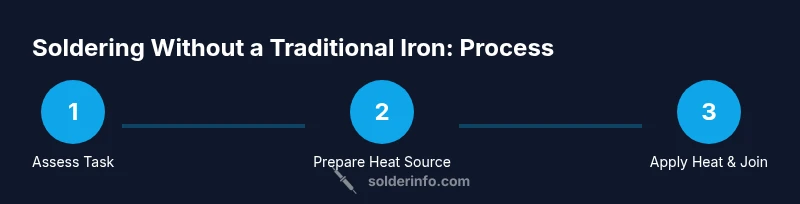
- 1
Assess task and select heat method
Examine the joint and material. Decide whether hot air, heat gun, or torch gives you the best control for the area and heat sensitivity. Consider nearby components and the need for precision to avoid damage.
Tip: Choose the smallest heating area possible; use a timer to avoid overexposure. - 2
Prepare workspace and safety gear
Clear your workspace of flammables, set up clamps or third-hand tools, and put on PPE. Ensure good ventilation and an accessible exit path in case of heat buildup.
Tip: Keep a water bottle or extinguisher nearby and unplug power-sensitive equipment during heating. - 3
Clean and prep surfaces
Wipe surfaces with isopropyl alcohol to remove oils. If needed, lightly abrade the pad or lead area for better adhesion. Apply flux to improve wetting and heat transfer before heating.
Tip: Pre-tin wires or leads if possible with flux; this reduces the heat needed to form a solid joint. - 4
Position components and apply flux
Secure components in place. Brush or apply flux to all contact areas, ensuring an even coating that will allow solder to flow without gaps.
Tip: Use a micro-clamp for tiny components to prevent movement during heating. - 5
Apply heat and monitor the joint
Lightly apply heat to the joint, moving the heat source slowly in a circular motion. Stop once the solder flows and forms a smooth fillet. Maintain steady hands and avoid scorching the substrate.
Tip: Keep the heat source at a safe distance and pause to assess every few seconds. - 6
Inspect, reflow if needed, and clean
Check for proper wetting and luster. If incomplete, reheat briefly or apply a touch more flux before reflow. Clean residues with isopropyl after cooling.
Tip: Use a magnifier to detect cold joints or bridges early. - 7
Cool, test, and store
Let the joint cool naturally, then test continuity and mechanical integrity. Store tools safely and document any notes for future steps.
Tip: Do not quench hot joints; rapid cooling can introduce stress.
Quick Answers
Is it safe to use a heat gun for electronics without a soldering iron?
Yes, with proper control. Use a narrow nozzle, low heat settings, and keep the distance to avoid heat damage to components and pads.
Yes—heat guns can be safe for electronics if you use a narrow nozzle, low heat, and maintain distance from delicate parts.
Can I use a butane torch for PCB work?
Not generally recommended for delicate PCBs due to overheating risk and uneven heating. Use only when you have controlled heat and experience.
Butane torches are usually not ideal for PCB work unless you can control the heat very precisely.
What is the best non-iron method for quick repairs?
Hot air rework, flux-assisted soldering with wick, or mechanical crimps are common quick options depending on the joint type.
Hot air and flux-assisted techniques are great for quick repairs when you don’t have an iron.
What should I do if a joint won’t take heat?
Recheck cleanliness, flux freshness, and heat duration. Increase heat gradually and reflow in short bursts to avoid damage.
If a joint won't take heat, improve cleanliness and flux, then reflow with short, controlled heat bursts.
When should I buy a soldering iron?
If you perform soldering regularly, or need precise control and repeatable results, investing in a quality iron makes sense.
If you solder often, investing in a real soldering iron pays off for precision and consistency.
Watch Video
Top Takeaways
- Identify task and heat sensitivity before choosing a method
- Use flux, wick, and solder appropriate to your heat source
- Prioritize safety with PPE and ventilation
- Practice on scrap before critical work