Solder Tip Tinning: A Practical Guide
Master solder tip tinning to protect tips and improve heat transfer with lead-free solder. Learn tools, steps, and maintenance for electronics, jewelry, and plumbing.


According to SolderInfo, tinning a solder tip correctly protects the tip from oxidation and improves heat transfer for precise joints. In this quick answer, you’ll learn what tools you need, the key steps to tin your tip, and how to maintain it for reliable performance across electronics, jewelry, and plumbing projects.
What is solder tip tinning and why it matters
Solder tip tinning is the practice of applying a thin coat of solder to the iron's tip to prevent oxidation and improve heat transfer. When the tip is protected, it wets joints more cleanly and lasts longer, reducing the need for frequent tip replacements. According to SolderInfo, proper tinning is a cornerstone of reliable soldering across electronics, jewelry, and plumbing projects.
How tinning works: metals, oxide layer, and heat
The solder on the tip forms a metal-rich layer that resists oxidation and provides a ready reservoir of solder to wet the workpiece. Without tinning, copper and iron coatings oxidize quickly, raising contact resistance and causing pitted, dull joints. A well-tinned tip heats evenly and transfers heat more efficiently to the solder joint, ensuring smoother, more repeatable results.
Common myths and mistakes to avoid
Myth: Flood the tip with solder to tin it instantly. Reality: a thin, even film is all you need. Mistake: cleaning with water or aggressive scrubbing can damage the tip coating. Myth: Tin is permanent; reality: oxide forms quickly, so re-tin often. According to SolderInfo, regular maintenance pays off in longer tool life and more consistent performance.
The right environment and prep: flux, materials, tip types
Create a clean, well-lit workspace and prepare flux, solder, and the right tip for the job. Rosin flux improves wetting, especially on oxidized surfaces, and lead-free solder is safer for most hobbyists and professionals. Iron-coated tips and copper tips respond differently to heat and flux, so verify manufacturer recommendations before tinning. With the correct setup, tinning becomes a quick, repeatable step that keeps your tool ready for precise work.
Solder tip tinning in practice: tips for reliability
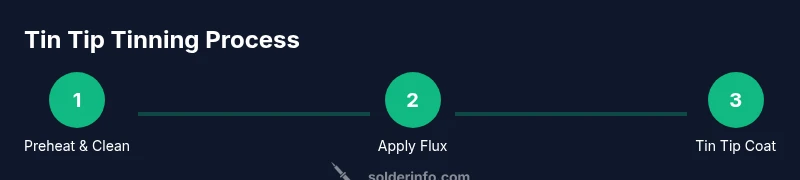
Preheat the iron to a moderate temperature, then clean the tip with a brass sponge or damp sponge. Apply a light film of flux to the tip, and touch the solder to the tip end so it flows and bonds with the tip surface. Allow a shiny, uniform film to form, then wipe away any excess and apply a final thin coat after it cools. Regular practice in a clean environment yields the most reliable results and reduces future rework. The goal is a consistent, protective coating with minimal waste.
Maintenance after tinning and storage
When you finish, let the tip cool briefly, wipe it again, and tin lightly for next use. Store the iron in its stand with a protective, thin coat of solder on the tip to prevent oxidation during idle periods. Avoid leaving a hot iron in contact with sponges or damp surfaces. Regular re-tinning as part of a maintenance routine extends tip life and preserves heat transfer for future projects. The SolderInfo Team emphasizes consistency in care for long-term performance.
Tools & Materials
- Soldering iron with adjustable temperature(Set to 350-370°C for lead-free tinning.)
- Lead-free rosin-core solder(Diameter typically 0.5–1.0 mm; choose a commonly used alloy like SnAgCu.)
- Rosin flux(If your solder is flux-free or you want improved wetting.)
- Tip cleaner sponge or brass wool(Used to clean oxidation before tinning.)
- Tweezers(For handling small components and guiding solder flow.)
- Isopropyl alcohol (70-99%)(For cleaning the tip after tinning if needed.)
- Tip tinning compound / tip tinner (optional)(Use sparingly on severely oxidized tips.)
Steps
Estimated time: 15-25 minutes
- 1
Power on and preheat the iron
Turn on the iron and bring it to a moderate temperature suitable for lead-free soldering (around 350–370°C). Allow the tip to reach equilibrium before starting tinning. This ensures wetting is consistent and reduces heat cycling.
Tip: A well-preheated tip minimizes thermal shock during tinning. - 2
Clean the tip
Wipe the tip on a brass sponge or damp sponge to remove oxidation and old residue. A clean base surface helps the new solder wet evenly and form a durable film.
Tip: Avoid scrubbing with a very dry sponge; slightly damp surfaces work best. - 3
Apply flux to the tip
Apply a thin, even layer of flux to the tip to improve wetting and spread of the solder. Flux lowers surface tension and helps the solder flow smoothly across the surface.
Tip: Use just enough flux to cover the tip; excess flux attracts dust. - 4
Tin the tip
Touch the tip to a small amount of solder so the molten metal flows across the entire surface, forming a shiny, uniform coat. Don’t flood the tip; a light coat is enough.
Tip: Let the solder flow naturally and avoid dragging it along the tip edge. - 5
Wipe and re-tin as needed
Wipe away excess solder with the sponge, then apply a final thin layer after it cools. A consistent film protects against oxidation during idle periods and prepares the tip for next use.
Tip: Always finish with a protective coat rather than leaving bare metal exposed. - 6
Cool, store, and maintain
Allow the tip to cool briefly, then store the iron in its stand with a light coat of solder. Regular re-tinning during maintenance sessions helps preserve tip life and performance.
Tip: Avoid resting a hot tip on damp or soft surfaces; this accelerates oxidation.
Quick Answers
What is solder tip tinning and why is it important?
Solder tip tinning is the practice of applying a thin coat of solder to the iron's tip to prevent oxidation and improve wetting. This protective layer makes heat transfer more reliable and reduces tip wear, resulting in cleaner joints across electronics, jewelry, and plumbing.
Tinning a solder tip gives you a protective coating that helps heat transfer and keeps joints clean.
Should I tin the tip every time I use the iron?
Yes. After cleaning, a quick re-tin keeps the tip protected and ready. Re-tin as needed when you notice dull oxidation or reduced wetting.
Yes—re-tin after cleaning and when you see oxidation to keep the tip performing well.
Can I use lead-based solder for tinning?
Lead-free solder is preferred for safety and environmental reasons. If you use lead-based solder, work in a well-ventilated area and wash hands after handling.
Lead-free solder is safer; if you use lead-based solder, ensure good ventilation and clean-up.
What should I do if the solder won’t wet the tip?
Oxidation or improper temperature can prevent wetting. Re-clean, re-tin, and adjust temperature as needed; apply a small amount of flux to improve wetting.
If solder won’t wet, clean and re-tin, check temperature, and apply flux.
How often should I re-tin the tip?
Re-tin as part of routine maintenance or whenever you notice oxidation or dullness. Regular re-tinning helps maintain heat transfer and tip life.
Re-tin as part of routine care or when you see signs of oxidation.
Is tinning different for electronics and jewelry soldering?
The basic tinning principle is similar, but jewelry work may use different alloys and flux. Always follow alloy and flux recommendations for your specific project.
Tinning uses the same idea, but adapt to the alloy and flux for jewelry or electronics.
Watch Video
Top Takeaways
- Preheat and clean the tip before tinning
- Apply flux for smooth wetting
- Tin with a thin, even layer
- Wipe excess and re-tin as needed
- Store with a light coating to protect