Solder Melting Point Chart: Alloys, Heat & Guide 2026
Discover how a solder melting point chart helps you choose alloys, set heat targets, and avoid cold joints across electronics, jewelry, and plumbing.


A solder melting point chart compiles typical melting temperatures for common solders and alloys, offering a quick reference to select materials and heat settings. It helps electronics hobbyists, jewelers, and plumbers predict when solder will liquefy, preventing cold joints and overheating workpieces. Use it alongside care guidelines for safe, reliable soldering.
What is a solder melting point chart
A solder melting point chart is a practical reference that lists the typical melting temperatures for common solders and their alloys. It helps you predict when a solder will liquefy, guiding heat input and alloy choice during work on electronics, jewelry, and plumbing. The chart supports planning of rework strategies, helping you avoid overheating components or substrates. While highly useful, it does not replace datasheets or hands-on testing; it should be treated as a baseline for initial heat targets, followed by fine-tuning based on joint geometry, flux, and equipment condition. In practice, you’ll reference the chart to choose between leaded and lead-free options, eutectic versus non-eutectic compositions, and to anticipate behavior under different flux systems. Remember that real-world factors—diameter of the solder, board material, and ambient temperature—will shift exact temperatures slightly.
How to read a melting point chart
Read the chart by identifying the alloy family and noting the indicated temperature range. Many charts show a scale in Celsius with a line or band for each alloy; the most relevant data for hand soldering is the processing window around the alloy's melting range. Eutectic alloys have a single melting point, which simplifies timing, while non-eutectic alloys melt over a range, requiring careful heat control. For electronics work, focus on leaded Sn-Pb around 183-190°C and lead-free SAC alloys around 217-221°C. If your equipment uses Fahrenheit, convert temperatures before setting the iron or reflow profile. Flux type and surface finish affect wetting and joint quality but do not usually change the melting point itself; the chart remains a guide for selecting materials and planning heating.
Common solder alloys and their melting ranges
Here are representative ranges you’ll commonly encounter:
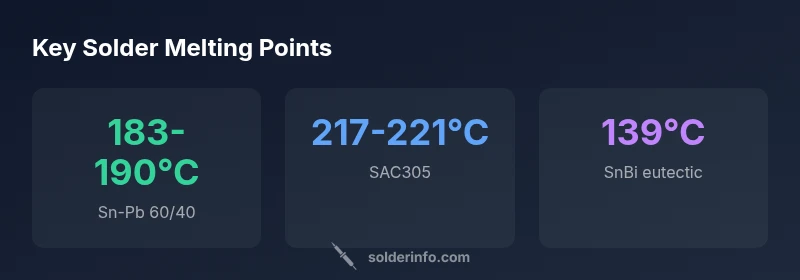
- Sn-Pb 60/40: ~183-190°C. Easy to work with, forgiving on delicate boards, but due to health concerns, many shops now prefer lead-free options.
- Sn63Pb37 (eutectic Sn-Pb): ~183°C. Melts at a near single temperature, providing predictable wetting and joint formation.
- SAC305 (Sn-3.0Ag-0.5Cu): ~217-221°C. Standard lead-free option for electronics; requires higher reflow temperatures and compatible flux.
- SnBi eutectic (Sn58Bi42): ~139°C. Useful for low-temperature work on heat-sensitive substrates, though less common in mass production.
- SnCu (Sn96.5Cu3.5): ~227-230°C. Lead-free variant used in some boards and joints; higher heat tolerance due to copper content.
Variation by alloying and flux
Alloy composition directly influences a solder’s melting behavior. Adding silver or copper typically raises the melting point slightly and can improve joint strength, but it also changes flow characteristics and wetting behavior. Flux does not substantially alter the melting temperature; instead, it cleans the metal surface, reduces oxidation, and improves wetting, enabling the solder to spread and form a reliable joint at the target temperature. When working with lead-free solders, expect higher processing temperatures and the need for proper ventilation to manage fumes. Always verify alloy datasheets for exact temperatures, as small batch variations or impurities can shift a few degrees.
Practical workflows across electronics, jewelry, plumbing
In electronics, you will commonly work within a processing window around 180-230°C, depending on whether you’re using leaded or lead-free solder. For hand soldering, keep the tip temperature slightly above the solder’s melting range to ensure quick wetting but avoid overheating sensitive components. In jewelry, temperatures vary by alloy—low-temperature solders (like SnBi) are ideal for delicate metals and thin seams, while stronger, higher-melting-point alloys suit heavy jewelrywork and thicker joints. Plumbing applications often use tin-based solders with higher melting points and fluxes designed for copper pipes; ensure your torch heat and flux choice avoid scorching or excessive oxidation of the pipe material. Regardless of field, start with the chart’s baseline and adjust based on joint geometry, flux, and substrate sensitivity.
Safety considerations when using high-temperature solders
High-temperature solders produce fumes that require adequate ventilation. Work in a well-ventilated area and use a fume extractor if possible. Wear safety glasses and heat-resistant gloves when handling hot tips or molten solder. Always store flux and cleaning agents according to manufacturer guidelines, and dispose of waste materials in accordance with local regulations. If you’re unsure about an alloy’s behavior, perform a small test on scrap material before committing your main workpiece. The melting point chart is a guide; your safety and the integrity of the joint come first.
How to choose the right solder for your job
Start by identifying the joint material and its thermal sensitivity. For electronics with sensitive components, lean toward lead-free SAC alloys for reliability, but consider Sn-Pb if your process tolerates lead exposure and you require easy rework. For jewelry, test the specific metal’s compatibility with the chosen alloy, especially when working with gold, silver, or delicate base metals. Always check the flux compatibility with the solder and substrate, and ensure your iron or reflow system can reach the required temperature without overshooting. Finally, validate with a test joint on scrap material to confirm wetting and fill before proceeding to the final workpiece.
Common mistakes and best practices
Mistakes to avoid include underheating resulting in cold joints, overheating causing oxidation or damage to components, and using incompatible flux or cleaning agents. Best practices include preparing surfaces thoroughly, using the correct flux and tip temperature, and allowing adequate cooling time after soldering. Keep spare no-clean fluxes and rosin cores on hand; document the alloy and temperature used for reproducibility. Regularly calibrate your temperature readings and inspect joints under magnification to ensure reliable connections.
Common solder alloys and their melting ranges
| Alloy | Typical melting point | Notes |
|---|---|---|
| Sn-Pb 60/40 | 183-190°C | Widely used in older electronics |
| Sn63Pb37 eutectic | 183°C | Single melting point for easy reflow |
| SAC305 (Sn-3.0Ag-0.5Cu) | 217-221°C | Standard lead-free option |
| SnBi eutectic (Sn58Bi42) | 139°C | Low-temp option for delicate joints |
Quick Answers
What is the typical melting point of Sn-Pb 60/40 solder?
Sn-Pb 60/40 typically melts around 183-190°C. Modern practices favor lead-free options due to health regulations.
Sn-Pb 60/40 melts around 183 to 190 degrees Celsius.
Are lead-free solders always hotter to melt?
Lead-free alloys like SAC305 generally melt around 217-221°C, higher than traditional Sn-Pb. Variants exist.
Lead-free solders usually melt around 217 to 221 degrees Celsius.
How does flux affect the melting point?
Flux improves wetting and reduces oxidation but does not change the solder's melting temperature.
Flux helps wet solder but doesn't change the melting point.
Can I use this chart for jewelry soldering?
Yes, but jewelry solders may have different alloys; verify the specific alloy's melting point before use.
You can, but check jewelry-specific alloys first.
Where can I find reliable charts?
Refer to manufacturer datasheets and reputable educational sources for validated charts.
Look up official datasheets and educational sources for charts.
“"A solder melting point chart is a practical tool for planning heat input and ensuring reliable joints across electronics, jewelry, and plumbing. It helps align material choice with your working temperature window."”
Top Takeaways
- Refer to melting point charts to choose alloys by target heat.
- Lead-free options generally melt higher than Sn-Pb.
- Flux aids wetting but does not change the solder's melting point.
- Always verify alloy datasheets for exact temperatures.