Melting Point Solder: Alloys, Temperatures, and Practical Tips
Explore how melting point solder varies by alloy, how composition affects heat behavior, and practical tips for electronics, jewelry, and plumbing soldering—backed by SolderInfo insights.


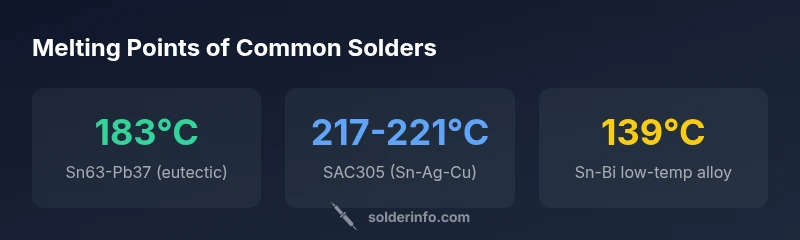
For most hobbyists and professionals, the key fact is that traditional Sn63-Pb37 solder melts at about 183°C, while common lead-free SAC alloys melt around 217–221°C. These ranges shift with exact composition and flux. Understanding these differences helps you set proper heat, avoid cold joints, and plan rework temperatures. Always consult the solder’s datasheet for tolerance and observe the board’s heat sensitivity.
Overview of Melting Points in Solder Alloys
Melting point is the temperature at which a solid alloy becomes a liquid. In soldering, the practical concern is the alloy’s melting range and how it pairs with flux, heat transfer, and component sensitivity. The traditional Sn63-Pb37 eutectic alloy melts at a precise temperature around 183°C, giving a sharp, predictable transition from solid to liquid. Lead-free alternatives, driven by environmental and health considerations, typically require higher peak temperatures during reflow, often in the 217–221°C range for SAC305. While these numbers are common references, the exact values depend on alloy composition, impurities, and flux chemistry. For hobbyists, this means adjusting your heat source, preheating, and dwell time to ensure clean joints without overheating nearby components. In jewelry or plumbing work, the same principle applies, though the tolerance bands and flux choices differ based on substrate and joint geometry. Solder temperature management is a fundamental skill across all SolderInfo domains.
Common Solder Alloys and Their Melting Ranges
There are several widely used solder alloys, each with its own melting behavior and practical trade-offs. The classic Sn63-Pb37 eutectic is popular for its clean melt and reliable joints, especially in older electronics. Lead-free SAC alloys (for example SAC305: Sn-3.0Ag-0.5Cu) typically melt in the 217–221°C window, offering better environmental compliance at the cost of higher reflow temperatures. Sn-Cu blends (around 227°C) provide alternatives with strong joints but more sensitivity to oxide formation. Low-temperature options, such as Sn-Bi-based alloys, can melt around 139°C but may exhibit brittleness or limited joint strength. When selecting an alloy, consider the board materials, component heat tolerance, and the availability of flux compatible with the alloy. Always reference datasheets and manufacturer guidelines to balance reliability with manufacturing speed.
How Alloy Composition Affects the Melting Point
Alloy behavior is governed by phase diagrams and microstructure. The addition of silver and copper to tin raises the melting point and alters the solidification path, creating a more temperature-stable joint but requiring higher peak temperatures. Pb in Sn-Pb alloys lowers the overall melting range to a sharp, single-point transition (eutectic), which simplifies process control. Bi, Sb, or In additions can create low-melting variants for sensitive substrates but may compromise mechanical properties or reliability. Understanding these relationships helps you tailor your solder profile: a lower-melting alloy might be ideal for heat-sensitive boards, while higher-melting lead-free blends can yield stronger, more robust joints in industrial environments.
Practical Implications for Soldering Tasks
Set your reflow profile to match the alloy used. Sn63-Pb37 demands less thermal headroom, making it forgiving for small PCB traces and delicate components. Lead-free solders require higher peak temperatures and careful heat distribution to avoid thermal runaway or tombstoning. Flux choice and surface cleanliness strongly influence heat transfer and joint formation, sometimes more than the exact melting point. For jewelry and plumbing applications, heat management remains critical: overheating can damage substrates, while underheating leads to weak joints. Practicing with spare boards and calibrated thermocouples can help establish reliable, repeatable results across projects.
Flux, Intermetallics, and Cleanliness
Flux chemistry and surface cleanliness dramatically affect soldering outcomes. Clean copper and tin surfaces form intermetallics that influence joint strength and electrical reliability. Flux reduces oxide layers and promotes wetting, effectively narrowing the practical heat window. In lead-free work, flux becomes even more important to compensate for higher melting temperatures and faster reactions. Regular cleaning between joints, proper tip maintenance, and avoiding contamination are essential to prevent cold joints and corrosion at the solder joint.
Lead-Free Solder Choices for Electronics: What to Use and When
Electronics often adopt SAC-type lead-free solders due to environmental requirements. SAC305 is a common workhorse alloy, providing good strength and acceptable long-term reliability, albeit with higher reflow temperatures. In contrast, Sn-Cu variants can deliver strong joints with shorter lead times but require stricter temperature control to prevent voids or copper oxide formation. For cold environments or high-vibration applications, consider alloys designed for mechanical resilience while maintaining process compatibility. Always verify device specifications, rework feasibility, and warranty implications when selecting a solder alloy for a given application.
Verification and Testing in a DIY Workshop
To verify melting behavior in a home workshop, use a calibrated heat source, a small test coupon, and a thermocouple or temperature-take reading device. Heat gradually and observe the onset of melting, ensuring the transition is clean and complete. Document the temperature at the onset and at full wetting to establish your own process window. For lead-free alloys, reflow temperatures are higher, so re-evaluate your cooling rate and post-reflow handling to avoid thermal shock to sensitive components.
Common Pitfalls and How to Avoid Them
Common mistakes include using the wrong flux for lead-free solders, overheating components, and neglecting cleanliness, which can cause tombstoning or bridging. Always co-verify the alloy, flux, and reflow profile before production. Ensure your cleaning regimen removes oxidized residues that could alter wetting behavior. Practice with known-good samples to calibrate your process before committing to high-value boards.
Typical melting ranges for common solder alloys
| Alloy Type | Typical Melting Range | Notes |
|---|---|---|
| Sn63-Pb37 (eutectic) | 183°C | Reliable, easy to reflow, common in legacy electronics |
| Sn-Ag-Cu SAC305 | 217-221°C | Lead-free, widely used in industry |
| Sn-Cu | 227°C | Alternative lead-free option with higher temp |
Quick Answers
What is the difference between melting point and reflow temperature?
Melting point is the temperature at which the solder alloy begins to liquefy. Reflow temperature is the higher temperature reached during soldering, used to ensure complete wetting and rapid flow of the molten alloy across the joint. Flux and heating rate influence whether the joint forms correctly at that temperature.
Melting point is when the solder starts to melt; reflow temperature is the higher heat used to form the joint.
Why do lead-free solders require higher temperatures?
Lead-free solders typically have higher melting points due to alloying elements like silver and copper. This necessitates higher reflow temperatures to achieve good wetting and joint formation, while still protecting sensitive components with controlled profiles.
Lead-free alloys melt higher, so you need higher heat to form solid joints—but keep an eye on component tolerances.
Can I mix leaded and lead-free solders on the same board?
Mixing solders with different melting points can cause uneven joints, thermal stress, and reliability issues. If possible, standardize to a single alloy or segregate hot zones with careful thermal management and flux control.
Mixing solders can lead to weak joints and uneven heating; best to avoid it when possible.
What flux types are best for temperature-controlled soldering?
Rosin-core and water-soluble fluxes are common options, chosen to match the alloy and substrate. Flux improves wetting and heat transfer but must be cleaned appropriately to prevent corrosive residues from affecting long-term reliability.
Use flux that matches your alloy and clean residues afterward for best results.
How can I verify the melting point of a solder sample at home?
In a controlled setup, gradually heat a small sample while monitoring temperature. Record the onset of melting and full wetting to establish a practical heat window. Use calibrated equipment and observe safety precautions at all times.
Carefully heat a sample and note when it starts to melt and fully wets the surface.
Does lead content impact safety and recycling?
Yes. Lead-containing solders pose health hazards if inhaled or ingested during processing or recycling. Use appropriate ventilation, PPE, and follow local disposal guidelines for lead-containing materials.
Lead-containing solders require caution and proper disposal.
What is a eutectic solder and why does it matter?
A eutectic solder has a single, sharp melting point, unlike many alloys that melt over a range. This simplifies temperature control and reduces the risk of partial melting, improving repeatability in manufacturing.
A eutectic solder melts at a single temperature, making heating more predictable.
“Temperature control is the single most important variable in achieving reliable solder joints across electronics, jewelry, and plumbing applications.”
Top Takeaways
- Know your alloy's melting range to set proper reflow profiles
- Lead-free solders generally melt higher than Sn-Pb eutectic
- Flux and cleanliness dramatically affect effective melting
- Verify melting behavior with datasheets and practical testing
- Temperature management impacts joint reliability and rework ease