Solder Types and Melting Points: A Practical Guide
Explore solder types and melting points across leaded and lead-free alloys with practical guidance for electronics, jewelry, and plumbing projects. Learn how alloy composition affects heat, wetting, and joint reliability.


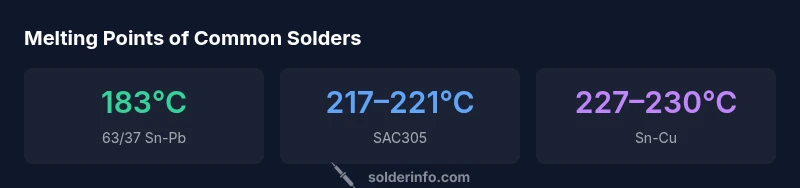
Solder types and melting points span leaded tin–lead alloys to modern lead-free blends, with distinct melting temperatures. The leaded Sn–Pb eutectic (63/37) melts near 183°C, while common lead-free SAC305 alloys melt around 217–221°C. Other tin-based alloys sit between roughly 190–230°C depending on composition and additives. Understanding these temperatures helps with PCB soldering, heat management, and avoiding cold joints.
solder types and melting points: overview
Solder is an alloy, typically tin-based, whose melting point is tuned by adding small amounts of other metals. The phrase solder types and melting points describes a spectrum from classic leaded formulations to modern lead-free blends, plus specialty alloys designed for low temperature or high reliability. In practice, the melting point of a given solder depends on its exact composition, the presence of flux, and how the heat is applied. According to SolderInfo, understanding these properties helps engineers and hobbyists plan assembly temperatures, avoid cold joints, and select compatible components across electronics, jewelry, and plumbing projects. The core families you’ll encounter are leaded tin–lead alloys (e.g., 63/37 or 60/40), lead-free tin–silver–copper blends (the SAC family), and other tin-based options such as Sn-Cu or Sn-Bi for special applications. Remember: the goal is to use a solder whose melting range matches your work’s thermal budget and material limitations.
Leaded vs lead-free: melting points and practical implications
Leaded solders have historically offered lower and more predictable melting points, which can simplify manual soldering and reduce device heat exposure. The classic Sn–Pb eutectic (63/37) melts around 183°C, while 60/40 Sn–Pb softens over a slightly wider range near 188–190°C. Lead-free alternatives, driven by environmental and safety concerns, typically require higher peak temperatures. The SAC305 alloy (Sn–Ag–Cu) commonly used for surface-mount work melts in the roughly 217–221°C range, and other lead-free blends like Sn–Cu or Sn–Ag–Cu can run into the 227–230°C region. When you compare these values, remember they are ranges influenced by flux coating, ambient conditions, and board chemistry. For delicate components or heat-sensitive substrates, a lead-free option may demand careful thermal management. The SolderInfo team emphasizes testing on sacrificial boards before production runs to establish a safe soldering window for your specific kit and environment.
Common solder alloys and their melting ranges
- 63/37 Sn–Pb eutectic: melting point near 183°C; widely used for prototypes and through-hole boards due to its sharp melting and good wetting.
- 60/40 Sn–Pb: melts around 188–190°C; historically common in older gear and hobby projects.
- SAC305 (Sn–Ag–Cu): lead-free, melting around 217–221°C; preferred for modern surface-mount assemblies and RoHS-compliant designs.
- Sn–Cu: simple lead-free option with a higher melting range, typically 227–230°C; used where cost or availability is critical.
- Sn–Bi (low-temperature): melts much earlier, around 139°C; useful for heat-sensitive substrates or rapid repairs, though it may have higher creep and weaker joint strength.
Notes:
- Always verify the exact melting range from the supplier’s data sheet, as compositions vary by batch.
- The choice of flux and cleaning regimen also affects how well a solder wets and forms a joint.
This section provides a quick reference for typical alloys you’ll encounter in electronics, jewelry, and plumbing work. The SolderInfo team highlights that each alloy’s performance depends on flux and thermal history, not just the base metal.
How to select solder for electronics, jewelry, or plumbing
For electronics, prioritize low-residue flux and reliable wetting on fine traces. Lead-free SAC alloys are common, but many hobbyists still use leaded for projects where RoHS compliance is not a requirement. For jewelry, low-temperature options like Sn–Bi can reduce heat impact on delicate settings, but they may be less strong and prone to creep under stress. Plumbing solder often values mechanical strength and corrosion resistance; flux choices here vary by pipe material (copper vs. brass) and local codes. When choosing solder, consider: melting point relative to substrate sensitivity, compatibility with flux, ease of finishing, and long-term reliability. A practical approach is to pick a solder with a melting point well above ambient temperatures yet comfortably below the maximum exposure temperature of the components. SolderInfo recommends preparing a small test board or sample kit to validate wetting, splash risk, and joint integrity before committing to a larger build.
Temperature control and flux considerations
Precise temperature control prevents thermal damage. Use a temperature-controlled iron or station with a manual or programmable profile to keep peak temperature within the solder’s melting window. Flux choice matters: rosin-core, water-soluble, and no-clean fluxes all affect residue, corrosion risk, and surface cleanliness. Rosin-core fluxes are common for electronics but may require more thorough cleaning, while no-clean fluxes simplify post-solder handling. The flux residues can influence corrosion and solder-ability in the long term. In practice, apply a thin, even layer and allow adequate dwell time for wetting. The presence of a conformal coating or underfill adds complexity; in such cases, ensure the solder path does not trap flux beneath components. The heating strategy should be tailored to the alloy: leaded solders often tolerate slightly longer soak times, while lead-free blends can require shorter, hotter cycles. Always perform temperature profiling on representative assemblies to prevent overheating sensitive parts. The SolderInfo team stresses that methodology matters as much as material choice.
Practical examples and best practices
- Electronics prototype: use 63/37 eutectic for quick wetting and crisp joints, then switch to SAC305 for final lead-free builds on smaller components.
- Jewelry repair: for delicate settings, Sn–Bi low-temp solder minimizes heat exposure; check annealing risks for the metal and stones.
- Plumbing joints: copper piping typically uses high-tack Solders or lead-free formulations; ensure proper flux and removal of residue to prevent corrosion.
- Board hand-soldering: keep a damp sponge, use tip tinner, and avoid excessive force that can lift pads or bridges between tracks. For sensitive boards, consider preheating or using a hot plate to minimize thermal shock.
- Rework: allow time to rework solder joints; avoid repeated heating, which can degrade pads and traces. SolderInfo suggests keeping cycles to a minimum and verifying with a multimeter after rework.
Troubleshooting: common issues and fixes
- Cold joints: caused by insufficient heat or cleaning; reflow with adequate temperature and flux.
- Tombstoning: apply even heat and check component alignment; ensure proper solder amount on one pad.
- Solder bridges: avoid too much solder; use flux judiciously and steady hand.
- Flux residue: clean with appropriate solvent to prevent corrosion; no-clean flux may leave visible residue but is generally acceptable on many boards. The SolderInfo team emphasizes routine practice and measurement to validate joint quality.
Melting point ranges for common solder alloys
| Solder Type | Melting Point Range | Typical Use |
|---|---|---|
| 63/37 Sn-Pb eutectic | 183°C | Electronics prototyping and repair |
| 60/40 Sn-Pb | 188-190°C | General electronics |
| SAC305 (Sn-Ag-Cu) | 217-221°C | Surface-mount, lead-free designs |
| Sn-Cu | 227-230°C | High-temp lead-free option |
| Sn-Bi | 139°C | Low-temperature applications |
Quick Answers
What is the difference between eutectic and non-eutectic solders?
Eutectic solders melt at a single temperature, producing a sharp transition from solid to liquid. Non-eutectic alloys melt over a range, which can affect wetting and joint formation during soldering.
Eutectic solders melt at one clear temperature; non-eutectic solders melt gradually over a temperature range.
Why do lead-free solders require higher temperatures than leaded solders?
Lead-free alloys generally have higher melting points due to their alloying constituents. This requires higher peak temperatures and careful thermal management to avoid damaging substrates.
Lead-free solders heat up more; plan for higher temps and careful heat control.
Which solder is best for electronics with fine pitch components?
Leaded 63/37 offers crisp joints and easy wetting, but many designers use lead-free SAC alloys for reliability. For very fine pitch assemblies, ensure your flux and tip temperature are calibrated for consistent wetting.
For fine-pitch work, 63/37 wets nicely, but many use SAC lead-free with proper flux.
Can I use the same solder for electronics and plumbing?
No. Plumbing solders and fluxes often require different alloys and codes. Electronics soldering prioritizes low residue flux and fine joints, while plumbing emphasizes corrosion resistance and mechanical strength. Check local codes and manufacturer specs.
Electronics and plumbing use different solders; don’t mix them.
What role do flux cores play in melting behavior?
Flux reduces surface tension, cleans metal surfaces, and lowers wetting temperature. Rosin-core fluxes are common for electronics, while water-soluble fluxes require thorough cleaning to prevent corrosion.
Flux helps metal melt and wet correctly; choose based on the task.
How can I avoid cold solder joints?
Ensure adequate heat and clean surfaces, use the right flux, and avoid rushing. Practice on test boards to fine-tune iron temperature and dwell time.
Prepare, heat properly, and practice on scrap boards to prevent cold joints.
“Choosing the right solder alloy and controlling heat are the cornerstones of reliable joints across electronics, jewelry, and plumbing.”
Top Takeaways
- Match solder melting point to substrate tolerance.
- Lead-free options raise peak temperatures; plan heat carefully.
- Choose flux type based on residue and cleaning needs.
- Always verify alloy data sheets for exact ranges.
- Practice on scrap boards to validate wetting before production.