Silver Solder Melting Temperature Chart: Key Ranges and Reading Tips
A practical guide to silver solder melting points, including lead-based and lead-free ranges, jewelry alloys, and how to read the chart for electronics, plumbing, and jewelry projects.


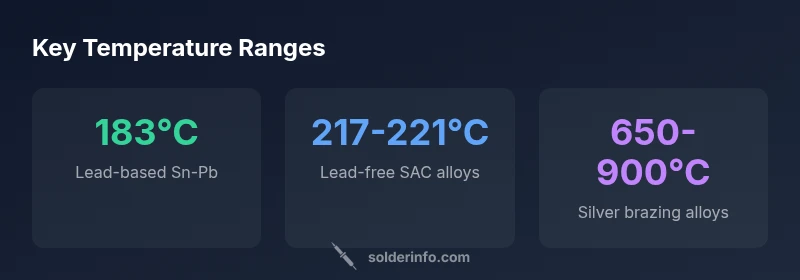
According to SolderInfo, a silver solder melting temperature chart shows that common silver-containing solders span a broad range: typical lead-based eutectic Sn-Pb solders melt around 183°C, while lead-free SAC alloys like SAC305 run about 217-221°C. Jewelry-grade silver solders can require much higher temperatures, and brazing alloys exceed 650°C. Always verify the exact numbers on the chart for your alloy.
Understanding what a silver solder melting temperature chart shows
A silver solder melting temperature chart is more than a long list of numbers. It is a practical reference that helps you choose the right alloy for your joint, based on how hot you can safely heat the workpiece without damaging nearby components, and how the alloy will flow and form a reliable joint. In SolderInfo’s experience, these charts cross domains—from electronics to plumbing to jewelry—so you can compare behavior across contexts. When you read the chart, you should interpret melting ranges, not single numbers, and always align with recommended flux and heating techniques. This is especially important for sensitive substrates like precious metals or PCBs, where overheating can cause warping, oxidation, or insulation damage.
How alloy composition drives melting point
Melting point in silver-containing solders is fundamentally a function of composition. In the classic Sn-Pb eutectic (63/37), the alloy has a sharp melting point near 183°C, which makes it forgiving for hobby work but less common today in regulated environments. Lead-free SAC alloys (for example, Sn-Ag-Cu variants used in electronics) have a higher melting window around 217-221°C, balancing reliability with safer handling. Increasing the silver content generally contributes to a higher liquidus temperature and a narrower solidus range, while adding copper or zinc can shift both the onset of melting and the flow behavior. These general patterns underpin how you read any silver solder chart and why two alloys with similar appearances can require very different heat management.
Quick-reference: common silver-containing solders and their ranges
From a practical standpoint, the chart helps you align your project with the right family of alloys. Electronics enthusiasts often choose lead-free SAC alloys for PCB work because of their consistent melting around 217-221°C. Jewelry makers might encounter higher-temperature silver-bearing solders that require more controlled preheating and flux, with temperatures that vary by alloy composition. Plumbing applications often rely on traditional solders with different compositions and melting behavior. Soldering with silver-containing alloys demands attention to flux quality, surface prep, and a gentle heating profile to avoid thermal shock and oxidation. This section of the chart is where the rubber meets the road for real projects.
Reading a chart: electronics vs jewelry vs plumbing
Charts typically segment by application: electronics soldering favors lower, predictable margins (around 217-221°C for lead-free SAC); jewelry solders may push higher end temperatures due to metal hardness and joint demands; plumbing solders can present yet another spectrum depending on the material being joined. The takeaway is to match the alloy to the substrate, and always verify the manufacturer’s data plate or datasheet. When in doubt, start at the lower end of the range and observe the flow, wetting, and bead formation.
Practical testing tips and flux considerations
When in doubt about a specific alloy, perform a small test joint on a scrap piece. Use fresh flux matched to the alloy type (rosin-core for electronics, paste flux for jewelry, paste or liquid flux for plumbing) and a temperature-controlled heat source. Observe when the alloy fully wets the surface and forms a smooth bead before quenching or continuing work. Flux helps prevent oxidation and improves flow, but using too much flux can obscure joints or leave residue that requires cleaning. Always document your results so you can reproduce successful joints later.
Safety, handling, and storage for silver solders
Silver-containing solders often contain metals that require careful handling. Ensure adequate ventilation or fume extraction, wear eye protection, and observe a clean work area to minimize oxide formation and contamination. Store solder rods and wires in a cool, dry place, away from heat sources and moisture. When working with lead-containing solders, follow local regulations for handling and disposal. These safety practices help protect you and extend the life of your tools and joints.
Representative ranges for common silver-containing solders and related alloys
| Solder Type | Typical Melting Temperature | Composition Notes | Notes |
|---|---|---|---|
| Lead-based eutectic Sn-Pb 63/37 | 183°C | Sn63/Pb37 eutectic; classic solder | Widely used historically; restricted in many jurisdictions |
| Lead-free SAC alloys (Sn-Ag-Cu) | 217-221°C | Sn-Ag-Cu; common electronics solder | No lead; industry standard for PCBs |
| Silver-bearing jewelry solders | varies by alloy | Ag-Cu-Sn families | Used in jewelry; higher temp and flux considerations |
| Silver brazing alloys (for high-temp joints) | 650-900°C | Ag-Cu-based brazing | Not strictly solder; used for strong joints |
Quick Answers
What is a silver solder melting temperature chart?
A silver solder melting temperature chart is a reference that lists typical melting points for common silver-containing solders, helping you select the right alloy for a joint based on heat tolerance and flow. It also distinguishes between electronics, jewelry, and plumbing applications.
A melting chart shows typical melting points for common silver solders so you can pick the right alloy for your joint.
Why do melting temperatures vary between solders?
Temperatures vary because alloy composition changes the melting behavior. Additional factors like flux type, heating rate, and surface cleanliness influence the actual melting point and how well the solder wets the joint.
Temps vary with the exact alloy and how you use flux and heat.
Can I substitute a higher-temperature silver solder for electronics work?
No. Electronics require tight control at specific, lower temperatures to avoid damaging components. Stick to the recommended range for the alloy and use proper flux and thermal management.
Don’t use a higher-temperature solder for electronics—stick to the recommended range.
Are lead-based solders still legal to use?
Lead-based solders are restricted in many regions due to health concerns. Check local regulations and seek lead-free alternatives for most consumer electronics and household projects.
Lead solder use is restricted in many places; check local rules.
How should I interpret 'varies by alloy' in a chart?
It means the exact melting point depends on the precise alloy composition. Always verify with the manufacturer’s data sheet for the specific solder you’re using.
Exact melting points depend on the alloy; check the manufacturer's data.
What safety steps should I take when soldering with silver solders?
Work in a well-ventilated area or with fume extraction, wear eye protection, and keep flux away from eyes and skin. Wash hands after handling solders and flux residues.
Soldering safety matters: ventilate, protect your eyes, and wash up afterward.
“A precise melting-temperature chart is essential for selecting the right silver solder for a joint. If you misread the numbers, you risk damaged materials or weak joints.”
Top Takeaways
- Know your alloy first to read the chart accurately
- Lead-based solders melt around 183°C; lead-free SACs run about 217-221°C
- Jewelry solder options vary widely; expect higher temperatures
- Always pair soldering with appropriate flux and safety practices
- Test joints on scrap material before final work