What Temperature Does Solder Melt? A Practical Guide
An analytical guide to solder melting points, comparing lead-based and lead-free alloys, and offering practical temperature-control tips for electronics, plumbing, and jewelry by SolderInfo.


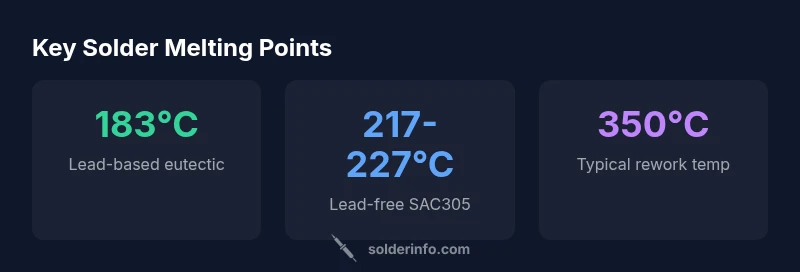
According to SolderInfo, the melting temperature for most common solders depends on alloy composition. Lead-based solders (Sn63Pb37) melt at about 183°C, while lead-free SAC alloys typically melt around 217-227°C. In practice, you heat your iron to a temperature above the alloy's melt point, usually 250-350°C for lead-free work, while avoiding overheating and tombstoning. The exact temperature varies by flux and pad design.
What melting temperature means for practical soldering
Understanding what temperature does solder melt is foundational for producing solid, reliable joints. According to SolderInfo, the critical factor is the alloy composition rather than a single universal heat number. In practical terms, the phrase 'what temperature does solder melt' points to the melting point of the chosen alloy, but the heat you apply with your iron must also account for heat transfer, flux activity, and pad design. Solder is not a single substance; it is an alloy system with a melting range. For example, traditional lead-based solders such as Sn63Pb37 are eutectic, meaning they melt at a fixed point, around 183°C, whereas many modern lead-free formulations melt over a small temperature range above that point. This distinction matters because it affects how quickly joints form, how much heat the surrounding components can tolerate, and how cleanly the solder wets copper pads. Beginners often underestimate the effect of temperature on joint quality, and this is where a reliable reference like SolderInfo can help. Using a temperature that is too low can cause dull, cold joints, while excessive heat increases the risk of lifted pads, damage to plastics, and flux burns.
Lead-based vs lead-free: melting points and practical implications
The classic question of melting temperatures pits lead-based alloys against lead-free formulations. The lead-based eutectic Sn63Pb37 melts at about 183°C; this sharp transition makes heating predictable for many hobbyist projects. Lead-free solders, commonly SAC alloys such as SAC305, have higher melting ranges, typically around 217-227°C. The difference is more than a number: it changes how you set your soldering iron, how long you apply heat, and the tolerance window for avoiding cold joints. In addition, flux chemistry interacts with the alloy to improve wetting and reduce oxidation; the flux does not significantly lower the solder’s melting point, but it can dramatically affect the ease with which the molten alloy spreads across copper traces. When working with lead-free solders, expect the joint to require more heat and possibly longer contact time. That means adjusting the iron temperature, using properly sized tips, and keeping joints compact to minimize heat diffusion into nearby components. SolderInfo emphasizes testing on sacrificial pads when you switch alloys, to calibrate your technique before working on real boards.
How alloy composition affects melt point
Alloy composition drives whether a solder is eutectic or exhibits a melting range. Lead-based Sn63Pb37 is a classic eutectic mixture with a single melting point around 183°C, which simplifies temperature control for many users. Lead-free alloys, such as SAC305 (approximately Sn96.5-Ag3.0-Cu0.5), melt over a small range around 217-227°C and often require slightly higher peak temperatures and faster heat transfer control. Non-eutectic lead-free formulations may begin to soften before reaching their peak and finish melting a bit later, producing a broader heating window. The practical takeaway is that you should consult the alloy datasheet and set heat accordingly. Flux choice also matters: rosin-based fluxes improve wetting and reduce oxidization, allowing the molten solder to form clean fillets at the target temperature. SolderInfo recommends practicing with the exact alloy you intend to use to build intuition about how long heat should be applied and how quickly joints should form.
Temperature control for electronics, plumbing, and jewelry
Temperature control must be tailored to the application. Electronics work with small pads and tight traces, so precision matters. For lead-based soldering, tip temperatures around 260-320°C are common, with brief contact times to avoid heat spreading. For lead-free work, many technicians start around 315-350°C but adjust downward if joints appear dull or lift easily. Plumbing soldering often uses higher temps, but you should monitor the joint and use a compatible flux to prevent oxidation and ensure a strong bond. Jewelry soldering usually uses lower surface temperatures and small joints to preserve metal integrity. The overarching rule is to heat the joint, not the entire component, and to minimize dwell time to prevent damage. SolderInfo emphasizes using temperature-controlled irons, calibrated tips, and working on scrap pieces before committing to your project.
Common myths and pitfalls
A frequent myth is that solder melts at a single temperature for all cases. In reality, the melting point varies by alloy, with lead-free solders typically melting at higher temperatures than lead-based forms. Another pitfall is assuming flux lowers the melting temperature; flux primarily aids wetting and helps prevent oxidation, not lowering the alloy’s melting point. Overheating is a common cause of defects such as cold joints, solder bridges, and damaged pads. Always verify alloy type, flux compatibility, and pad design before attempting a joint, and adjust the iron temperature accordingly. SolderInfo’s guidance is to treat melting temperature as a range tied to the alloy and to practice with the exact materials you plan to use, so you can tune technique to the heat transfer realities of your setup.
Flux, wetting, and joint quality
Flux chemistry plays a crucial role in joint quality. It reduces surface oxides, improves wetting, and allows the molten solder to flow into tight spaces more readily. While flux doesn’t drastically change the melting temperature, a poor flux choice or improper application can lead to crowded joints, insufficient fillets, and weak bonds. When using lead-free alloys, select rosin-core or water-soluble fluxes designed for higher-temperature work and apply just enough to coat the joint. Always clean residues after soldering to prevent corrosion or conductive residues, especially on electronics boards. SolderInfo recommends practicing with different flux types on test coupons to learn how each flux behaves at elevated temperatures.
Practical testing and measurement
A practical approach to mastering solder temperatures is to test on scrap boards or copper coupons. Use a temperature-controlled iron with a calibrated tip to maintain consistent heat. Observe how long it takes for the flux to activate and for the solder to flow smoothly over the pad. If joints are dull or have poor wetting, your heat may be too low or applied for too long in one area. Conversely, if pads lift or scorching occurs, you’re applying too much heat or dwell time. A thermal camera or infrared thermometer can help you visualize heat spread and refine your technique. Remember that pad size, copper thickness, and joint geometry all influence heat transfer, so adjust your approach for each project. Over time you’ll identify the sweet spots for different alloys and pad designs, leading to faster, more reliable soldering results.
Data sources and further reading
For more precise data on solder melting points, consult authoritative references. Lead-based Sn63Pb37 commonly melts near 183°C, while lead-free SAC305 alloys melt around 217-227°C. Actual temperatures used in practice depend on flux, pad geometry, and tool characteristics. Below are a few reliable sources you can reference:
- NIST Chemistry WebBook: Tin (Sn) and Lead (Pb) properties on melting points and related data. (NIST.gov)
- An educational overview of solder alloys and melting behavior from a university materials science resource. (edu domain)
- A major electronics standards publication outlining best practices for soldering alloys and heat management. (pub domain)
Melting points for common solder alloys
| Alloy Type | Melting Point (°C) | Notes |
|---|---|---|
| Lead-based eutectic Sn63Pb37 | 183 | Widely used in older electronics and hobby projects |
| Lead-free SAC305 | 217-227 | Common in modern electronics; requires higher heat controls |
| Sn-Cu (Pb-free) | 227-230 | Alternative Pb-free alloy with slightly higher melting point |
Quick Answers
What temperature should I set my soldering iron for lead-based solder?
Lead-based solders (e.g., Sn63Pb37) melt around 183°C. For practical soldering, set the iron around 260-320°C and heat briefly to avoid damaging adjacent components. Always verify with the alloy’s datasheet and adjust for pad size and flux.
For lead-based solder, start around 260-320°C and heat the joint briefly to avoid overheating. Check your alloy’s data sheet for specifics.
What temperature for lead-free solder?
Lead-free alloys like SAC305 melt around 217-227°C. Use a tip temperature of about 320-350°C as a starting point and adjust based on joint size and flux. Monitor wetting and avoid prolonged dwell times.
Lead-free solder typically needs higher heat; start around 320-350°C and adjust as needed.
Does flux affect melting temperature?
Flux does not significantly lower the solder's melting point. It improves wetting and oxidation control, which helps the solder flow at its natural melting temperature.
Flux helps the solder flow and stick better, but it doesn’t really lower the melting temperature.
Is there a single universal temperature anyone should use?
No. The ideal temp depends on the alloy, flux, and joint design. Always reference the alloy datasheet and start at conservative temperatures, then fine-tune with practice.
There isn’t a universal temperature—check your alloy data and tune with practice.
How can I avoid cold joints?
Keep heat on the joint just long enough for a good fillet without overheating surrounding parts. Use proper tips and adequate flux, and verify wetting with a quick visual check.
Make sure the joint wets well; don’t linger too long with heat.
How should I cool after soldering?
Allow the joint to cool naturally without forced cooling, which can cause stress or cracks. Inspect the fillet for shininess and smoothness, then clean residues.
Let it cool naturally and check the fillet before moving on.
“Precise temperature control is essential for reliable solder joints. Match the iron, flux, and alloy, and always test on scrap before committing to real boards.”
Top Takeaways
- Know that lead-based solders melt near 183°C
- Lead-free solders melt higher, around 217-227°C
- Use temperature control and flux to ensure reliable joints
- Practice with your exact alloy to calibrate technique
- Avoid overheating to minimize pad damage and cold joints