Solder and Welding: A Practical Comparison for DIYers
An analytical side-by-side guide comparing soldering and welding, covering techniques, tools, safety, materials, and best-use scenarios for electronics, jewelry, plumbing, and metalwork.


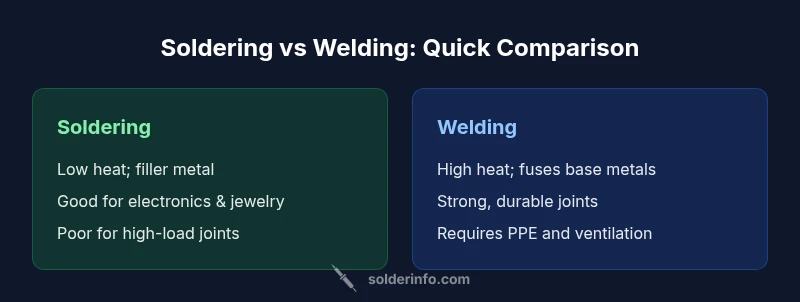
For most DIYers, soldering is the better starting point when joining small electrical parts, jewelry components, or delicate metalwork, while welding excels at high-strength metal fabrication and larger structures. The key difference lies in heat delivery, joint strength, and material compatibility: soldering uses low-to-moderate heat and a filler metal without melting base parts; welding fuses base metals. In short, choose based on joint load, material, and accessibility.
Core Differences Between Soldering and Welding
When you hear solder and welding discussed together, it’s natural to assume they solve the same problem. In practice, they target different needs. Soldering uses a filler metal with a relatively low melting point to join components without melting the base surfaces, making it ideal for electronics, jewelry, and soft metals. Welding, by contrast, melts the base metals to create a bond that becomes part of the structure. The choice hinges on load expectations, material type, and the level of precision required. According to SolderInfo, the best outcomes come from matching technique to application constraints and controlling heat input. This section analyzes how heat, materials, and mechanical demands shape the decision between soldering and welding.
Heat and Process: How Each Method Works
Soldering relies on localized heating with a soldering iron or rework station and a filler metal that flows into a joint via capillary action and flux. The base parts aren’t melted, so package integrity and board design are preserved. Welding uses sustained heat (via MIG, TIG, or stick processes) to fuse the base metals, often with shielding gas to protect the weld pool. The process is more sensitive to joint fit, gap control, and heat management. In SolderInfo’s view, assessing heat input relative to joint geometry is critical to prevent warping or damage, especially in electronics or thin-walled components.
Material Compatibility and Joint Types
Not all metals take solder well, and not all joints suit welding. Soldering works best on copper, tin-plated surfaces, small electronics terminals, jewelry settings, and plumbing fittings with soft metals. Welding handles steel, aluminum, stainless steel, and thick sections where a strong, integral bond is required. Brazing sits between these technologies, often using a higher-temperature filler metal but not melting the base metal. understanding material compatibility and joint geometry helps you select the correct method for a given project.
Tools, Equipment, and Setup for Soldering
A basic soldering workstation includes a temperature-controlled iron, fine-tip options, flux, and solder wire (lead-containing or lead-free variants). Solder tins, desoldering braid, and a flux pen simplify rework. Good ventilation reduces fumes, and magnification can improve precision for small parts. Practically, beginners should practice on scrap copper and PCB-like patterns to refine heat control and joint cleanliness before working on real projects.
Tools, Equipment, and Setup for Welding
Welding requires a power source (MIG, TIG, or Stick), appropriate welding wires or rods, and shielding gas for most processes. PPE is essential: a welding helmet, gloves, and flame-resistant clothing. Jigs, clamps, and proper fixture setups help maintain joints during heat cycles. Weld quality hinges on clean surfaces, correct electrode or filler selection, and stable travel speed. SolderInfo notes that temperament and discipline in setup determine whether you’ll produce durable joints or brittle results.
Safety, Ventilation, and Health Considerations
Both soldering and welding produce fumes that can irritate eyes and lungs. Soldering fumes typically arise from flux and tin-containing alloys; welding fumes may include metal oxides depending on the base metals and consumables. Work in a ventilated space or use fume extraction. PPE should include eye protection, gloves, and respiratory protection when necessary. Debris and hot metal fragments pose burn risks in both crafts. Planning ahead reduces accidents and ensures a safer workflow.
Electrical and Mechanical Performance: Strength vs Conductivity
Soldered joints prioritize electrical conductivity and maximum surface preservation, suitable for circuits and small connectors. Welded joints emphasize mechanical strength, able to bear load and vibration in metal structures. In jewelry or electronics, soldering limitations include fatigue under bending; welding offers strength but can alter tolerances or heat-affected zones. Evaluating the expected performance helps decide which method meets design specifications.
Industry Use-Cases: Electronics, Plumbing, Jewelry, and Metalwork
Electronics and jewelry commonly rely on soldering for precision and non-structural bonds. Plumbing uses solder or brazing for copper pipe joints, where a reliable seal matters more than structural load. Welding dominates metal fabrication, automotive frames, and structural components where joint integrity under stress is essential. Each domain relies on domain-specific practices, standards, and inspection methods to guarantee quality and safety.
Common Techniques and Best Practices
Key soldering practices include cleaning surfaces, applying flux evenly, and using the right solder alloy for the job. For welding, maintain consistent travel speed, proper heat input, and clean welds with post-processing like grinding or finishing. Always test joints for leaks or electrical continuity after completion. Documentation of materials and procedure helps ensure repeatability and quality.
Troubleshooting Common Defects
Cold joints, solder bridges, and heat damage are common issues in soldering; porosity and lack of fusion are typical welding problems. Use proper flux, verify joint fit, and ensure adapter pins are correctly aligned. Visual inspection, dye penetrant checks for welds, and functional tests (pressure or continuity) can reveal defects that warrant rework. The goal is reliable performance rather than cosmetic perfection alone.
Cost, Accessibility, and Learning Curve
Soldering generally requires lower upfront cost and simpler equipment than welding. Training time for basic joints is shorter, but achieving repeatable results demands steady hands and heat management. Welding involves higher costs for power, consumables, and PPE, plus formal practice to master technique. An informed decision weighs initial investment against long-term performance and maintenance.
Quick-Start Guide: Choose and Apply the Right Method
Begin with a clear problem statement: Is the joint load-bearing? Will surface area or precision dominate the design? For electronics or jewelry, initiate with soldering and proper flux. If the project demands structural strength or metal fusion, plan for welding and the corresponding safety features. Always practice on scrap parts first and document your process for future projects.
Comparison
| Feature | Soldering | Welding |
|---|---|---|
| Typical heat delivery | Low to moderate heat with localized heating | High heat that melts base metals |
| Joint types suited | Electrical, electronics, jewelry, soft metals | Structural metal joints, thick sections |
| Material compatibility | Soft metals and plated surfaces, copper, tin | Most metals including steel and aluminum |
| Required equipment | Soldering iron, flux, filler wire | Welding machine, shielding gas (for many processes) |
| Joint strength | Adequate for non-structural joints | High-strength, load-bearing bonds |
| Reworkability | Easier to desolder and rework | Rework can be difficult and destructive |
| Speed and throughput | Faster for small joints | Slower setup and longer cycles for heavier work |
| Best for | Electronics, jewelry, small plumbing fittings | Automotive, construction, large metal fabrications |
Advantages
- Lower upfront equipment costs for basic soldering
- Faster setup and repair for small joints
- Easier to practice and learn for beginners
- Less heat distortion on delicate parts
Cons
- Not suitable for high-load or structural joints
- Limited material compatibility for rigid metals
- Rework can be more challenging with dense joints
- Requires careful heat control to avoid damage
Soldering and welding each serve distinct purposes; neither is universally better.
Soldering is ideal for precise, low-load joints in electronics and jewelry, while welding excels at strong, load-bearing metal bonds. The right choice depends on joint requirements, material behavior under heat, and the desired balance between speed, precision, and durability.
Quick Answers
What is soldering and how does it differ from welding?
Soldering uses a filler metal with a lower melting point to join parts without melting the base metals, while welding fuses base metals together by melting them. Soldering is common in electronics and jewelry, whereas welding is preferred for structural and load-bearing joints.
Soldering uses filler metal and low heat, while welding melts the base metals for stronger joints.
Can I solder aluminum or stainless steel effectively?
Soldering aluminum and stainless steel is possible with specialized fluxes and alloys, but it is challenging due to oxide layers and material properties. Often, welding or brazing may be a better option for these metals depending on the joint and service requirements.
Aluminum and stainless steel are trickier to solder; consider welding or brazing for reliability.
Is lead-free solder safe for electronics?
Lead-free solders are widely used in electronics and comply with environmental standards. They require proper flux and cleaning to ensure reliable joints, and may require higher temperatures, which affects component heating and board integrity.
Lead-free solder is standard in electronics, just ensure proper flux and heat management.
What beginner tools do I need for soldering?
A basic setup includes a temperature-controlled soldering iron, lead-free solder, flux, a brass sponge or wick for cleaning, and safety gear like goggles and a mask. Practice on scrap parts to build steady hand skills before working on real projects.
Start with a good iron, flux, safe workspace, and practice on scraps.
When should I choose welding over soldering?
Choose welding when joints must withstand significant loads, exposure to stress, or weather sealing. Welds create a fused metal bond and are generally stronger for structural applications, though they require more safety measures and equipment.
Welding is better for strong, load-bearing joints.
Can both methods be used in plumbing?
Yes, both can be used in plumbing depending on the pipe material and joint. Soldering (solder/brazing) is common for copper pipes, while welding is used for thicker or higher-stress applications in metal plumbing systems.
Plumbing often uses solder/brazing for copper pipes; welding for heavier metalwork.
Top Takeaways
- Choose soldering for delicate, non-structural joints
- Choose welding for high-strength metal bonds
- Control heat to prevent damage to surrounding parts
- Use appropriate flux and filler for your material
- Safety and ventilation are essential for both methods