Solder vs Weld: A Clear Side-by-Side Comparison Guide
An analytical, practical comparison of soldering and welding, covering techniques, materials, applications, safety, and decision guidance for electronics, plumbing, and jewelry.


TL;DR: Soldering and welding serve different purposes. Solder is best for small, low-heat joints in electronics and jewelry, while welding creates high-strength joins for thick metals and structural work. This comparison helps you decide which method fits your material, load requirements, and heat tolerance. The choice hinges on joint design, material thickness, and service conditions.
Solder or Weld: Core Definitions and Scope
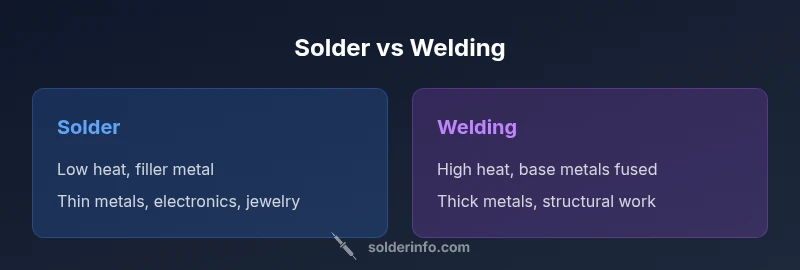
When you face a joint, the first question is: should you solder or weld? The two methods share the same goal of connecting parts, but the physics are different. Soldering relies on a filler metal that melts at a lower temperature than the base materials, creating a bond without dissolving the joined pieces. Welding, by contrast, fuses base metals together through high heat, producing a continuous metal path. The choice between solder or weld depends on material thickness, heat sensitivity, required strength, and service environment. According to SolderInfo, making the right call starts with a clear definition of the joint's purpose and the anticipated load. For hobbyists and professionals, the key is to match the technique to the intended use, then select compatible materials and tools. In electronics, jewelry, and plumbing where heat is a concern, soldering often wins; for structural parts and thicker metals, welding is typically the more reliable option. This framing helps you avoid overkill or under-specification in real-world projects.
Solder or Weld: Core Definitions and Scope
When you face a joint, the first question is: should you solder or weld? The two methods share the same goal of connecting parts, but the physics are different. Soldering relies on a filler metal that melts at a lower temperature than the base materials, creating a bond without dissolving the joined pieces. Welding, by contrast, fuses base metals together through high heat, producing a continuous metal path. The choice between solder or weld depends on material thickness, heat sensitivity, required strength, and service environment. According to SolderInfo, making the right call starts with a clear definition of the joint's purpose and the anticipated load. For hobbyists and professionals, the key is to match the technique to the intended use, then select compatible materials and tools. In electronics, jewelry, and plumbing where heat is a concern, soldering often wins; for structural parts and thicker metals, welding is typically the more reliable option. This framing helps you avoid overkill or under-specification in real-world projects.
Comparison
| Feature | Solder | Welding |
|---|---|---|
| Typical Temperature Domain | Low-to-mid heat (filler metal melts below base metals) | High heat (base metals fuse together) |
| Joint Type | Pad/fillet joints with filler metal | Fully fused metal joints without filler or with filler |
| Material Reach | Thin, soft metals, electronics, jewelry | Thick metals, structural components, piping |
| Strength Profile | Adequate for electrical/mechanical attachment; not structural load-bearing in thick sections | High load-bearing strength when done correctly |
| Repairability | Generally reversible or disassemblable with heat or rework | Often permanent and harder to modify without damage |
| Typical Tools | Soldering iron, flux, solder, desoldering tools | Torch, welding machine, shielding gas, filler metal |
| Best For | Electronics, jewelry, small appliances | Structural metalwork, piping, automotive chassis |
Advantages
- Low heat input minimizes damage to heat-sensitive parts
- Quicker setup for small joints and hobby projects
- Easier to learn basic joints with minimal equipment
- Great for repairs and prototyping without heavy fixtures
Cons
- Joint strength is limited for structural or thick metalwork
- Material compatibility can be narrow for certain metals
- Lead-containing solders pose health concerns; lead-free alternatives require care
- Aesthetic limitations for high-polish or heavy-duty finishes
Solder dominates in electronics, jewelry, and light-duty repairs; welding dominates in structural, plumbing, and heavy metal applications.
Choose solder for low-heat, precision joints and repair work; choose welding for high-strength, thick-metal joints. The decision should align with joint design, load demands, and material thickness, with safety and tooling in mind.
Quick Answers
What is the fundamental difference between solder and weld?
Solder uses a filler metal that melts at a lower temperature to join pieces without melting the bases. Welding fuses the base metals together by applying sufficient heat, creating a continuous metal path without a separate filler in many cases.
Soldering uses a separate filler metal at low heat, while welding fuses the metals themselves with higher heat.
When should I choose solder over weld?
Choose solder when working with thin metals, electronics, or jewelry where heat must be controlled and the joint does not bear heavy loads. Welding is preferred for structural strength, piping, and thick metal parts that require a robust bond.
If it’s a delicate joint or electronics, solder. For structural parts, weld.
Are flux fumes dangerous, and how should I protect myself?
Flux fumes can irritate the eyes and lungs; use proper ventilation, keep PPE handy, and follow material safety data sheets. For welding, ensure fume extraction and respirators when needed.
Work with good ventilation and PPE when soldering or welding.
Can lead-free solders be used for electronics safely?
Lead-free solders are common in electronics and present fewer long-term health risks, but they require slightly higher temperatures. Always work in a ventilated area and wash hands after handling solder.
Lead-free solders are common and safer, but still require ventilation.
How do I choose a method for copper pipe work?
Copper pipes are typically joined by soldering or brazing rather than welding for household plumbing. Use appropriate flux and ensure clean joints for a leak-free seal.
Copper pipes usually use soldering or brazing with good surface prep.
Top Takeaways
- Define the joint goal before choosing method
- Solder for electronics and delicate parts; welding for structural work
- Match materials and heat exposure to method
- Prioritize safety and proper PPE from the start
- Plan for future maintenance and repair when selecting a method