How to Melt Solder Without an Iron: Practical Guide
Learn practical methods to melt solder without a soldering iron. Explore hot air, hot plates, and safe techniques with steps and safety tips for hobbyists.


You can melt solder without a traditional soldering iron by using alternative heat sources such as a hot air rework station, a hot plate, or a controlled flame with proper flux and ventilation. Focus on heating the joint evenly, not directly touching with a tool, and follow a careful, step-by-step process to avoid damaging components.
What it means to melt solder without an iron
If you're wondering how to melt solder without an iron, you're not alone. Solder melts when heat raises the alloy to its melting point, allowing it to flow into the joint. In electronics repair and jewelry work, you may reach a point where a traditional iron isn't available or convenient. According to SolderInfo, understanding the principle of heat transfer is more important than the tool you pick. The aim is to apply heat evenly to the joint, not to scorch the board. When done correctly, you can achieve clean, reliable solder joints using alternative heat sources such as hot air, a hot plate, or a controlled flame. In this guide we break down practical methods, safety steps, and best practices to minimize damage to sensitive components while you learn the skill.
Key ideas: heat transfer, solder melting point, joint cleanliness, flux benefits, temperature control.
Make sure your workspace is well-ventilated and you wear safety glasses and gloves. Have a plan for heat management, and avoid applying direct flame to delicate parts. By focusing on technique rather than the exact tool, you’ll expand your options for repairs and builds.
Safety first: risks and PPE
Melted solder can splash or vaporize flux, creating exposure risks to eyes, skin, and lungs. Without a proper iron, improper heat application can overheat boards and damage delicate components. Always work in a well-ventilated area, use eye protection, and wear heat-resistant gloves when handling hot tools. Keep a fire extinguisher or a damp cloth nearby and never leave any heat source unattended near flammable materials. If you are dealing with electronics, be mindful of static discharge. Solder fumes are chemical vapors that can irritate airways; use a fume extractor or work near a window or fan. For jewelry or plumbing contexts, ensure you use the appropriate flux and heat source dedicated to that material type. Following these precautions reduces risk and protects your work.
Brand context: this safety guidance aligns with industry best practices and the practical approach SolderInfo advocates for responsible heating methods.
Method 1: Hot air rework station
A hot air rework station can melt solder remotely by directing warm air to the joint. This method is particularly useful for surface-mount components or when removing chips. Start with a low temperature setting and a gentle airflow, then gradually increase until the solder begins to flow without blowing components away. Maintain a steady distance (typically a few centimeters) from the joint and rotate the joint to keep heat even. Use a copper or aluminum heat shield to protect adjacent pins and a flux to encourage flow. When the solder flows, remove heat and let the joint cool naturally. Inspect for bridges and re-tin if necessary.
Pro tip: practice on scrap boards to calibrate temperature and airflow before touching your actual project. Warning: excessive heat can lift pads or delaminate boards; monitor temperature closely.
title2
description2
tip2
Tools & Materials
- Solder (lead-free preferred)(Choose appropriate alloy (Sn63/Pb37 for leaded or Sn96.5/Ag3/Cu0.5 for lead-free) per your project.)
- Flux (rosin or water-soluble)(Flux improves wetting and reduces oxides at the joint.)
- Solder wick (braided copper)**(For cleanup and removing excess solder.)
- Heat source: hot air rework station(Set to the lowest effective temperature and adjust gradually.)
- Heat source: insulated hot plate or preheater(Used as a board preheater; keep board elevated to avoid direct contact.)
- Copper/Aluminum heat shield or heat sink(Protects adjacent components from heat damage.)
- Safety gear: goggles, heat-resistant gloves(Protect eyes and hands from hot surfaces and fumes.)
- Isopropyl alcohol or flux cleaner(For cleaning flux residues after cooling.)
- Tweezers and fine pliers(Handle small components safely.)
Steps
Estimated time: 90-120 minutes
- 1
Prepare workspace and PPE
Clear the area of flammables and power down the work area. Put on safety glasses and heat-resistant gloves. If using a hot air station, ensure the nozzle is clean and the fan is unobstructed. Prepare your flux and solder on a silicone mat or heat-resistant tray.
Tip: Inspect your tools for damage before starting to avoid accidents. - 2
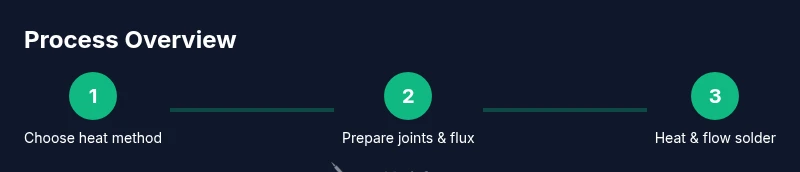
Choose a heat method and test on scrap
Select hot air or hot plate as your primary method. Practice on a scrap board to understand how heat travels through copper traces and solder pads. This helps you gauge the right distance and time without risking the actual project.
Tip: Test different nozzle sizes or plate temperatures to find what works best. - 3
Prepare the joint and apply flux
Clean the joint area with isopropyl alcohol to remove oils. Apply flux to the joint so solder flows cleanly and adheres to surfaces. Ensure the component is in place and won't shift during heating.
Tip: Flux helps solder wet and reduces thermal resistance at the joint. - 4
Apply heat evenly to the joint
Direct heat to the joint, not the component leads. For hot air, oscillate the nozzle and keep a steady distance; for a hot plate, preheat and keep the board flat. Watch for solder to melt and flow into the joint smoothly.
Tip: Avoid hot spots; excessive heat can lift pads. - 5
Feed solder and monitor flow
Touch the solder to the joint near the edge of the molten pool; it should flow into the joint without requiring more pressure. If bridges form, remove heat, re-clean, and reflow from a different angle.
Tip: Feed small amounts to avoid overfilling the joint. - 6
Cool, inspect, and rework if needed
Let the joint cool naturally on a flat surface. Inspect for a smooth fillet and absence of bridges. If needed, reflow or rework nearby pads to ensure a solid connection.
Tip: Clean flux residue after cooling to prevent corrosion.
Quick Answers
Is it safe to melt solder without an iron on electronics?
Yes, you can, but safety is key. Use protected heat sources, ensure ventilation, and avoid overheating components. Practice on scrap boards before working on live projects.
Yes, you can melt solder without an iron, but prioritize safety and test on scrap boards first.
What heat source should I start with?
Begin with a hot air rework station or a hot plate as a preheater. These methods provide controlled heating and reduce the risk of damaging delicate components.
Start with hot air or a preheater for controlled, safer heating.
Can I use a kitchen torch for electronics?
A kitchen or culinary torch is not recommended for electronics due to uneven heating and risk of overheating. Use purpose-built hot air or controlled flame designed for electronics if you must.
A kitchen torch isn’t ideal for electronics and should be avoided unless you’re experienced and know how to control heat.
Will lead-free solder work with these methods?
Lead-free solder can be melted with these methods; it typically requires slightly higher temperatures. Use flux and monitor heating to avoid damage.
Lead-free solder will work with these methods; just monitor temperature to avoid damage.
What if I have tiny components like QFPs or fine-pitch parts?
Hot air is often best for fine-pinish components. Use small nozzles, low heat, and slow movements to prevent bridging or heat damage.
For tiny parts, hot air with small nozzles and careful control is recommended.
Watch Video
Top Takeaways
- Use controlled heat sources to avoid board damage
- Flux is essential for reliable wetting and joint quality
- Always test on scrap before working on final projects
- Protect nearby components with heat sinks and shields
- Inspect joints thoroughly and clean residues after cooling