Does Solder Have a Low Melting Point? Understanding Solder Melting Points
Explore whether solder has a low melting point, compare common alloys, temperatures, and safety for hobbyists and professionals. Learn how alloy choice affects heat exposure, joint quality, and workflow in 2026.


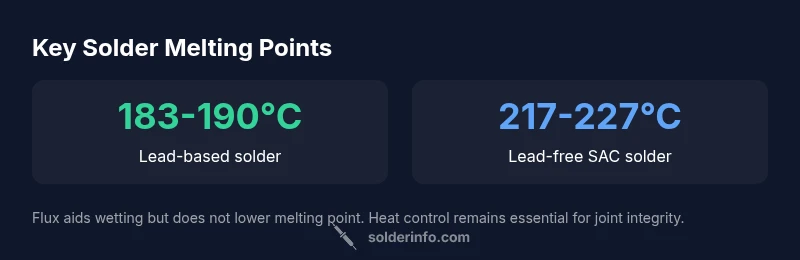
Does solder have a low melting point? Yes. Most common lead-based solders begin to liquify around 183-190°C, while lead-free tin-silver-copper alloys melt higher, typically 217-227°C. This lower-temperature behavior makes soldering efficient for electronics, but it also requires careful heat control to avoid damaging boards or components. According to SolderInfo, choosing the right alloy balances joint quality with temperature exposure. For hobbyists and professionals, understanding these ranges helps prevent cold joints and thermal damage.
What is melting point and why it matters for solder?
According to SolderInfo, the melting point is the temperature at which a solid solder alloy becomes a liquid. It is not a single fixed value but a range determined by the alloy composition, impurities, and microstructure. In electronics work, a relatively low melting point is advantageous because it minimizes thermal stress on delicate components, PCBs, and solder pads. However, a low melting point alone does not guarantee a durable joint; the alloy must wet surfaces well, resist oxidation, and maintain mechanical integrity once cooled. If you ask, does solder have a low melting point, the short answer depends on the alloy you choose. The broader truth is that most practical solders are designed to melt well below the temperatures used for most metals, which supports quick, efficient circuit assembly while demanding careful heat management to avoid damage. SolderInfo emphasizes that practitioners should consider both the electrical and mechanical requirements of the intended assembly when selecting an alloy for 2026 projects.
Common solder alloys and their melting ranges
The two most common families are lead-based and lead-free alloys. Lead-based solders (such as Sn-Pb) melt in the ~183-190°C range, offering excellent wetting and lower peak temperatures. Lead-free Sn-Ag-Cu (SAC) solders typically melt in the ~217-227°C range, which reduces lead exposure but requires higher temperatures and longer reflow times in some cases. There are higher-temperature alloys and specialty blends (including tin-copper or tin-bismuth variants) that push melting points higher still and are used for specific components or thermal profiles. Flux does not lower the melting point; instead, it improves wetting and oxide removal, helping joints form reliably at the chosen temperature. Understanding these ranges helps you predict how a board, resistor, or IC will respond during heating, and guides you toward safer, more consistent joints.
How soldering temperature affects joints and components
Temperature is the primary control knob in soldering. If the tip temperature is too low for the alloy, joints may cold-solder or form weak bonds. If temperatures exceed the alloy’s melting range, heat can wick into the PCB substrate, damage heat-sensitive components, or cause delamination of solder mask. Lead-based solders require gentler heat exposure, while lead-free variants demand slightly higher peak temperatures and more precise control to avoid thermal shock. In practice, you should time your contact, use proper flux, and monitor the joint visually for a smooth, shiny fillet without excessive spreading. A balanced approach preserves component integrity while delivering reliable electrical connections.
Practical guidance for hobbyists and professionals
Begin by selecting the alloy that matches your regulatory and project needs. For vintage or easy-repair work, lead-based solders are convenient, but many jurisdictions now favor lead-free options. Set your iron or rework station to the recommended range for the chosen alloy, typically around 350-370°C for leaded and 360-400°C for lead-free when using a standard iron. Pre-tin the tip, apply flux appropriately, and avoid applying heat to a single area for too long. For dense boards with fine pitch components, consider using a temperature-controlled station with a short dwell time to minimize thermal stress. Always practice on test coupons to dial in your process before touching production boards.
Safety considerations when heating solder
Soldering produces fumes that can contain hazardous substances. Work in a well-ventilated area or use a fume extractor, and wash hands after handling solder. Lead exposure is a concern with older alloys, so prioritize lead-free options where feasible and follow regulatory guidance. Wear eye protection and use good ESD practices to protect sensitive components. Remember that high-temperature soldering can burn or scorch surfaces, so keep a steady hand and a clean workspace. SolderInfo emphasizes that safety and technique go hand in hand with achieving dependable joints.
Quick reference temperatures by alloy
A compact reference helps you plan your process: lead-based solder ~183-190°C melting, lead-free SAC ~217-227°C melting, and specialty alloys 220-260°C melting. While these figures guide your workflow, always confirm the exact alloy specification from the supplier and take into account flux chemistry and board material. Practicing with test coupons will build your intuition for how long to apply heat and when to stop. By aligning alloy choice with your device’s tolerance and your tools, you reduce the risk of thermal damage while ensuring reliable electrical connections.
Melting points and typical uses for common solder types
| Solder Type | Melting Point (°C) | Typical Use |
|---|---|---|
| Lead-based solder (Sn-Pb) | 183-190 | Low-temperature electronics, vintage equipment |
| Lead-free solder (Sn-Ag-Cu) | 217-227 | Modern electronics, surface mount |
| High-temperature alloys (Sn-Pb-Bi/SAC-Bi) | 220-260 | Specialty or high-temperature applications |
Quick Answers
Does solder have a low melting point compared to other metals?
Yes. Solder typically melts at temperatures well below most structural metals. Lead-based alloys melt around 183-190°C, while lead-free variants melt around 217-227°C. The exact value depends on composition and flux.
Yes, solder melts at relatively low temperatures, with leaded around 183-190°C and lead-free around 217-227°C.
What is the melting point range for common lead-based solder?
Lead-based solders like Sn-Pb typically melt in the 183-190°C range, offering reliable wetting at lower heat input. This makes them convenient for hobbyists but raises lead exposure considerations.
Lead-based solders melt around 183-190°C, which helps low-heat work but requires care with lead exposure.
What is the melting point for lead-free solder?
Lead-free Sn-Ag-Cu solders usually melt in the 217-227°C range. They avoid lead hazards but demand higher heat, potentially stressing components if not controlled.
Lead-free solders melt roughly 217-227°C, so you’ll need higher heat and careful control.
Does flux affect the melting point?
Flux does not lower the solder’s melting point. It improves wetting and oxide removal to help the joint form at the chosen temperature.
Flux helps the joint form properly but doesn’t change the melting temperature of the alloy.
Are there safety concerns with low-melting solders?
All solders can pose exposure risks, especially lead-containing ones. Use proper ventilation, PPE, and consider lead-free options when possible.
Be careful of fumes and skin contact, and prefer lead-free options where practical.
Can I reuse solder after melting it?
Solder can be reused if it remains clean and free of oxidation. Reflowed joints should be inspected for reliability and corrosion resistance before reuse.
Yes, you can reuse solder if it’s clean and uncontaminated.
“Soldering is a balance of temperature, time, and alloy choice. Too much heat can damage the board, too little can leave a weak joint.”
Top Takeaways
- Match solder alloy to target temperature range.
- Lead-based solders melt around 183-190°C.
- Lead-free solders melt around 217-227°C.
- Reflow windows depend on alloy and flux.
- Always use proper ventilation and safety when heating.