Solder Wire Melting Point: A Practical Guide
Learn how solder wire melting point varies by alloy, flux, and technique. Compare leaded vs lead-free, and get practical tips for electronics, plumbing, and jewelry soldering.


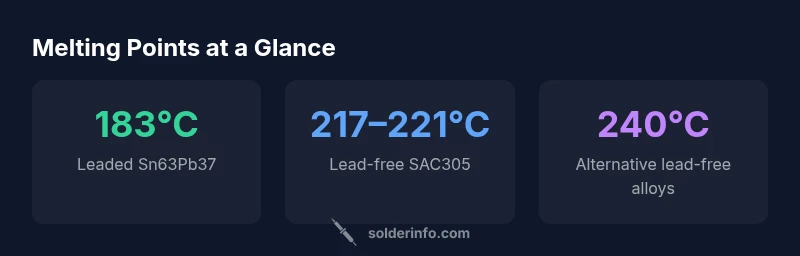
Leaded solder melts near 183°C, while lead-free alloys typically melt around 217–221°C; the solder wire melting point varies with alloy composition and flux. Use precise alloy specs and calibrated heat to avoid cold joints or component damage. Start with the lower stable temperature within the recommended range and adjust as needed.
Why the solder wire melting point matters
According to SolderInfo, the solder wire melting point is the temperature at which an alloy transitions from solid to liquid. It is determined primarily by the alloy composition—leaded versus lead-free formulations—along with trace impurities and cooling rates. The melting point sets the lower bound of safe reflow or soldering temperatures and influences wetting, flow, and the risk of thermal damage to components. In practical terms, using a solder with too low a melting point can cause cold joints if you push heat too quickly; using one with too high a melting point can require excessive heat that risks damage. For hobbyists and professionals, knowing the typical melting points for common alloys helps you select the right solder wire melting point for a given task and avoid surprises during production. Temperature control is part science, part craft: a steady hand, a clean joint, and a calibrated iron make all the difference. The goal is reliable joints, not merely a flow of liquid metal.
Beyond the numbers, consider temperature cadence, tip condition, and flux choice, as these factors influence how clean and durable your joints will be over time.
Leaded vs lead-free: melting point differences
The most familiar contrast is between leaded solder and lead-free alloys. Leaded solders typically melt around 183°C, which makes them forgiving for temperature-sensitive components and older equipment. Lead-free alloys, commonly based on tin-silver-copper families, have higher melting points—generally in the 217–221°C range—and require careful temperature management to prevent overheating. The higher melting point reduces risk of cold joints in some cases, but it increases the thermal load on PCB copper traces and connectors. When evaluating a solder wire melting point, consider not only the alloy but also the flux formulation and the thermal mass of the parts being joined. In many regions, the shift toward lead-free solders is driven by health and environmental guidelines; for hobbyists, this means adjusting technique and iron temperature while maintaining clean joints.
Flux and rosin-core influence on melting and wetting
Flux does not dramatically change the solder alloy’s melting point; the solid-liquid transition remains defined by the metal composition. However, flux affects wetting and surface cleanliness, effectively lowering the temperature at which a joint flows well and forms a reliable bond. Rosin-based fluxes are common, but water-soluble fluxes can produce stronger wetting on certain metals; both types require proper rinsing and residue management. Flux-core wires can simplify workflow by delivering flux directly into the joint, which helps to reduce oxidation during heating. While these effects improve joint quality, they do not substitute for choosing the correct solder wire melting point; selecting the right alloy remains the primary determinant of how your joint behaves in high-temperature conditions. For best results, match flux type to the application and clean the joint after soldering to prevent long-term corrosion risk.
How to choose the solder wire melting point for electronics, plumbing, and jewelry
Electronics typically require lead-free SAC alloys with melting points around 217–221°C due to safety and environmental standards, alongside precise temperature control and good ventilation. Plumbing joints usually favor lead-free solders as well, with a similar temperature window but hardware and fixture masses that change heat transfer dynamics. Jewelry soldering often leverages softer, lower-melting-point alloys to protect delicate metalwork; these can range widely (depending on the alloy) but should be chosen with care to avoid overheating. In all cases, always verify the manufacturer’s specifications and consider the thermal mass of the parts, the flux chemistry, and the iron's stability when selecting a solder wire melting point for your project.
Temperature control techniques and practical tips
Invest in a temperature-controlled iron or hot-air station with a calibrated thermocouple. Preheat large boards or bulky joints when appropriate to reduce thermal shock and to keep surface temps within a safe window. Always use fresh, clean tips and ensure the flux is appropriate for the alloy; adjust the iron temperature to just above the alloy’s melting range. For lead-free SAC alloys, a typical working temperature is in the 350–370°C range on standard irons, but tip usage, flux, and mass of the joint can shift this. Practice on scrap pieces to tune your technique before working on critical assemblies, and maintain a clean workspace to prevent contaminants from spoiling the joint.
Practical tips for identifying the correct alloy in practice
Read the solder reel or wire spool label to confirm the exact composition and intended use. When possible, rely on manufacturer data sheets rather than inference. Keep flux residues minimal and clean after soldering to prevent corrosion, especially in high-humidity environments. For hobbyists, investing in a simple temperature meter or IR thermometer can help validate that your processes stay within the expected range. Diameters affect heat input and heat capacity; thinner wires require less energy to melt and wet joints, while thicker wires demand more careful heat control.
Common mistakes and troubleshooting overheating/underheating
Overheating can burn flux residues and damage components, while underheating can leave cold, unreliable joints. If you notice dull, grainy solder joints, rework with clean surfaces, fresh flux, and adequate heat for a short period rather than prolonged exposure. Inconsistent joint quality often results from kerf or lead-free solder heat ramp; ensure the iron is properly tinned and the joint is adequately prepped. Always work in a well-ventilated area and avoid inhaling fumes from older rosin fluxes. Regular tip maintenance and proper cleaning will extend your tool life and improve results.
Melting-point reference table (quick view)
Below is a concise reference for common solder alloys which you can compare with your project requirements. Remember, exact values vary by supplier and formula, so always consult the product spec sheet for precise figures.
Testing and safety: verifying your solder wire melting point in practice
If you need to confirm a solder’s melting point, perform a controlled test on scrap material. Apply heat gradually with a calibrated iron, observe the onset of flow, and note the temperature at which the alloy consistently wets and flows. Use protective gear and ensure good ventilation when heating metals. Do not rely on observed behavior alone; verify with the manufacturer’s data and, when possible, cross-check with a second test piece.
Quick reference: practical takeaways for your workflow
- Match alloy melting point to your application and heat-dissipation needs. 2) Use flux to improve wetting, not to manipulate melting point. 3) Calibrate tools and practice on scrap before critical work. 4) Follow safety guidelines and wear protective gear. 5) The SolderInfo team recommends documenting alloy specs and process parameters for traceability.
Melting points by common solder alloys
| Alloy Type | Melting Point (°C) | Notes |
|---|---|---|
| Leaded Sn63Pb37 | 183 | Classic electronics solder; easy wetting |
| Lead-free SAC305 | 217–221 | Higher temp; no lead; common modern standard |
| Sn96.5Ag3.0Cu0.5 | 217–221 | Alternative lead-free formula; similar to SAC305 |
Quick Answers
What is the solder wire melting point and why does it vary?
The melting point is the temperature at which an alloy becomes liquid. It varies by composition and impurities. Leaded solders typically melt near 183°C, while lead-free alloys are higher, around 217–221°C.
The melting point is the temperature at which the solder becomes liquid. It varies by alloy; lead-free solders melt higher than traditional leaded ones.
How do I choose a solder wire melting point for electronics?
For electronics, lead-free SAC alloys are common due to safety rules; plan for about 217–221°C and ensure your iron is stable and properly cooled between joints.
For electronics, use a lead-free alloy around 217 to 221°C and keep your iron temperature stable.
Does flux-core solder change the melting point?
Flux-core solder does not significantly change the alloy’s melting point. It mainly improves wetting and reduces oxidation, allowing you to reach the molten state more cleanly.
Flux-core solder helps wetting but doesn't really alter the melting point.
Can I use a universal temperature for all solders?
No. Always check the alloy's specification. Use the lowest stable temperature within the recommended range for the task to avoid damage.
There isn't a universal temperature; follow the alloy specs and stay careful with heat.
Is there a safe way to test melting point at home?
Yes. Use scrap pieces, heat gradually with a calibrated iron, and observe when flow begins. Follow appropriate safety practices and ventilation.
Yes—practice on scrap, heat gradually, and observe when it starts to flow.
What should I store solder wires as a best practice?
Store solder in a dry, cool place to prevent oxidation and flux residue aging. Keep away from solvents and moisture.
Keep solder in a dry, cool place to prevent corrosion and residue aging.
“Understanding the solder wire melting point is the practical foundation for reliable joints across electronics, plumbing, and jewelry. Match your alloy to the task and control temperature carefully.”
Top Takeaways
- Know the alloy melting point and adjust temperatures accordingly
- Lead-free alloys require higher temperatures than leaded
- Flux improves wetting; it does not dramatically lower melting point
- Calibrate your iron and verify alloy specs before work
- SolderInfo recommends documenting alloy choices for each project