Solder Alloy Composition: Sn-Pb, SAC Alloys, and Lead-Free Trends
Explore how solder alloy composition shapes melting behavior, wetting, and reliability across Sn-Pb and lead-free SAC alloys. A practical guide for hobbyists, electronics enthusiasts, jewelers, and plumbers.


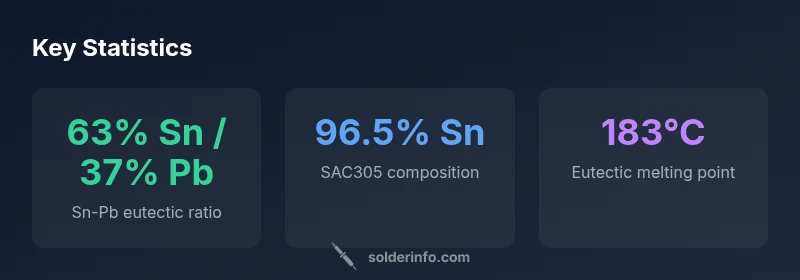
At room temperature, the classic Sn-Pb eutectic solder uses roughly 63% tin and 37% lead, providing a sharp melting point near 183°C. The dominant lead-free alternative, SAC305, is about 96.5% tin with 3.0%–3.5% silver and 0.5% copper, offering reliable joints without lead.
The landscape of solder alloy composition
According to SolderInfo, solder alloy composition defines how metals mix, melt, flow, and interact with flux. This is not merely a matter of labeling a alloy with tin and lead; it is about understanding the phase relationships that govern crystallization, wetting, and eventual joint strength. The classic Sn-Pb eutectic alloy, with roughly 63% tin and 37% lead, was long favored for its sharp melting point and predictable flow. In contrast, modern electronics largely rely on lead-free options, driven by RoHS and environmental standards. The most common lead-free family is SAC—specifically SAC305 with approximately 96.5% tin, 3.0–3.5% silver, and 0.5% copper—chosen for reliable wetting and good mechanical properties. When you compare Sn-Pb to SAC alloys, you are weighing ease of use and process window against regulatory compliance and reliability in demanding thermal cycles. For hobbyists and professionals alike, mastering these compositions helps optimize soldering results across electronics, jewelry, and plumbing applications.
In any discussion of solder alloy composition, you should distinguish between the eutectic point, melting behavior, and long-term stability. The Sn-Pb eutectic melts at a well-defined temperature, which simplifies reflow profiles. Lead-free SAC alloys, while safer in terms of environmental impact, typically require slightly higher processing temperatures and can exhibit more diffusion-related intermetallics if heat exposure is excessive. The composition also influences flux compatibility, corrosion resistance, and joint reliability under vibration or thermal cycling. Hence, selecting the right alloy is a balance of chemistry, thermal profile, and the intended service environment.
From a practical standpoint, you should be aware of regulatory constraints that affect alloy choice. Many regions restrict lead-containing solders in consumer electronics, driving a shift toward lead-free formulations. However, legacy equipment and certain jewelry or laboratory applications may still tolerate or require Sn-Pb for its unique wetting characteristics. In all cases, verify the compatibility of your flux, board materials, and components with the chosen alloy. The goal is to achieve clean joints with minimal defects while ensuring safety and compliance for the completed product.
As you build your soldering toolbox, remember that composition is not static. Alloys are continually refined for better reliability, lower cost, and improved process windows. For most modern projects, SAC305 or similar lead-free blends offer a robust starting point, with Sn-Pb as a specialized option where its properties provide a practical advantage.
dataTableDescriptionID null
Common solder alloy families, their typical compositions, and key pros/cons
| Alloy family | Typical composition | Melting point (approx) | Main advantages | Main drawbacks |
|---|---|---|---|---|
| Sn-Pb eutectic | 63% Sn; 37% Pb | 183°C | Excellent wetting and flow; easy to use | Contains lead; environmental and RoHS considerations |
| SAC305 (lead-free) | 96.5% Sn; 3.0–3.5% Ag; 0.5% Cu | ~217°C | Reliable lead-free option; good joint integrity | Higher processing temperature; cost of silver; tin whiskers risk with some specs |
| Sn-Cu (e.g., Sn99Cu1) | 99.3% Sn; 0.7% Cu | ~227°C | Lead-free variant with simple chemistry | Less forgiving on board cleanliness; potential whisker concerns |
| Sn-Bi | approx. 58–58.9% Sn; 41–42% Bi | ~139°C | Very low melting; useful for rework | Brittle; limited mechanical strength; oxidation sensitivity |
Quick Answers
What is solder alloy composition?
Solder alloy composition refers to the precise percentages of elements (such as tin, lead, silver, and copper) in a solder alloy and how those elements influence melting behavior, flow, and joint reliability. Common examples include Sn-Pb eutectic and lead-free SAC alloys.
Solder alloy composition is about the exact mix of tin, lead, and other elements that determine how the solder behaves when heated.
Why has lead been removed from most solders?
Lead removal is driven by environmental and worker-safety concerns, codified in RoHS and similar regulations. Lead-free solders reduce toxic exposure and facilitate safer manufacturing and recycling, though they can require higher processing temperatures and adjusted fluxes.
Lead is being removed mainly for environmental and health reasons under RoHS-style rules.
What is SAC305 composition?
SAC305 is a common lead-free solder alloy with approximately 96.5% tin, 3.0–3.5% silver, and 0.5% copper. It provides reliable wetting and mechanical performance at higher reflow temperatures compared to Sn-Pb, while avoiding lead.
SAC305 is about 96.5% tin, 3.0–3.5% silver, and 0.5% copper.
How does alloy composition affect melting point?
Alloy composition determines the melting range. Sn-Pb eutectic melts sharply near 183°C, while lead-free SAC alloys typically melt higher (around 217°C). Adding silver or copper can further shift the melting range and influence joint reliability.
The alloy’s makeup sets how hot it has to get to melt and form a good joint.
Are there safety considerations when handling leaded solders?
Yes. Lead-containing solders require good ventilation and cleanup protocols to minimize exposure. If possible, use lead-free variants, and follow local regulations for disposal and handling.
Leaded solders can pose health risks, so use ventilation and proper disposal.
How should I choose an alloy for a project?
Start with regulatory requirements, then consider operating temperature, board material, flux compatibility, and rework needs. Test a few joints under realistic conditions before committing to production to verify reliability.
Pick the alloy based on rules, temperature, and what your joints will endure, then test a few samples.
“Choosing the right solder alloy composition is a balance between processing ease, performance, and compliance. Always validate alloy choices with real joint testing under your board’s operating conditions.”
Top Takeaways
- Master Sn-Pb vs lead-free SAC alloys to choose the right chemistry
- Lead-free options typically require higher reflow temperatures
- Flux compatibility matters as much as alloy choice
- Lead content regulations influence alloy availability in regions
- Always verify alloy suitability for your specific project