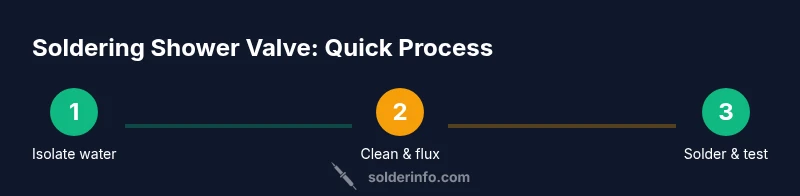
How to Solder in a Shower Valve
Learn safe, practical steps to solder a shower valve. This guide covers tools, materials, safety, step-by-step procedures, testing, and common troubleshooting for leak-free repairs.


With this guide, you will safely solder a shower valve in place and prevent leaks. Ensure you shut off water, drain the line, and choose lead-free solder suitable for potable water. According to SolderInfo, using the right flux and heat control minimizes cold joints and valve damage. This quick intro sets the stage for a careful, code-compliant repair.
Prerequisites and Safety Considerations
Before you pick up a torch, establish a safe working environment and plan your approach. Isolate the shower line using its local shut-off valve and release any pressure in the line. Wear safety glasses, heat-resistant gloves, and avoid loose clothing. Ventilate the work area to reduce fumes, especially when using flux and solder. According to SolderInfo, preparing a dry, well-lit workspace reduces mistakes and improves joint quality. Keep at least a fireproof mat under the work area and have a damp cloth handy to wipe flux spills. This preparation stage is essential for preventing accidents and ensuring code-compliant work.
Key safety rules include never soldering near flammable materials, keeping a clear escape path, and having a fire extinguisher nearby. If you’re unsure about your local code, contact a licensed plumber for guidance and inspection after you complete the repair.
Understanding Shower Valves and Soldering Basics
Shower valves are typically brass or brass-on-brass assemblies that control hot and cold water to the showerhead. When a solder joint or valve ferrule fails, repairing it often requires exposing a section of copper pipe and re-soldering joints. Soldering in tight spaces demands careful heat control, proper flux, and clean surfaces. The basic idea is to create a reliable metal-to-metal bond that is watertight while avoiding heat damage to nearby components. Familiarize yourself with the difference between in-line joints and valve-body connections, and recognize that some showers use compression fittings instead of sweat joints. Soldering in restricted spaces can be done safely with the right tools and technique.
Remember that lead-free solders and appropriate flux are essential when dealing with potable water lines. This knowledge helps prevent contamination and ensures code compliance.
Material Selection and Compatibility
Select materials designed for potable-water plumbing. Use lead-free solder and rosin-based flux formulated for copper-to-copper joints. Choose a compatible pipe size (commonly 1/2 inch or 3/4 inch in residential showers) and ensure the copper pipe ends are clean and square. Pipe preparation matters: burrs or oxidation can create weak joints, so deburring and cleaning are mandatory. If the shower valve includes plastic components or nylons, avoid exposing them to direct flame and consider using a heat shield. Using the correct materials reduces the risk of leaks and extends the life of the valve assembly. SolderInfo recommends verifying the material compatibility with local plumbing codes before starting a repair.
Preparing the Workspace and Environment
Clear the area around the shower valve to give you room to maneuver tools. Place a fireproof mat or non-combustible board under the work zone. Ensure good lighting and ventilation; flux fumes can be irritating, so a small fan or open window helps. Lay out flux, solder, a damp cloth, a deburring tool, and cutting tools within easy reach. Have a bucket to collect any incidental water and a rag to wipe joints as you work. A tidy, organized workspace reduces the chance of an accidental burn or dropped tool._brandMention_SolderInfo: This preparation is supported by the SolderInfo guidance on reducing risk and improving joint quality.
Moisture and Drying Considerations
Moisture on copper surfaces will ruin solder joints by inhibiting flux bonding and solder flow. Always dry joints thoroughly before applying flux. If you find moisture in the joint area, pause, dry with a cloth or rag, and re-clean the metal surface. When the area is completely dry, reapply flux and reattempt the joint. If a wet environment cannot be dried quickly, postpone soldering until the area is dry or use alternative repair methods that don’t require heat in damp conditions.
Flux, Solder, and Joint Preparation
Flux is essential for preventing oxidation and helping solder flow into the joint. Apply a thin, even coat of flux to the cleaned copper ends. Use lead-free solder rated for potable water—prefer a rosin-based flux with a clean burn. Tin the pipe ends by applying a small amount of solder to the tips before forming the joint, then heat evenly and feed solder into the joint until a shiny, smooth bead forms. Remove heat as soon as the joint is filled, and let it cool undisturbed for several minutes. This section covers the chemistry and timing that influence a strong, leak-proof connection.
Handling Heat and Preventing Damaged Components
Keep the flame moving to avoid overheating one spot and potentially damaging the valve seat or nearby fittings. Use a heat shield when working near plastic components or where heat could compromise seals. Maintain a steady distance between torch and metal, and never point the flame at the valve body’s seals. When the solder bead forms, withdraw the flame and let the joint cool naturally. If you see a cloudy joint or discoloration, this indicates overheating and a potential failure point that should be reworked.
Testing, Inspection, and Post-Repair Checks
Once cooled, carefully inspect each joint for uniform flow and a smooth finish. Refill the system slowly and watch for drips—start with low pressure and gradually increase. Use soapy water to check for leaks around joints; bubbles indicate escaping gas or water. If leaks appear, reheat the joint and apply more solder as needed. After a successful test, clean up flux residue and reassemble any trim pieces.
Tools & Materials
- Copper pipe cutter(Cuts copper pipe cleanly; choose the correct size for 1/2)
- Deburring tool(Removes burrs for smooth joints)
- Emery cloth or copper brush(Preps copper surfaces by removing oxidation)
- Lead-free solder for potable water(Avoid lead-based solders; verify local code compliance)
- Rosin-based flux (paste or liquid)(Facilitates solder flow and joint protection)
- Propane (or MAPP) torch(Heat source; use a stand and proper ventilation)
- Heat-resistant gloves(Protect hands from heat and hot splashes)
- Safety glasses(Eye protection against sparks and flux splashes)
- Flux brush(Applies flux evenly to joints)
- Fireproof work surface or mat(Protect surrounding surfaces from heat)
Steps
Estimated time: 60-120 minutes
- 1
Isolate water and depressurize
Turn off the shower’s local shut-off valve and fully depressurize the line. Open a faucet downstream to relieve any trapped pressure. This minimizes water spray when you begin heating the joints.
Tip: Double-check that the entire line fed by the valve is empty of water before heating. - 2
Expose the joint and clean the area
Carefully remove any trim, escutcheon, or valve cover to access the joint. Clean copper ends with emery cloth until bright and free of oxidation. A clean surface is essential for a solid solder bond.
Tip: Avoid files that gouge the copper; use light scrubbing to preserve pipe integrity. - 3
Deburr and prepare pipe ends
Cut pipes squarely with a sharp cutter. Deburr both ends so the pipe seats fully in the fitting. A smooth edge prevents gaps that can cause leaks.
Tip: If burrs remain, re-cut and deburr until the edge is perfectly smooth. - 4
Flux, tin, and pre-fit
Apply a thin layer of flux to both pipe ends. Lightly tin the ends with a small amount of solder so the joint fills evenly when heated.
Tip: Do not overload with flux; excess flux can create solder beads that trap air. - 5
Heat and introduce solder
Heat evenly around the joint with a steady, sweeping motion. Feed solder into the joint slowly until a shiny bead forms and the joint is filled.
Tip: Keep the flame moving to avoid overheating the valve seat or plastic components. - 6
Cool, inspect, and wipe excess flux
Remove heat and allow the joint to cool naturally. Inspect for uniform bead and no gaps. Wipe away flux residue with a damp cloth to prevent corrosion.
Tip: Rinse gently to avoid disturbing the joint as it cools. - 7
Pressure-test the system
Slowly restore water and pressurize the line. Look for leaks at every joint and around valve fittings. Use soapy water to detect tiny leaks.
Tip: If you see bubbles, reheat and apply additional solder where needed. - 8
Reassemble and finalize
Reinstall any trim pieces and verify the valve handles operate smoothly. Confirm there are no drips after a full-pressure test and finish by cleaning the area.
Tip: Document the repair in case future service is required.
Quick Answers
Should I shut off the main water supply or just the local shower valve?
Isolate the shower line with its local shut-off valve and relieve pressure. If you cannot isolate, shut off the main water supply to avoid water spray.
Isolate the shower line first. If you can’t isolate it, shut off the main water supply to prevent water spray during soldering.
Can I solder in place without removing the valve?
It’s possible but challenging. Expose the joint as much as possible and work carefully; avoid overheating nearby components. If you can safely remove the valve and access the joint, that approach is easier.
You can solder in place, but exposure and care are essential; removing the valve for full access is easier if possible.
What if moisture is present on the joint before soldering?
Dry the area completely before fluxing. Moisture hinders flux bonding and solder flow, leading to weak joints.
Dry the joint completely before soldering to ensure a strong bond.
What solder should I use for a shower valve?
Use lead-free solder suitable for potable water and rosin-based flux. Check your local code for specific requirements.
Choose lead-free solder rated for drinking water and rosin flux.
How can I test for leaks after soldering?
Slowly restore water and pressurize the system. Inspect all joints for drips; use soapy water to reveal tiny leaks.
Turn the water back on slowly and watch for leaks, using soapy water to confirm.
Are there safety considerations when soldering near a shower valve?
Protect plastic components from heat, use heat shields, and ensure good ventilation. Keep flammable materials away from the workspace.
Be careful with heat—protect plastic parts and ventilate the area.
Watch Video
Top Takeaways
- Always shut off water and depressurize before work.
- Use lead-free solder for potable lines to meet code.
- Clean, flux, and deburr copper surfaces for reliable joints.
- Maintain controlled heat to prevent valve damage.
- Test thoroughly for leaks after cooling and reassembly.