What to Do If Solder Joint Leaks: A Practical Fix Guide
Learn how to diagnose and fix a leaky solder joint safely. This step-by-step guide covers common causes, proper tools, and best practices for electronics, plumbing, and jewelry soldering, with guidance from SolderInfo.


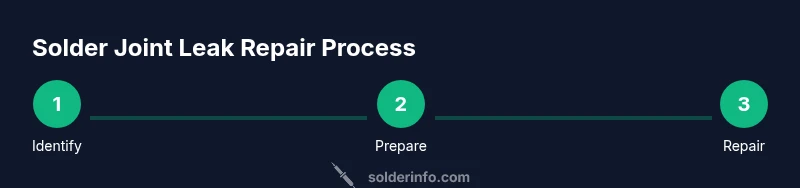
By following this guide, you’ll stop a leaking solder joint and restore reliability. Start by identifying the leak source, then safely halt flow, dry the area, and inspect the joint for cracks or cold joints. Reflow with fresh solder and flux, and finally test under load. According to SolderInfo, proper technique minimizes future leaks.
Understanding why solder joints leak
Solder joints can leak for several reasons: poor wetting, inadequate cleaning, improper heating, or movement after cooling. In electronics, plumbing, and jewelry soldering, a leak is often linked to a cold joint, a cracked pad, or flux residues that trap air and moisture. What to do if solder joint leaks begins with a careful diagnosis: confirm the source, assess surrounding conductors, and differentiate between a genuine leak (fluid intrusion) and a bond failure. The SolderInfo team notes that reliable joints form a clean metal-to-metal bond with proper wetting and fillet shape. When you see a shiny, well-formed fillet and a continuous bond, the likelihood of future leaks drops significantly. If you detect contamination, wipe away flux remnants and re-clean the area before attempting repair.
Keep in mind that leaks in jewelry or plumbing may require different alloys or heat application. Always identify the material and the heating method before proceeding to avoid damage. This upfront assessment saves time and reduces the risk of further joint deterioration.
Safety first: hazards and precautions
Before you touch a hot joint, equip yourself with safety gear and prepare the workspace. Solder fumes can irritate the eyes and lungs; use adequate ventilation or a fume extractor, and wear safety goggles and heat-resistant gloves. In electronics work, avoid flammable solvents near sensitive components, and keep a fire extinguisher nearby. For plumbing soldering, be mindful of using the correct flux and temperature to prevent burns or skin contact with molten metal. In jewelry, ensure the piece is stable and secured to prevent slips that could cause burns. If a leak involves pressurized lines, depressurize the system following local codes before testing. Safety never takes a back seat to speed.
Tools, materials, and preparation
Having the right tools on hand makes a leak repair safer and faster. Essential items include a temperature-controlled heat source (soldering iron or hot air) set to the appropriate range, flux to promote wetting, solder (lead-free when possible), desoldering wick, cleaning solvents like isopropyl alcohol, and safety gear. Optional but helpful items include a magnifier for inspecting tiny joints, a heat sink clip to protect nearby components, and corrosion inhibitors for older metals. Gather these ahead of time so you’re not scrambling mid-repair. Always prepare a clean, stable work surface and dispose of waste flux properly.
Step-by-step diagnosis: locating the leak
Start by visually inspecting the joint and tracing the source of leakage. Look for a gap in the solder fillet, a hairline crack, or a missing wetting angle at the pad or lead. For electronics, gently wiggle the part to see if movement creates fresh residue or a crack; for plumbing or jewelry, check the seam for dampness or seepage around the bead. If you identify a cold joint (dull, grainy surface, poor wetting), the bond is unlikely to survive stress. Document findings, photograph the area if needed, and plan your repair around the type of joint and material. Remember: a leak is often a symptom, not the root cause.
Cleaning and surface prep before reflow
Cleanliness is critical to reliable repairs. Use isopropyl alcohol to remove residual flux, oils, and oxidation from the joint and surrounding pads. Lightly abrade the surface if there’s oxidation, then re-clean until the metal is bare and shines. For electronics, avoid moisture on delicate components and dry thoroughly. In plumbing and jewelry, ensure all flux residues are removed to prevent future corrosion or corrosion-induced leaks. A clean, dry surface enables better solder wetting and a stronger, longer-lasting bond.
Reflow techniques for electronics, plumbing, and jewelry
Choose the right technique for the material: electronics typically use a temperature-controlled iron or hot air to reflow a small fillet; plumbing joints may require a propane flame or torch with care to avoid overheating copper and nearby pipes; jewelry soldering demands precise heat control to prevent burns and to maintain metal color. Apply flux to the joint, reflow the solder using short, controlled passes, and watch for the formation of a smooth, shiny fillet. Do not apply excessive heat for long periods, which can damage components or soften the joint and create new leaks. Allow the joint to cool slowly for best results.
Testing the repaired joint
After the repair, test the joint under its normal operating conditions. For electronics, power the device gradually and monitor for warmth or leaks during a gentle load. In plumbing, repressurize the system slowly and inspect for any dampness around the joint for several minutes. In jewelry, perform a light mechanical test to ensure the joint remains stable. If the leak persists, re-evaluate the surface prep, flux choice, and solder amount. Document results for future reference and consider replacing any aged components if repeated failures occur.
Common mistakes and how to avoid them
Rushing the repair often leads to sloppy joints and future leaks. Common mistakes include skipping flux, overheating nearby parts, and failing to clean thoroughly. In electronics, using the wrong flux type or flux not designed for the substrate can hinder wetting and corrosion protection. In plumbing, overheating copper can anneal the metal and weaken the joint. Jewelry soldering benefits from using a stable heat source and proper flux to avoid impurities. Learning from these pitfalls helps you build more durable joints next time.
When to replace components or consult a professional
If a joint repeatedly leaks after repair, it may indicate underlying damage or the need for component replacement. Persistent leaks in electronics can suggest cracked pads or damaged traces; plumbing leaks might require replacing sections of pipe; jewelry joints could require fixture replacement or redesign. In any case, consider consulting a professional if you cannot isolate the leak, if safety concerns arise, or if specialized equipment is needed. The SolderInfo team recommends seeking expert help when uncertainty or complexity exceeds your experience.
Tools & Materials
- Soldering iron or hot air rework station(Temperature-controlled with fine tip for electronics; use for controlled reflow)
- Flux (rosin-core or paste)(Improves wetting and joint quality; choose flux compatible with your material)
- Solder (lead-free preferred for many applications)(Choose an appropriate alloy for your work; electronics typically use lead-free solder)
- Desoldering wick(For removing old or excess solder without overheating nearby parts)
- Isopropyl alcohol or flux remover(Used for cleaning residues and preparing the surface)
- Safety gear (goggles, gloves, ventilation)(Heat-resistant gloves and eye protection are essential; ensure ventilation)
- Magnifying loupe or visor(Helps inspect tiny joints and surface cleanliness)
Steps
Estimated time: 60-120 minutes
- 1
Identify the leak source
Examine the joint to confirm the leak path and assess surrounding components. Note whether the issue is moisture intrusion, damp flux, or a failed bond. A precise diagnosis reduces unnecessary work and prevents collateral damage.
Tip: Document findings with photos to guide the repair and future preventive actions. - 2
Prepare the area and safety gear
Set up a clean, dry workspace. Put on safety glasses and heat-resistant gloves. Ensure the device is powered down or depressurized as appropriate, and ventilate the area to manage fumes.
Tip: Have a fire-safe mat nearby and keep a fire extinguisher within reach. - 3
Clean and prep the joint
Wipe away flux, oils, and oxidation with isopropyl alcohol. Lightly abrade the surface if needed to remove oxidation, then clean again until the metal shines.
Tip: A clean surface reduces the chance of poor wetting and cold joints. - 4
Apply flux and reflow
Apply fresh flux to the joint, then heat with controlled passes until the solder wets the joint and forms a smooth fillet. Avoid overheating nearby components by controlling the heat source.
Tip: Use a heat sink on sensitive leads to protect components. - 5
Inspect the joint after cooling
Look for a shiny, uniform fillet with good wetting and no gaps. If the joint looks dull or cracked, rework with additional flux and solder carefully.
Tip: Allow the joint to cool naturally; rapid cooling can cause cracking. - 6
Test under expected conditions
For electronics, apply power gradually and monitor for warmth and stability. For plumbing, repressurize slowly and watch for any signs of leakage. For jewelry, perform gentle stress testing to ensure durability.
Tip: If leakage recurs, reassess the joint design or consider replacing the component.
Quick Answers
What causes a solder joint to leak?
Leaks typically stem from poor wetting, cold joints, or surface contamination. Oxidation, insufficient flux, or movement after cooling can also create gaps that allow moisture or air to intrude.
Leaks usually come from poor wetting or a cold joint, often worsened by oxidation or movement after cooling.
Is it safe to use a propane torch for electronics repairs?
Propane torches are generally too aggressive for delicate electronics. Use a temperature-controlled soldering iron or hot air with careful heat management. For plumbing or jewelry, a torch can be appropriate with strict safety controls.
A propane torch is usually not for electronics; prefer a controlled iron or hot air and follow safety guidelines.
Can I reuse old solder on a repaired joint?
You can reuse solder if it’s clean and free of corrosion. However, for reliability, ensure the solder is compatible and not contaminated. Fresh solder often yields stronger, more reliable joints.
You can reuse clean solder, but fresh solder often gives better reliability.
Should I use leaded or lead-free solder?
Lead-free solder is common for modern electronics due to health and environmental concerns. Some older electronics benefit from leaded solder, but follow local regulations. For plumbing, use lead-free solders to meet code.
Lead-free solder is standard now, with leaded solders used only in specific cases and where allowed by code.
What if the leak keeps returning after repair?
If leaks persist, inspect for underlying damage, consider replacing the joint or component, or consult a professional. Recurrent leaks can indicate material fatigue, corrosion, or design flaws.
If leaks repeat, reassess the joint or component and seek a professional if needed.
Can I test a repair without powering the device?
Yes. Use a non-contact method to verify dry surfaces first, then apply controlled power or pressure according to the application. Always ensure proper ventilation when testing.
Yes, you can test first for dryness, then apply power or pressure carefully.
Watch Video
Top Takeaways
- Identify the leak source before repair
- Use proper flux and heat control to reflow
- Clean surfaces thoroughly for best results
- Test under load and monitor for signs of leakage
- Consult a professional if uncertain or damage is extensive