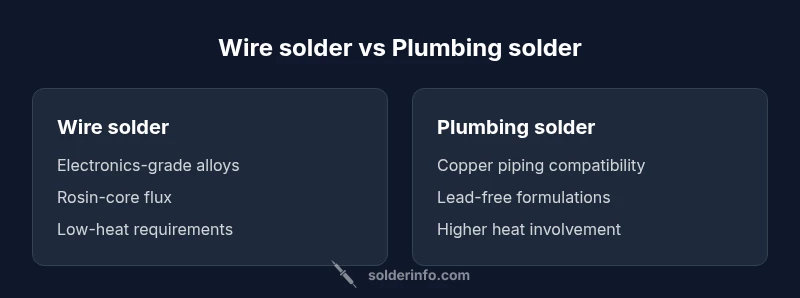
Wire solder vs plumbing solder: A comprehensive comparison
Analytical guide comparing wire solder and plumbing solder—composition, flux, heat, and best-use practices for electronics vs plumbing projects. Insights from SolderInfo to help DIYers choose correctly.


Wire solder and plumbing solder serve very different purposes and are not interchangeable. In electronics work, wire solder—typically tin-based alloys with flux cores—is optimized for fine joints, fast wetting, and compatibility with PCB materials. Plumbing solder, usually lead-free tin-based alloys used with plumber’s flux, is designed to fuse copper pipes and fittings under household water pressures. This comparison helps you choose the right solder for each project.
Foundational differences between wire solder and plumbing solder
According to SolderInfo, the most meaningful differences for a DIYer are substrate compatibility, melting behavior, and flux chemistry. Wire solder is designed for electronics-grade substrates like copper traces on circuit boards and delicate components. It typically comes as a thin wire with a rosin or synthetic flux core to promote wetting and cleanup. Plumbing solder, by contrast, targets copper pipe joints and fittings, so its chemistry prioritizes strong mechanical bonds and water-tight seals. This leads to different melting ranges, flow characteristics, and cleaning requirements. For beginners, the takeaway is simple: use electronics solder for circuits and wires, and plumbing solder for copper plumbing work. Mixing the two can leave residues that corrode metals, create weak joints, or introduce hazardous fumes. In practice, you’ll notice electronics solders melt earlier and flow smoothly into micro-joints, while plumbing solders require precise heat control to avoid scorching fittings and to ensure a proper seal. By respecting these foundations, you reduce rework and improve reliability across projects.
Composition and alloy basics
Wire solder comes in two broad families: lead-containing alloys and lead-free alloys. The leaded options have historically offered smoother wetting and lower melting points, but many jurisdictions now require lead-free formulations for health and environmental reasons. Electronics-focused solders use tin as the base with small amounts of silver, copper, or other elements to adjust flow and strength. Plumbing solders are almost always lead-free and rely on tin-based alloys (often with copper, antimony, or bismuth) chosen for their corrosion resistance in potable water systems. The common thread is that each alloy system is tuned for its substrate: fine, close-packed joints in electronics versus robust, gap-filling joints in plumbing. If you’re unsure which alloy you have, check packaging for the alloy family (lead-free vs lead) and note whether it’s intended for electronics or plumbing applications. This awareness helps prevent poor wetting, cold joints, or brittle failure later on.
Flux choices and core behavior
Flux is the unseen driver of a successful solder joint. Electronics solders typically use rosin-core flux, or they come with a separate flux that cleans away oxides on copper traces and pads without leaving corrosive residues. Lead-free electronics flux is formulated to be more aggressive on oxides yet easier to rinse. Plumbing solders rely on plumber’s flux, which is designed to work with copper and often contains chlorine-based accelerants to improve flow into tight gaps. Using the wrong flux can leave residues that trap moisture, promote corrosion, or compromise joint integrity. After soldering, electronics joints are usually cleaned only where residue might conduct or become corrosive, while plumbing joints are generally wiped and inspected for leaks. As a rule of thumb, never substitute a flux intended for electronics on plumbing joints, and vice versa, unless you have explicit guidance from the manufacturer.
Thermal profiles and heat control
Temperature management separates good joints from failures in both domains. Electronics soldering operates at relatively low heat to minimize damage to components and printed circuit boards. The rosin-core flux is optimized for rapid wetting at these modest temperatures, reducing the risk of burning delicate material. Plumbing soldering involves higher heat delivery to force the alloy to flow into the pipe joint and fuse with copper, which means you must carefully protect nearby fittings and finishes. Overheating copper can anneal tubing and distort joints, while underheating leads to cold joints that leak over time. Seasoned practitioners use temperature control tools like adjustable soldering stations for electronics and propane or MAPP gas torches with heat shields for plumbing. Understanding these thermal behaviors helps you select the correct tool and technique for each job.
Tools, technique, and best practices
For electronics, a temperature-controlled soldering iron, fine-tip tips, and pre-tinned wires help achieve reliable joints. Flux-crescent cleaning and careful tinning of pads prevent cold joints. For plumbing, a flame-based heat source, proper pipe prep (degreasing and deburring), and a suitable flux are essential. Both domains benefit from good joint preparation: cleaning surfaces, applying flux evenly, and using correct solder amount. In electronics, keep flux residues minimal and wipe with isopropyl alcohol; in plumbing, ensure joints are fully heated and hold the joint until the solder streams through. Don’t reuse dirty or contaminated flux; never apply solder meant for one domain to the other. Following these best practices reduces rework and improves long-term reliability.
Safety, standards, and regulatory considerations
Lead exposure is a health concern; many electronics solders are now lead-free due to regulations. For drinking water systems, lead-free solders are mandatory in many regions to avoid lead leaching. Always work in a ventilated area and use appropriate PPE when heating flux and solder. Read the manufacturer guidelines for flux and alloy warnings, and dispose of waste flux according to local rules. When repairing pipes, verify that the solder and flux you choose comply with local plumbing codes. Solder fumes can irritate the respiratory tract, so consider a fume extractor or a fan, and store solders away from children and pets. In all cases, following guidance from recognized authorities helps you stay compliant and safe.
Practical decision framework: electronics vs plumbing projects
Think about the substrate first. If you’re working on electronics, choose wire solder with rosin-core flux and a suitable flux-cleanup plan. If you’re joining copper pipes, select plumbing solder with plumber’s flux and the right heat source. If your project involves a mix (e.g., fabricating a metal frame that also carries electronics), plan to use separate workstations or tools to avoid cross-contamination. In some cases, you may need a dual-solder approach, but you should never use one alloy type for both foundations. The decision framework helps you avoid common mistakes and improves reliability across tasks.
Common mistakes and how to avoid them
The most common errors include mixing solders, using a flux not designed for the substrate, overheating sensitive electronics, and using excessive flux residue. Always inspect joints visually for smooth wetting and a bright, uniform surface. For copper pipes, ensure joints are fully filled with solder and hold until the joint solidifies, preventing leaks. For electronics, clean flux residues as needed and verify there are no cold joints. If something looks off, pause and rework with the correct alloy and flux.
Quick-start checklists for hobbyists and professionals
- Electronics quick-start: select electronics-grade wire solder with rosin-core flux; keep iron set to a mild temperature; clean surfaces before soldering; inspect joints after cooling
- Plumbing quick-start: use plumber’s flux; pre-clean copper surfaces; heat the joint evenly; wipe away excess solder
- Safety: work in ventilated space; wear eye protection; wash hands after handling flux
- Tools: have a clean workspace; store solders away from heat sources; prepare cleaning solvent
BLOCKQUOTE
Comparison
| Feature | wire solder | plumbing solder |
|---|---|---|
| Typical alloy | tin-based electronics alloys (lead-containing or lead-free) | lead-free tin-based plumbing alloys (copper/tin alloys) |
| Flux type | Rosin-core flux (electronics) | Plumber’s flux designed for copper joints |
| Melting behavior | lower melting range suitable for delicate electronics | |
| Best for | electronics assembly/repair, small components | |
| Best for | copper pipe joints and fittings | |
| Availability/diameter | widely stocked in electronics and hobby stores; small-diameter wire | |
| Joint reliability focus | electrical conductivity and precision joints | |
| Heat sensitivity | low heat, minimizes component damage | |
| Typical joint outcome | bright, clean joints on pads and traces | |
| Typical joint outcome (plumbing) | leak-tight, gap-filling joints on pipes |
Advantages
- Clear domain-specific guidance reduces confusion
- Better long-term reliability when used in the correct domain
- Wide availability of electronics and plumbing solders
- Lead-free options reduce health risk in both contexts
Cons
- Risk of joint failure if used improperly across domains
- Requires different flux handling and cleaning for each domain
- Higher learning curve to master two distinct workflows
- Can be confusing for mixed projects without separate workspaces
Electronics solder is the right choice for electronics; plumbing solder is the right choice for copper plumbing.
Choose based on the substrate: use wire solder with rosin-core flux for electronics, and plumbing solder with plumber’s flux for copper pipes. Avoid cross-use to prevent weak joints or leaks; when in doubt, follow manufacturer guidance and local codes.
Quick Answers
Are wire solder and plumbing solder interchangeable?
No. They are engineered for different substrates and performance requirements. Using the wrong solder can lead to weak electrical joints or leaks in plumbing. Always match solder type to the project.
No—electronics solder is for circuits, plumbing solder is for pipes; mixing them can cause failures.
Can I use plumbing solder for electronics?
Not recommended. Plumbing solder is designed for copper joints and may require different heat input and flux that could damage components or leave corrosive residues. Use electronics-grade solder for circuits.
No, stick to electronics solder for electronics.
What is rosin-core flux and why does it matter?
Rosin-core flux is a resin-based flux embedded in the solder wire, designed to remove oxides and promote wetting on metal surfaces commonly found in electronics. Using the right flux improves joint reliability and cleanup.
Rosin flux helps the solder stick and flow properly on electronics joints.
How can I identify the right solder for a project?
Check the substrate (electronics board vs copper pipe), local codes, and the flux type recommended by the manufacturer. Packaging usually labels electronics vs plumbing用途 and lead content.
Look at what the project is made of and follow the manufacturer’s guidance.
Is lead-free solder safer for both electronics and plumbing?
Lead-free solders are generally preferred for health and environmental reasons, especially for potable water systems. Many electronics also use lead-free solders for compliance. Always follow local regulations.
Lead-free is usually safer and often required by codes.
Should I clean flux residues after soldering?
Yes, clean electronics flux residues if they are conductive or corrosive; plumbing flux residues are typically wiped and checked for leaks. Appropriate cleaning improves long-term reliability.
Clean what you can; it helps prevent corrosion or conductivity issues.
Top Takeaways
- Know the substrate first to pick the right solder
- Electronics solder focuses on wetting and clean residues
- Plumbing solder emphasizes leaks-free copper joints
- Avoid cross-use to prevent failures
- Follow local codes and manufacturer guidelines for safety