Electrical vs Plumbing Solder: A Practical Side-by-Side Guide
An objective comparison of electrical soldering vs plumbing solder, covering alloys, flux, tools, safety, and standards to help hobbyists pick the right solder for electronics or copper piping.


Electrical soldering and plumbing solder operate in different domains and codes. Electronics uses lead-free alloys with specific flux; plumbing uses water-safe solders for pipes. See our full comparison for detailed guidance on alloys, flux, and safety.
Electrical Soldering in Context
According to SolderInfo, making the right solder choice is foundational to reliability in both electronics and plumbing, but the two domains diverge early in material science and process. In electronics, soldering is about creating low-resistance, corrosion-resistant joints on circuit boards, component leads, and cable terminations. The joints are usually small, delicate, and require clean pads, careful heat management, and flux residues that won't migrate into sensitive circuitry. Electronics-grade solders are typically tin-based alloys designed to melt quickly at moderate temperatures and to wet copper traces cleanly. Flux plays a crucial role here: no-clean or rosin-core fluxes are common because they minimize cleanup after soldering while maintaining electrical integrity. For hobbyists and professionals, a steady iron with good temperature control, a clean workspace, and proper ventilation are the core requirements. Using the wrong flux or alloy can create unwanted bridges between pads, cause tombstoning of tiny components, or leave residues that corrode copper or degrade insulation over time. In short, electrical soldering prioritizes joint reliability, signal integrity, and long-term durability of electronic assemblies. The domain also demands careful handling of tools and materials to avoid contamination of circuits and to meet safety guidelines during high-temperature work.
Plumbing Soldering Essentials Plumbing soldering is about creating water-tight connections on copper tubes and fittings that carry drinking water and heating fluids. The alloys used for plumbing are designed to wet copper surfaces quickly and to form durable joints under wet, pressurized conditions. In modern plumbing practice, the emphasis is on lead-free compositions due to drinking-water safety and regulatory compliance, a standard that has become universal in many regions. Plumbing flux is formulated to remove oxidation and to leave a clean surface that promotes wetting; some plumbers prefer flux that washes away with water, while others use flux that remains but is inert after soldering. The working environment differs from electronics: heat is delivered with a torch, joints are larger and often exposed to moisture, and the risk of leaks is immediate. Tools include a propane or map-gas torch, a pipe cutter, a deburring tool, and a flux brush. The SolderInfo guidance notes that improper heating can crack pipes or degrade joint integrity, and that residual flux must be cleaned to protect the interior and prevent corrosion in metal piping. In plumbing, the goal is repeatable, leak-free joints that endure temperature and pressure fluctuations for many years.
Comparison
| Feature | Electrical soldering (electronics) | Plumbing soldering (copper) |
|---|---|---|
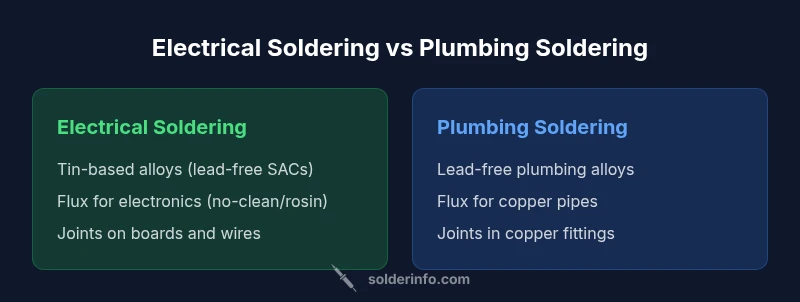
| Typical alloy family | tin-based lead-free SAC alloys for electronics | tin-based lead-free alloys for copper piping |
| Flux type | rosin-core or no-clean flux designed for electronics | flux designed for copper piping, often water-safe or easy-to-clean |
| Temperature handling | low-to-moderate heat with precise control | higher heat delivery with torches for larger joints |
| Joint types | PCB pads, wires, connectors, surface-mits | copper tube joints and fittings, pro-grade solvent cleaning |
| Safety considerations | fume control, electrical safety, residue management | lead-free safety and water purity; fire safety with torches |
| Standards & codes | IPC/IEC standards for electronics | local plumbing codes and water-safety regulations |
| Common failure modes | cold joints, bridges, contamination of delicate traces | leaks, poor wetting, calcification of joints |
Advantages
- Clarifies domain-specific solder choices to reduce rework
- Improves safety by using compatible materials for each domain
- Guides compliance with industry standards and codes
- Supports longer joint life and reliability across electronics and plumbing
Cons
- Can be complex for beginners due to different alloys and fluxes
- Requires learning two separate skill sets and toolkits
- Potential for confusion when projects span both domains
Choose electronics-grade solder for electrical work and plumbing-grade solder for copper piping; avoid cross-domain substitutions.
Domain-appropriate solders and fluxes are foundational to reliability and safety. Electronics work benefits from low-melt, corrosion-resistant alloys and no-clean flux, while plumbing requires lead-free, water-safe alloys with flux that suits copper joints. Following these guidelines reduces rework and code violations, says the SolderInfo team.
Quick Answers
What is the main difference between electrical solder and plumbing solder?
Electrical solder is formulated for electronics, emphasizing small joints, clean flux, and signal integrity. Plumbing solder focuses on copper joints and water safety, with flux designed for wet environments. Material choice depends on the domain and safety requirements.
Electrical solder is for circuits and boards, while plumbing solder is for pipes and water safety. Use the right one for the job to avoid reliability issues.
Can I use electronics solder on copper pipes?
No. Electronics solder and flux are not designed for potable water joints and can introduce safety and corrosion risks. Use plumbing solder approved for drinking-water systems.
No, electronics solder isn’t for pipes; stick to plumbing solder that’s rated for drinking water.
Is lead-based solder acceptable for plumbing?
Modern codes require lead-free solders for drinking water. Use lead-free plumbing solder and approved flux, following local regulations.
Lead-based solder is not acceptable for drinking water systems in most places today.
What is flux and why is it important?
Flux cleans metal surfaces, prevents oxidation during heating, and promotes solder wetting. Electronics flux is often no-clean or rosin-based, while plumbing flux emphasizes compatibility with water systems.
Flux cleans surfaces and helps solder flow; electronics use special flux to protect circuits, plumbing uses flux safe for water zones.
What tools are required for each type?
Electronics work uses a temperature-controlled iron, small tips, and precision hand tools. Plumbing requires a torch, pipe cutter, deburring tool, and flux brushes. Both benefit from good ventilation and safety gear.
Electronics needs a precise soldering iron; plumbing uses a torch and pipe tools.
What are signs of a bad joint?
Electronics joints may show cold joints or bridges; plumbing joints may leak or show poor wetting. Inspect with magnification, test for continuity (electronics), and pressure test (plumbing).
Look for gaps or leaks, and test joints to confirm reliability.
Top Takeaways
- Identify the project domain before selecting solder
- Use flux types appropriate to each domain
- Follow relevant codes and standards
- Prepare surfaces thoroughly to prevent cold joints
- Inspect joints carefully and avoid cross-domain substitutions