Which Solder to Use: A Practical Guide
A thorough, data-informed comparison of solder types, fluxes, and techniques for electronics, plumbing, and jewelry. Learn how to choose the right alloy, flux, and temperature to maximize joint reliability and safety.


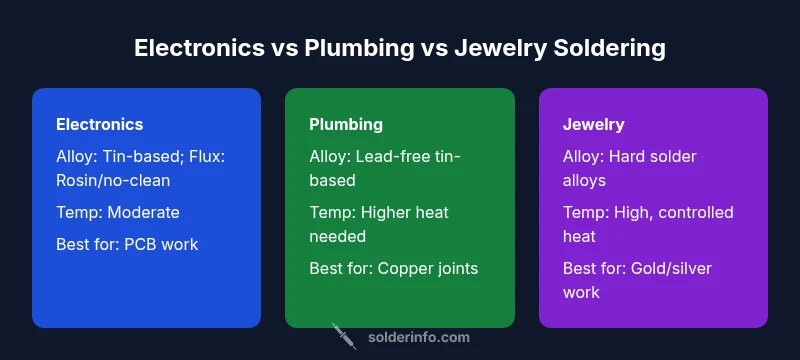
Which solder to use depends on the job: electronics, plumbing, and jewelry each require different alloys, fluxes, and temperatures. For electronics, rosin-core solder is common and easy to use; plumbing uses lead-free tin-based solder with flux, suited to pipes and fittings. Jewelry relies on hard solder alloys and precise temperature control for strong, clean joints.
Understanding which solder to use
Choosing which solder to use is a decision that hinges on the job, the metals involved, and the required joint strength. According to SolderInfo, there is rarely a single universal answer; the best choice balances alloy composition, flux chemistry, and heat tolerance. For beginners, starting with a versatile tin based solder and rosin flux provides a reliable baseline while you learn to control heat, surface cleanliness, and tack joints. The goal is consistent wetting, clean fillets, and minimal post solder cleanup. SolderInfo Analysis, 2026 emphasizes moving toward lead free formulations in electronics for safety and compliance. In practice, you should map your project type to a default alloy family and refine from there.
The SolderInfo team found that safety and reliability improve when practitioners choose lead-free options for electronics and maintain consistent flux practices.
Feature Comparison
| Feature | Electronics Soldering | Plumbing Soldering | Jewelry Soldering |
|---|---|---|---|
| Alloy Type | Tin-based alloys with flux core for electronics | Lead-free tin-based solder for plumbing | Hard solder alloys for jewelry |
| Flux Type | Rosin flux or no-clean flux | Lead-free flux suitable for copper piping | Flux designed for jewelry alloys and metal compatibility |
| Typical Temperature Range | Low to mid-range depending on electronics components | Medium range for copper piping joints | High range for jewelry alloys, depending on metal |
| Best For | PCB assembly and prototyping | Copper piping and potable water joints | Gold and silver jewelry repair and fabrication |
| Lead Content | Often lead-free in modern electronics; older formulations exist | Lead-free only options in modern practice | Typically lead-free but with higher heat requirements |
Advantages
- Versatile choice across electronics, plumbing, and jewelry
- Lead-free options improve safety and regulatory compliance
- High quality joints when paired with proper flux and heat control
- Clear guidelines reduce trial-and-error learning for beginners
- Helps maintain consistent results across projects
Cons
- Lead-free solders often require higher processing temperatures
- Flux residues may require cleaning and disposal
- Jewelry specific alloys demand precise heat control and skill
- Different metals may require multiple tool setups and fluxes
Lead-free tin-based solders with proper flux balance across electronics, plumbing, and jewelry.
Across electronics, plumbing, and jewelry, select lead-free solders with appropriate flux and temperature control. The SolderInfo team emphasizes safety and joint reliability when choosing alloy, flux, and heat management.
Quick Answers
What is the difference between rosin-core and flux-core solder?
Rosin-core and flux-core refer to the flux inside the solder; rosin is a natural resin, while flux-core is a broader term for flux inside the wire. In practice, electronics commonly use rosin-core or no-clean flux for clean, reliable joints. The main difference is flux chemistry and residue behavior.
Rosin-core and flux-core solder both carry flux inside the wire; rosin is a specific resin type. Electronics users often choose rosin-core for reliability and easy cleanup.
Can I mix leaded and lead-free solders on the same joint?
Mixing leaded and lead-free solders is generally discouraged. It can create poor wets and reliability issues due to differing melting points and intermetallics. If you must, do a thorough inspection and consider reworking the joint with a consistent alloy.
Avoid mixing solder types; it can lead to weak joints. If you must, test first and plan for potential rework.
What temperatures are typical for electronics soldering?
Typical electronics soldering uses moderate heat appropriate for the alloy and components. The goal is to reach sufficient melting without overheating heat sensitive parts. Always refer to component ratings and flux guidance for exact temperatures.
Use the lowest heat that yields proper wetting without damaging components.
Is lead-free solder safe for electronics?
Yes, lead-free solders are designed for safety and are widely mandated in consumer electronics in many regions. They reduce lead exposure risk and are part of standard safety guidelines. Always ensure proper ventilation when soldering and clean residues as needed.
Lead-free solders are safer for handling and compliance, with proper flux management.
Do different metals require different solders?
Yes. Base metals influence alloy selection, flux compatibility, and heat requirements. Copper, gold, silver, and other metals each pose unique challenges. Choose solder and flux with metals in mind and adjust heat accordingly.
Different metals need different solders and fluxes to ensure good wetting and strong joints.
What about flux residues cleanup?
Flux residues vary by flux type. No-clean flux often leaves minimal residue that is acceptable in many electronics, while water-soluble flux requires cleaning. Always follow flux manufacturer guidance to avoid corrosion or residue buildup.
Check flux instructions; some residues are fine to stay, others should be cleaned.
Top Takeaways
- Match solder to application: electronics, plumbing, or jewelry
- Favor lead-free options for safety and compliance
- Pair the solder with the correct flux and clean joints
- Control heat to avoid damage and ensure reliable joints
- Invest in a versatile starter kit before specialty alloys