Pipe Solder vs Electrical Solder: A Practical Comparison
A rigorous comparison of pipe solder and electrical solder, covering alloys, flux, heating methods, safety, and best practices for plumbing versus electronics.


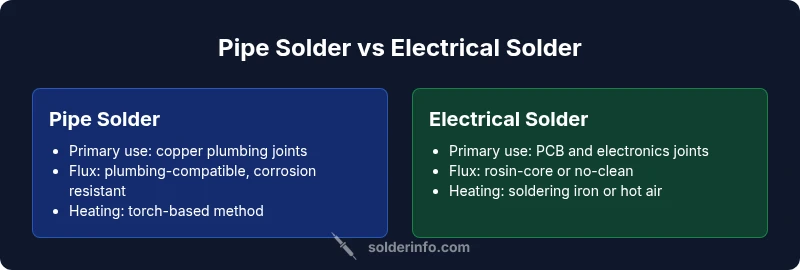
Pipe solder and electrical solder are designed for different jobs. Pipe solder is used to join copper plumbing joints, while electrical solder is formulated for circuit boards and electronics assemblies. The key differences are in heat tolerance, flux type, and alloy composition. For safe, reliable results, choose pipe solder for plumbing and electrical solder for electronics, and never substitute one for the other.
What pipe solder is and what electrical solder is
According to SolderInfo, the terms pipe solder and electrical solder often mask deeper engineering differences that matter for reliability and safety. Pipe solder is a material system optimized for joining copper plumbing joints, creating watertight seals under modest temperature ranges and with flux designed to withstand moisture and corrosion. Electrical solder, by contrast, is tailored for electronics assemblies, emphasizing clean joints, minimal thermal damage to nearby components, and flux formulations that leave minimal residues on circuit boards. Understanding these distinct purposes helps hobbyists, DIYers, and professionals avoid cross-application misuse and maintain system integrity.
In practice, the two solders rarely interchange without compromising performance. Plumbing joints rely on mechanical strength and corrosion resistance, while electronics rely on precise electrical continuity and long-term stability under operating heat. The SolderInfo team emphasizes that selection should be driven by the environment, regulatory requirements, and the materials being joined. This foundational distinction will guide the deeper comparisons that follow.
Key differences in alloys and flux
Alloy composition drives performance in both domains. Plumbing solders are typically tin-based and lead-free, optimized for copper pipes and corrosion resistance. Electronics solders include leaded and lead-free tin alloys designed for predictable melting behavior and reliable fillet formation on copper, brass, and PCB pads. Flux systems also diverge: plumbing flux focuses on protecting joints against moisture and oxide formation during soldering in a humid environment, whereas electronics flux emphasizes residue-free or easily cleaned post-solder residues and compatibility with delicate boards and components. The right flux reduces oxidation, aids wetting, and improves joint quality.
From a materials science perspective, the key is compatibility with the substrate and service conditions. Copper pipes require flux that promotes a strong metallurgical bond without introducing contaminants that could corrode steel fittings or compromise seals. Electronics demand flux that cleans and protects surface-minish pads, without causing dendritic growth or conductive residues that could degrade circuit performance. The design intent behind each solder category is to optimize those performance criteria in their respective domains.
Temperature and heating considerations
Temperature control is a critical differentiator. Pipe soldering typically benefits from controlled flame heating that evenly heats the copper tube and filler alloy to form a uniform joint, with attention to avoiding overheating that can anneal or damage surrounding materials. Electronics soldering relies on precise, localized heating using a soldering iron or hot air station to melt the alloy just enough to form a robust bond without thermally stressing nearby components. Overheating electronics can lift pads, erase traces, or damage components, while overheating plumbing joints can damage pipes or insulation. The objective in each case is to achieve proper wetting and alloy diffusion without compromising the substrate or adjacent parts.
Tools and methods: torch vs soldering iron
Pipe work often uses a handheld propane or mapp gas torch to apply heat directly to copper joints and the solder alloy, enabling a quick flow and sealing action. Electronic soldering relies on precision tools: a hand-held soldering iron with a fine tip for PCB work, or hot air rework stations for surface-mount components. The choice of tip geometry, heat setting, and dwell time matters in both domains. For pipes, a steady hand and flame management help avoid heat damage to plastic underlayment or nearby metal fittings. For electronics, maintaining a low, steady temperature and performing quick, controlled reflow reduces the risk of burning flux residues or damaging components.
Flux types and cleaning practices
Flux choice reflects the environmental and material context. Plumbing flux is formulated to resist moisture and protect the joint during curing, while electronics flux is often rosin-based or no-clean to minimize post-solder cleaning and residue on sensitive circuitry. Cleaning requirements diverge: plumbing joints may tolerate mild cleaning or water rinse, while electronics joints benefit from thorough cleaning to prevent corrosion and ensure reliable insulation. Soldering with appropriate flux reduces oxidation, promotes good wetting, and improves joint longevity in both domains.
Typical failure modes and how to avoid them
Common failure modes arise from mismatched materials, inadequate surface preparation, and improper heating. In plumbing, improper cleaning or insufficient flux can yield leaks, while overheating can deteriorate plastic pipe insulation or nearby sealants. In electronics, poor heat control leads to cold joints, lifted pads, or burnt flux residues that attract dirt and moisture. Prevention hinges on proper surface preparation, appropriate flux, correct alloy selection, and controlled heating. Regular inspection after soldering—checking for shiny, smooth fillets and clean pads—helps identify potential issues before they become failures.
Safety, compliance and environmental concerns
Both domains have safety and regulatory considerations. Plumbing work must comply with local codes, including restrictions on lead and appropriate disposal of flux residues. Electronics work falls under RoHS and related environmental standards that limit hazardous substances and require lead-free or compliant alloys. Ventilation and eye protection are essential in both contexts, and proper disposal practices for flux and solder waste help minimize environmental impact. The overarching message from SolderInfo is to choose materials and methods that align with regulatory requirements and best practices for safety and reliability.
How to decide when to use which solder
A practical decision framework starts with identifying the job: Is it a plumbing joint exposed to water pressure or a PCB joint subject to electrical currents? If the joint lives in a water system, select plumbing solder with compatible flux and lead-free formulation. For electronics, pick electronic solder with appropriate flux (rosin-core or no-clean), and tailor your heating technique to avoid component damage. When in doubt, consult product data sheets, local codes, and manufacturer recommendations. A disciplined approach reduces cross-domain errors and ensures longevity of both plumbing and electronics installations.
Handling, storage, and compatibility considerations
Store solders in a dry, cool place away from moisture, as humidity can cause oxidation and performance degradation. Keep fluxes tightly sealed to prevent evaporation and contamination. Mixing solders across domains should be avoided to prevent cross-contamination and potential failure modes. When performing maintenance or repair, use dedicated tools and consumables for each domain to preserve joint integrity and system safety. Documentation of the materials used helps ensure traceability in both plumbing and electronics projects.
Common mistakes and how to fix
Mistakes include using electronics flux on plumbing joints or applying plumber-grade solder to PCB pads, leading to poor adhesion or corrosion. Incorrect tip size, excessive heat, and poor cleaning can cause solder bridges on boards or leaks on pipes. Fixes involve selecting the correct solder type, choosing an appropriate flux, and practicing proper heat control. If a joint fails, rework with fresh flux, clean surfaces, and a new solder connection to restore reliability.
Real-world scenarios and decision trees
In real-world projects, decision trees simplify the selection process. For a copper water line repair in a basement, choose pipe solder with water-resistant flux and a torch-based technique. For a small PCB rework, select electronics solder with rosin-core flux and a precision iron. Scenario-based guidance helps prevent cross-domain mistakes and promotes consistent best practices. SolderInfo’s ongoing analyses emphasize that sticking to the appropriate domain reduces risk and improves outcomes across both plumbing and electronics.
Looking ahead: trends in solder alloys and flux
Industry trends indicate a continuing emphasis on lead-free formulations and more environmentally friendly flux systems. Electronics increasingly favor lead-free SAC alloys with no-clean flux to simplify post-solder cleaning and improve reliability in compact devices. Plumbing continues to evolve toward compliant, corrosion-resistant alloys that work well with modern copper piping and join techniques. Professionals should stay informed about regulatory changes and material innovations to maintain best-in-class performance across both domains.
Comparison
| Feature | Pipe Solder | Electrical Solder |
|---|---|---|
| Primary Use | Copper plumbing joints | Circuit boards and electronics assemblies |
| Typical Flux Type | Flux designed for plumbing use (lead-free, corrosion resistant) | Rosin-core/no-clean flux common in electronics |
| Common Alloys | Tin-based lead-free alloys for plumbing | Tin-based leaded or lead-free SAC alloys for electronics |
| Heating Source | Torch-based heating (propane/mapp gas) | Soldering iron or hot air for electronics |
| Joint Strength Focus | Watertight seal and mechanical strength | Electrical continuity and thermal stability |
| Standards/Compliance | Plumbing codes and lead-free requirements | RoHS/compliance for electronics |
Advantages
- Each type is optimized for its field, improving reliability
- Clear safety and regulatory alignment for plumbing vs electronics
- Lower risk of cross-contamination when used correctly
- Simple, domain-specific training reduces mistakes
Cons
- Requires different tools and skills, increasing training needs
- Using the wrong type can cause leaks or circuit failure
- Lead-free plumbing solders may require more careful heat management
- Specialized disposal and handling practices for each domain
Use dedicated solder types for each domain; pipe solder for plumbing and electronics solder for circuits
Matching solder type to application minimizes leaks in plumbing and failures in electronics. This aligns with industry best practices and SolderInfo guidance, reducing risk and improving long-term reliability.
Quick Answers
Can I use the same solder for copper plumbing and electronics?
No. Plumbing joints and PCB joints have different requirements for alloys, flux, and heat control. Using the wrong solder can lead to leaks or circuit damage.
No—pipe solder is not suitable for electronics, and electronics solder should not be used for plumbing.
What are the risks of lead-containing solders today?
Lead-containing solders are increasingly restricted. Plumbing codes require lead-free alloys, and electronics standards (RoHS) limit lead in boards. Always opt for lead-free options where applicable.
Lead-containing solders are restricted; prefer lead-free options for both plumbing and electronics.
What flux should I use for plumbing vs electronics?
Plumbing flux is designed to withstand moisture and corrosion in piping. Electronics flux is typically rosin-core or no-clean to minimize residues on boards.
Plumbing flux fights moisture; electronics flux is chosen to be easy to clean on boards.
Can I reuse solder or joints after rework?
Solder can be melted and reused under controlled conditions, but oxidation and residues reduce quality. Rework should aim for clean, new solder joints.
You can reuse solder in some cases, but it's usually better to rework with fresh solder for reliability.
What safety precautions should I follow while soldering pipes?
Work in a well-ventilated area, wear eye protection, and keep flames away from flammable materials. Handle flux residues properly and avoid lead exposure where prohibited.
Ventilate, protect your eyes, and manage heat away from hazards.
Are there beginner-friendly steps for a quick comparison?
Yes. Identify the job, select the appropriate solder and flux, prepare surfaces, heat with proper tools, apply solder, and clean joints. Inspect for smooth, shiny connections.
Start by identifying the job and choosing the right solder, then follow a clean, step-by-step process.
Top Takeaways
- Match solder to the job to avoid failures
- Follow local plumbing codes and RoHS standards
- Use proper flux and clean joints for reliability
- Invest in domain-specific tools and training
- Avoid cross-contamination by keeping materials separate