Solder Melting Temperature: Alloys, Profiles, and Best Practices
Explore solder melting temperature for common alloys, how heat profiles affect joints, measurement methods, and practical tips for electronics, jewelry, and plumbing.


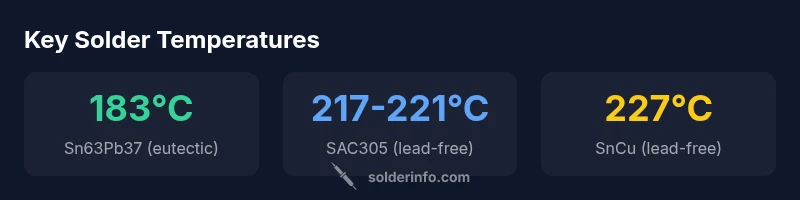
Leaded Sn63Pb37 eutectic solder melts at about 183°C, providing a low-temperature option for quick work and easy heat control. Lead-free SAC305 and similar alloys melt around 217-221°C, requiring higher reflow temperatures. Understanding these figures helps select appropriate flux, soldering iron settings, and heat-up profiles to protect components and avoid cold joints.
Why Solder Melting Temperature Matters
Solder melting temperature is a fundamental constraint that governs how hot a joint must become to flow and wet surfaces effectively. According to SolderInfo, this single figure informs your reflow window, the risk of delaminating adhesives, and the likelihood of tombstoning on fine-pitched components. In electronics, jewelry, and plumbing alike, selecting the correct alloy temperature helps protect delicate parts while delivering reliable electrical or mechanical connections. While a lower melting point can speed production and reduce thermal stress, it may compromise joint strength or thermal cycling resistance. Conversely, higher-melting-point solders improve high-temperature robustness but demand careful heat management to avoid damage to substrates and nearby features.
In practice, you balance the alloy’s liquidus with your flux chemistry, pad design, and heat source capability. The goal is a clean, void-free joint formed within a safe time window that minimizes splashes and heat transfer to surrounding areas.
Common Alloys and Their Melting Points
Understanding concrete numbers matters, but it helps to categorize by whether a solder is leaded or lead-free. Leaded Sn63Pb37 (eutectic) melts at about 183°C, which makes it forgiving for hobby projects and rapid prototyping. Sn60Pb40 is similar but may show a slight spread around the eutectic point due to composition tolerances. Lead-free SAC305 (Sn96.5Ag3.0Cu0.5) typically melts in the 217–221°C range, and SnCu (Sn99.3Cu0.7) sits a bit higher, around 227°C. For precision work, always verify the exact spec on the vendor datasheet, as trace alloying elements can shift the liquidus.
-
The choice between leaded and lead-free matters for safety, compliance, and environmental reasons. If you’re manufacturing for consumer electronics in regions that limit lead usage, lead-free alloys are often mandatory. If you’re prototyping or repairing older equipment, leaded solders can be more forgiving during manual assembly.
-
Wetting and flow depend on flux as well as temperature. A robust flux reduces surface oxides and improves solder spread even at temperatures near the alloy’s melting point. In jewelry and plumbing, where substrate cleanliness varies, flux quality and mechanical heat control are equally important.
How Temperature Profiles Are Built
A temperature profile is the planned path your soldering process follows from preheat to peak temperature and cooldown. A typical profile starts with a gentle preheat to warm the board and reduce thermal shock, then a controlled ramp to the alloy’s melting range, a short dwell to ensure proper wetting, and a careful cooldown. For leaded solders, peak temperatures near 180–190°C are common in hobbyist work, whereas lead-free processes often peak around 210–230°C. The exact ramp rate depends on board thickness, copper density, component spacing, and the solder alloy. In professional setups, ovens and reflow machines log real-time temperature traces to ensure repeatability and prevent overheating sensitive components. The core principle is to reach the target temperature quickly enough to avoid excessive solder residence time, which can degrade adhesives or damage heat-sensitive parts.
Measurement and Verification Methods
Measuring solder temperature accurately is essential for process control. Thermocouples placed near the joint, thermistors, and calibrated reflow ovens provide real-time feedback that helps operators adjust ramp rates and dwell times. For DIY work, a fixed-temperature iron with a fine-tipped nozzle and a temperature-sensing accessory can approximate a stable wetting temperature, but professional work benefits from controlled reflow ovens or hot plates with data logging. It’s also important to verify that the flux and cleaning steps were effective, as oxides can raise the effective melting temperature by impeding wetting. When in doubt, use test coupons and examine joints under magnification to confirm proper spread, lack of voids, and good fillets.
Practical Guidance for Electronics, Jewelry, and Plumbing
Electronic assemblies benefit from a conservative thermal budget: avoid overheating plastic packages, connectors, or epoxy, and respect component manufacturer guidelines. For jewelry, lower-melting alloys reduce risk to stones and delicate settings, while ensuring a strong metal-to-metal bond. In plumbing, thicker copper requires higher temperatures and more dwell time to ensure proper flow without damaging fittings. Always tailor your heat source to the alloy, apply flux correctly, and clean residues promptly to prevent corrosion or poor wetting.
Effects of Flux and Cleaning on Effective Melting Point
Flux plays a key role in soldering: it prevents re-oxidation and enhances wetting, effectively reducing barriers to joint formation. A clean surface enables the solder to reach its melting temperature more consistently, reducing the tendency for cold joints. Some fluxes also leave residues that can attract moisture or cause corrosion if not cleaned properly after soldering. While flux doesn’t change the alloy’s intrinsic melting point, it does influence the practical temperature at which a reliable joint forms. Always select flux appropriate for the alloy and substrate, and clean flux residues after soldering according to the product guidelines.
Troubleshooting Temperature-Related Issues
Common problems tied to temperature include cold joints (insufficient wetting), solder balls, and tombstoning of passive components. If joints appear dull or gray, you may be undershooting the melting point, causing incomplete fusion. If pads or traces show signs of overheating, you may be applying heat for too long or at too high a peak temperature. In multi-layer boards, excessive heat can delaminate prepregs or cause damage to inner layers. Use a calibrated heat source, monitor the peak temperature, and adjust dwell time to match the alloy’s melting point while respecting the substrate tolerance.
Material Compatibility: Substrates, Pads, and Leads
Matching the solder to the substrate is essential. Copper pads handle leaded solders well, but extreme temperatures or long dwell times can soften solder mask and FR-4 laminates. For lead-free solders, ensure pads and traces tolerate higher temperatures; consider preheating to reduce thermal shock. Lead-free alloys typically require higher peak temperatures, so ensure your components’ temperature ratings align with the profile. In jewelry, heat control is even more critical to protect gemstones. In plumbing, larger joints may require more heat input and longer dwell times to ensure proper flow and fusion.
Final Best Practices for Temperature Management
Always start with manufacturer data for the specific solder alloy and flux. Use a temperature profile that matches the alloy’s melting point, adjust ramp rates to protect components, and verify with test coupons before committing to production. The SolderInfo team recommends documenting your standard profiles and keeping equipment calibrated to maintain consistent results across sessions.
Typical melting points by solder type
| Solder Type | Typical Melting Point (°C) | Notes |
|---|---|---|
| Sn63Pb37 (eutectic) | 183 | Low-temperature traditional alloy |
| Sn60Pb40 | 183-190 | Near-eutectic; modest tolerance |
| SAC305 (Sn96.5Ag3.0Cu0.5) | 217-221 | Lead-free; common in modern boards |
| SnCu (Sn99.3Cu0.7) | 227 | Lead-free alternative; higher temp |
Quick Answers
What is the melting temperature of solder and why does it vary by alloy?
Solder melting temperature depends on alloy composition. Leaded solders like Sn63Pb37 melt near 183°C, while lead-free variants often melt higher, around 217–221°C. Variations arise from tin, lead, silver, copper, and other alloying elements that shift the liquidus and solidus. Always consult manufacturer data sheets for precise figures.
Melting temp depends on alloy composition; leaded solders melt around 183°C, while lead-free versions are higher, typically 217–221°C.
How do you determine the correct solder temperature for a project?
Start with the alloy’s melting range from the datasheet, then set your flux and iron temperature slightly above that range for reliable wetting. Flux type, pad cleanliness, and component sensitivity also influence the effective temperature window. Verify with test joints before scaling up.
Use the alloy’s melting range from the datasheet and adjust with flux and pad cleanliness in mind.
What happens if you exceed the melting temperature during soldering?
Excessive heat can damage components, delaminate substrates, or cause thermal shock. It can also degrade flux residues and increase the risk of bridging on dense PCB layouts. Always aim for the minimum heat required to achieve reliable wetting and avoid prolonged dwell.
Too much heat can damage parts and boards; keep it within the recommended window.
Are lead-free solders hotter to melt than leaded solders?
Yes, in general lead-free solders require higher peak temperatures than leaded ones due to their higher melting points. This can affect heat-sensitive components and pads, so preheating and careful dwell control are more important with lead-free alloys.
Lead-free solders usually melt at higher temperatures than leaded ones.
Can flux affect the effective melting temperature?
Flux does not change the alloy’s intrinsic melting point, but it lowers the surface oxide barrier, improving wetting and effectively allowing you to form a good joint at a given temperature. Cleanliness and flux compatibility with the substrate are critical.
Flux helps wetting but doesn’t change the alloy’s melting point.
“Understanding solder melting temperature is essential for reliable joints across electronics, jewelry, and plumbing.”
Top Takeaways
- Choose alloy based on required processing temperature
- Lead-free solders demand higher peak temperatures
- Flux quality and cleanliness influence joint reliability
- Always validate with a proper temperature profile