How hot does solder get: temperatures, ranges, and practice
Understand how hot solder gets across alloys and applications, with melting points, iron temps, and practical guidelines for electronics, plumbing, and jewelry soldering.


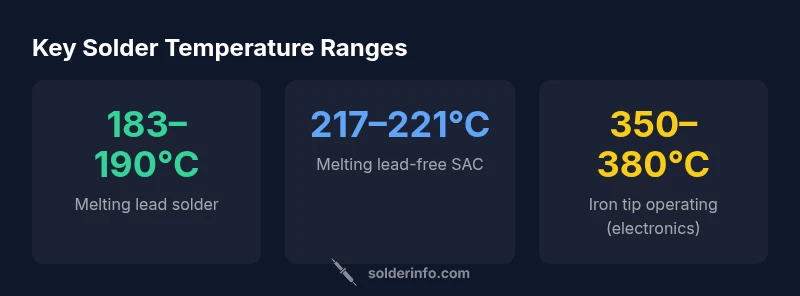
How hot does solder get depends on alloy and application. Lead-based solders melt around 183–190°C, while lead-free SAC alloys melt around 217–221°C. For electronics work, a soldering iron tip typically operates around 350–380°C; when using lead-free solders you may range up to 360–400°C. Plumbing solders and jewelry solders have higher or lower ranges depending on alloy. This quick guide gives you the core temperature ranges to target.
Understanding Solder Temperature Basics
For novices and seasoned technicians alike, the main question when starting a project is: how hot does solder get during typical work? The short answer is: it depends on the alloy and the application. In electronics, most common solders melt within the 183–221°C range, while the heat you apply with your iron is higher, typically around 350–380°C for leaded solders and up to 360–400°C for lead-free blends. Temperature control matters because heat must be high enough to melt the alloy and wet the joint, yet not so high that you damage components, burn flux, or lift pads. The SolderInfo team emphasizes that you should approach soldering with a two-tier view: (1) the solder’s melting temperature, and (2) the iron’s working temperature. Knowing both helps you set the right target and avoid common mistakes. In 2026, standard guidelines emphasize matching solder type to your heat source, a principle echoed across electronics, plumbing, and jewelry work. This article will expand on those principles.
Melting Points: Leaded vs Lead-Free Solders
Lead-based solders (commonly 60/40 tin/lead) melt in a relatively forgiving range, around 183–190°C, making them easier to work with for beginners and certain hobby projects. Lead-free SAC305 blends melt around 217–221°C, which means you must raise your iron temperature or adjust your technique to achieve reliable wetting and a good solder fillet. In plumbing applications, soft lead-free solders typically melt in the 250–300°C range, while high-temperature hard solders used for copper piping can require still higher heat. Jewelry solders can vary dramatically, with higher-melting-point alloys used for precious metal work. The key takeaway is that alloy composition drives both the melting threshold and the reflow behavior. When you ask how hot does solder get, focus first on the alloy’s melting range, then on how your flux and heat source will handle reflow and wetting.
How Temperature Affects Joint Quality
Heat is a tool for controlled wetting and flow. If the temperature is too low, the solder won’t wet the joint and you’ll get a cold joint; if too high or applied too long, flux oxidation can accelerate, and pads or components may be damaged. For consistent joints, you want to hold the iron at a temperature sufficient to melt the alloy quickly and preserve the surrounding material. Establish a brief contact time, usually a few seconds per joint, to avoid overheating, doming or lifting pads. Flux chemistry also plays a role: rosin-based fluxes aid wetting, while water-soluble fluxes can be harsher on delicate boards. The goal is a smooth, shiny fillet with a compact grain structure. Remember that the exact temperature you use is a function of alloy, flux, joint geometry, and the heat transfer characteristics of the tool you’re using.
Soldering Irons and Heat Management
Selecting the right iron and tip is almost as important as choosing the solder itself. A larger, high-mass tip will transfer heat quickly but can overshoot if not controlled. For electronics work, most technicians operate a clean, well-tinned tip at about 350–380°C; some lead-free work requires 370–400°C. If you work on small SMD components or finely pitched boards, a smaller tip or a chisel tip provides better heat control and reduces thermal mass on surrounding pads. Calibrating your iron to deliver steady heat without spikes is essential. Use a temperature-controlled station when possible and practice consistent dwell times to minimize thermal stress on components. The practical norm is: keep the iron within the recommended range for your solder, and use the flux effectively to facilitate wetting at those temperatures.
Practical Temperature Guidelines for Common Solder Types
Electronic work often uses lead-based or lead-free solders. For leaded 60/40, target 350–370°C, stepping down as the joint settles. For lead-free SAC305, aim around 370–400°C, adjusting to flux and board tolerance. Plumbing solders for copper pipes typically operate around 250–300°C for soft solders; higher-temperature hard solders can require more heat and a quick approach to avoid overheating adjacent materials. Jewelry soldering introduces even higher melting points for many alloys, especially when precious metal work is involved. Always check the alloy datasheet and flux recommendations. In the end, the right temperature is a balance: enough heat to melt and wet, but not so much that the joint or substrate is damaged.
How to Measure and Calibrate Temperature
Use a temperature-controlled soldering station or a digital iron thermometer to monitor tip temperature. Start with a conservative setting within the recommended range for your solder type, then perform test joints on a scrap PCB or copper test piece. If joints look dull or open, adjust by increasing heat slightly and shortening dwell time; if solder beads up poorly or leaves a large blob, you may be running too hot or too slow with flux. Regularly tin the tip to maintain heat transfer efficiency and reduce oxidation. Calibrate periodically, particularly after replacing tips or flux types.
Safety Considerations When Heating Solder
Soldering produces fumes that can irritate the eyes, nose, and throat. Always work in a well-ventilated area or use an appropriate fume extractor. Wear eye protection and avoid skin contact with hot solders and flux. Lead-based solders pose a health risk if mishandled; always wash hands after handling and keep lead-containing materials away from food preparation surfaces. Keep a spill tray for flux, and store solders in a cool, dry place. In 2026, practitioners emphasize safety as the baseline of professional practice; temperature is part of safe handling, not just performance.
Troubleshooting Common Temperature-Related Issues
Cold joints show a dull appearance and a dull or cracked fillet, typically caused by insufficient heat, excessive dwell time, or poor flux. Overheating can lift pads, oxidize the joint, or damage components; you’ll notice scorching or verdigris on copper, or heat damage on fragile components. If you observe tombstoning or skewed fillets, reassess your tip choice, temperature, and dwell time. Ensure your flux remains compatible with the solder alloy and adjust your technique to achieve proper wetting without excessive heat. Regular practice and controlled testing help you diagnose temperature-related issues quickly.
Final Tips for Efficient and Safe Soldering
Practice makes perfect. Develop a consistent workflow: prepare joints, apply flux, pre-tin the tip, set the appropriate temperature, make a single precise contact, and remove heat promptly after the joint forms. Use the right flux for leaded vs lead-free solders, clean boards to prevent oxidation, and always keep a clean, dry workspace. If you need to bridge electronics and plumbing work, keep dedicated tools and temperature zones to avoid cross-contamination. The bottom line: understanding the temperature ranges for your solder type and keeping heat under control yields reliable joints with minimal risk to components and substrates.
Melting points and iron temperatures for common solders
| Solder Type | Melting Point (°C) | Typical Iron Temp Range (°C) | Notes |
|---|---|---|---|
| Leaded 60/40 | 183–190 | 350–370 | Widely used; easy flow |
| Lead-free SAC305 | 217–221 | 360–400 | Higher heat required; flux considerations |
Quick Answers
What is the melting temperature of common solders?
Lead-based solders melt around 183–190°C, while lead-free SAC305 blends melt around 217–221°C. Always consult the alloy datasheet and flux recommendations for precise values. Factor in board materials and flux chemistry in your temperature planning.
Lead-based solders melt around 183–190°C; lead-free around 217–221°C. Check the alloy datasheet for exact values and plan heat accordingly.
Why do lead-free solders require higher temperatures?
Lead-free solders typically have higher melting points and different wetting behavior, which means the iron must reach a higher temperature to achieve proper solder flow. Flux and tip design also influence how heat is delivered to the joint.
Lead-free solders melt at higher temperatures and often need more heat to wet the joint properly.
Can I solder electronics and plumbing with the same technique?
Electronics and plumbing use different solders and fluxes; electronics emphasize small joints and low thermal mass, while plumbing uses higher heat and larger joints. Use alloy-appropriate flux and consider heat transfer and material tolerance.
Electronics and plumbing require different solders and heat management; don’t mix them.
What signs indicate overheating a joint?
Overheating can cause lifted pads, damaged components, or burnt flux. If joints shimmer, oxidize quickly, or damage nearby materials, reduce heat or shorten dwell time and verify flux compatibility.
Signs of overheating include damaged pads and burnt flux; back off heat and reflow quickly.
What safety precautions should I take when heating solder?
Work in a well-ventilated area, wear eye protection, and wash hands after handling solder. Lead-based solders require extra caution due to toxicity. Keep flammable materials away from the heat source.
Ventilate the area, wear protection, and handle lead-based solders carefully.
How can I calibrate my iron to avoid overheating?
Use a temperature-controlled station, set to the recommended range for your solder type, and test on a scrap joint. Adjust in small increments and monitor joint quality before proceeding with production work.
Use a controlled station and test joints to dial in the right temperature.
“Temperature control is the foundation of reliable solder joints; understand both the solder melting range and your iron’s heat output for consistent results.”
Top Takeaways
- Know the melting points: leaded vs lead-free solder differ by 30–40°C.
- Match iron temperature to solder type to ensure proper wetting.
- Use flux effectively to prevent oxidation and improve flow.
- Calibrate your iron and practice on test joints before real work.