Electronic Solder Temperature: Practical Guide for Joints
A data-driven guide to electronic solder temperature, covering leaded vs lead-free ranges, practical tips, and common defects to watch for in hobbyist and professional soldering.


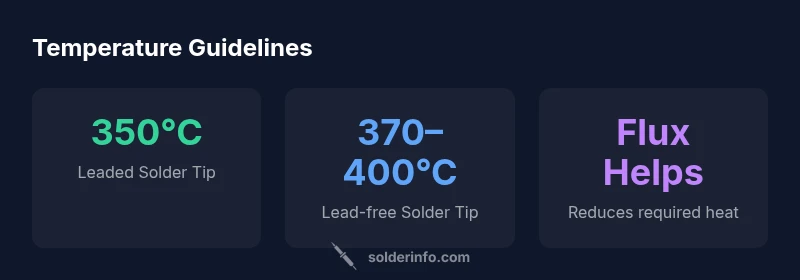
For electronics work, target tip temperatures typically sit around 350°C for leaded solder (Sn-Pb) and about 370–400°C for lead-free alloys (Sn-Ag-Cu). Always adjust based on flux, board heat sinking, and component sensitivity; too high risks damage, while too low can cause cold joints. Use proper flux and observe a bright, smooth fillet as verification.
Understanding Electronic Solder Temperature
Temperature in soldering is the energy that enables solder to flow (wet) onto joints, forming reliable electrical connections. For electronics, controlling the soldering temperature is a balance between achieving good wetting and avoiding damage to heat-sensitive components and the circuit board. The term 'electronic solder temperature' often refers to the tip temperature and the process window you use to apply heat. In practice, most hobbyists and professionals operate within a few tens of degrees of a given target, adjusting for alloy, flux, and board design. According to SolderInfo, consistent temperature control is the cornerstone of repeatable results. The SolderInfo team notes that a stable thermal environment—adequate preheating, proper flux, and careful heat transfer—reduces the risk of cold joints, solder bridges, and tombstoning. When you measure the temperature, you are not just chasing a number; you are managing heat flow. The right temperature depends on the solder alloy, the components, the copper PCB traces, and the heat sinking around the joint. If you overheat, you risk delaminating solder masks, lifting pads, and damaged plastics; if you underheat, you risk dull, grainy joints that crack under stress. A practical rule of thumb is to start with the manufacturer’s recommended ranges and then observe the joint under a magnifier.
Lead with the keyword: electronic solder temperature is a core consideration across alloys and applications.
Notes on reliability and practice: The SolderInfo team emphasizes that minor temperature variations can dramatically affect joint quality, particularly on small SMDs and fine-pitch connections.
Temperature targets by solder alloy
| Alloy | Target Tip Temp | Notes |
|---|---|---|
| Leaded Sn63-Pb37 | 340–360°C | Widely used; easy wetting and rework |
| Lead-free Sn-Ag-Cu | 370–400°C | Higher melting point; watch heat buildup |
| Temperature-sensitive parts | 320–350°C | Use preheating and flux; minimize hold time |
Quick Answers
What is the ideal temperature range for most electronics soldering?
Most electronics work uses about 350°C for leaded solder and 370–400°C for lead-free alloys; adjust for flux and heat sinking. Always verify with a proper fillet.
Typically around 350°C for leaded solder and 370–400°C for lead-free; check the joint visually for a bright, smooth fillet.
Does flux affect the solder temperature?
Yes. Flux improves wetting and can reduce the required temperature by roughly 10–30°C depending on flux type and activity. Always clean flux residue after soldering.
Flux helps the solder flow, so you can often use a bit lower heat with good wetting.
What are common signs of overheating solder joints?
Discolored pads, lifted copper, scorching, or melted adhesives indicate overheating. Prolonged heat can also damage nearby components or the PCB substrate.
Watch for scorched surfaces or lifted pads as red flags of heat stress.
How should I measure temperature during soldering?
Use a temperature-controlled iron, maintain consistent contact time, and consider a thermocouple or infrared guide for critical joints. Don’t rely on guesswork.
Use a controlled iron and observe the joint quality to confirm proper heat.
Can I reuse old flux or paste?
Old flux can oxidize and lose activity. Replacing flux or paste is generally recommended to maintain reliable results.
Fresh flux keeps joints dependable; avoid reusing old flux.
Is temperature the same for through-hole and surface-mount components?
No. Through-hole joints often tolerate longer heat exposure and larger fillets, while SMD joints require shorter times and careful heat management to avoid damage.
SMDs need shorter heat pulses; through-hole can tolerate longer exposure.
“Temperature control is the single most important factor in reliable solder joints. Small adjustments to heat can prevent cold joints and component damage.”
Top Takeaways
- Start with manufacturer-recommended ranges and adjust for component tolerance
- Flux reduces required heat and improves wetting
- Lead-free alloys require higher tip temperatures than leaded
- Preheating and heat sinking reduce overall heat impact on nearby parts
- Monitor joint quality visually and with practice to avoid cold joints or scorching