Why Won't My Solder Stick to Copper Wire? A Practical Troubleshooting Guide
A comprehensive troubleshooting guide to diagnose and fix why solder fails to wet copper wire, with practical steps, safety tips, and proven techniques for reliable joints.


The most common reason why solder won’t stick to copper wire is surface oxidation and contamination that prevent wetting. Start by cleaning the wire, then apply fresh flux and re-tin the conductors. Use the right heat and solder choice, heating the joint until the copper wets smoothly. If problems persist, re-evaluate flux and insulation at the joint.
Why Won't My Solder Stick to Copper Wire
The exact phrase why wont my solder stick to copper wire often comes up in troubleshooting discussions because the problem is almost always surface-related. When copper is oxidized or covered in oil, fingerprints, or handling residue, solder cannot wet and flow evenly. In addition, using an old or incompatible flux can prevent the solder from activating properly. Temperature also plays a crucial role: too cool and the joint resists flow; too hot and insulation nearby can burn or degrade, creating a barrier to proper wetting. The goal is a clean, shiny, and uniform joint where the solder beads and surrounds the copper smoothly.
If you suspect a surface issue, begin with a quick surface check and cleanup, then re-test with fresh flux and correct heat. This approach often resolves the problem without needing exotic tools or expensive materials. As you work, always prioritize safety—work in a ventilated area and wear eye protection. By adhering to clean surfaces, appropriate flux, and controlled heat, you dramatically increase your chances of a reliable solder joint on copper wire.
Surface Cleaning and Preparation
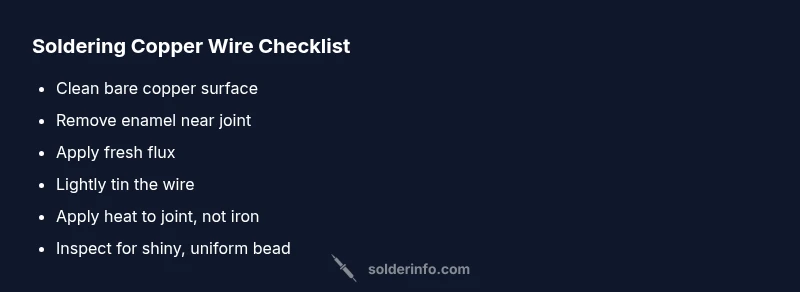
Before soldering copper wire, ensure that every surface that will be wetted is free of oils, residues, and oxidation. Start by wiping the exposed copper with isopropyl alcohol to remove fingerprints and oils. For stubborn oxidation, very gently abrade the wire with a brass brush or fine sandpaper; dont gouge the copper or remove too much metal. After cleaning, visually inspect for a dull brown layer or black films, which indicate contamination that can prevent wetting. If present, repeat cleaning until the copper appears bright and bare. Finally, loosely twist stranded copper to expose a clean surface, then gently tin a short section to verify good wetting before attempting the final joint.
Flux and Solder Selection
Flux is the unsung hero of copper wire work. Use fresh flux suitable for the solder you choose—rosin-core flux is common for electronics, while water-based flux can be used in controlled environments. If flux has dried out or crusted, its activator is compromised and wetting will fail. Apply a thin layer of flux to the cleaned wire; the flux should visibly wet the copper and prepare it for solder. Choose a solder alloy appropriate for copper—leaded alloys wet more easily on copper, but in many hobby and professional settings lead-free is preferred. Tin the wire lightly with a small amount of solder after flux application to create a decent surface for the final joint.
Heating Technique and Iron Tips
Wetting copper requires controlled heat. Start by pre-tinning the soldering iron tip and ensuring it is clean. Bring the tip to the joint and allow it to transfer heat to the wire rather than melting the solder directly on the tip. When the copper wire becomes warm and the flux is activated (you should see a slight sizzle and flux coloring), apply solder to the wire, not the iron. The goal is a bright, smooth bead that flows around the wire with minimal bridging. If the solder beads poorly or dimples, re-wipe the area and reapply flux. Avoid scorching insulation or overheating the wire, which can cause damage and poor joints.
Special Cases: Enamel-Coated Copper and Insulated Wires
Some copper wires, especially magnet wires or specialty electronics wires, may have enamel insulation or coatings that must be removed before soldering. If you see a dull film that doesn’t wet, it likely requires stripping or gentle burn-off from the insulation without burning the copper. Strip back only the portion to be soldered and re-clean the surface. For heavily insulated or coated wires, a sanding block or precise scraping can be helpful. After removing coatings, re-clean, apply flux, and re-tin to verify wetting before proceeding with the final joint.
Quick Fixes and Prevention for Future Joints
Keep scrap wires to practice wetting techniques and verify flux and temperature settings before starting critical work. Store flux in a tightly closed container to prevent drying out, and replace solder with a fresh spool when needed. Regularly inspect your tips for wear and maintain them with a tip cleaner or brass sponge. Finally, always allow joints to cool undisturbed to prevent micro-cracking or cold joints. Implementing these habits will reduce future issues and improve overall soldering reliability on copper wire.
Steps
Estimated time: 30-45 minutes
- 1
Inspect and prep workspace
Set up in a well-ventilated area, gather safety gear, and visually inspect the copper wire for oxide, oil, or damaged insulation. Wipe the surface with isopropyl alcohol to remove residues.
Tip: Always wear eye protection; avoid breathing flux fumes in enclosed spaces. - 2
Clean and strip the wire
If you detect oxidation, gently abrade with a brass brush or fine sandpaper until the copper looks bright. Strip back or remove any enamel coating near the joint area. Clean again to remove debris.
Tip: Only expose the amount of copper you need for the joint. - 3
Flux application and tinning
Apply a thin, even layer of flux to the cleaned copper. Lightly tin the wire with a small amount of solder to verify wetting and to create a better bonding surface.
Tip: Tinning is optional but often speeds up the process and improves reliability. - 4
Heat control and joint formation
Preheat the joint with a properly tinned tip and allow the copper to reach a consistent temperature. Touch the solder to the joint, not the iron, and watch for a smooth, shiny bead forming around the wire.
Tip: Avoid forcing the solder; if it beads unevenly, lift and reapply flux before retrying. - 5
Inspect and cool
Let the joint cool naturally without movement. Inspect for a shiny, conical bead with good coverage and no gaps or cold joints. Clean any excess flux residue after cooling.
Tip: A good joint should be glossy and evenly distributed. - 6
Prevent future issues
Store flux correctly, replace worn tips, and practice on scrap wire to maintain wetting technique. Apply these habits to all copper wire joints to minimize future failures.
Tip: Maintenance reduces the need for repeated troubleshooting.
Diagnosis: Solder wound around copper wire will not wet and form a reliable joint
Possible Causes
- highCopper oxidation or contamination on the wire surface
- highInappropriate or stale flux causing poor activation
- mediumInsulation or surface coatings near the joint
- mediumInadequate temperature control (too low or too high)
- lowIncorrect solder type or flux for the environment
Fixes
- easyClean the copper surface with isopropyl alcohol and, if needed, gently abrade to remove oxide; ensure bare copper.
- easyApply fresh flux suitable for the solder and re-tin the wire before joining.
- easyCheck insulation near the joint and strip back as needed; remove any lacquer or enamel coating in the joint area.
- easyAdjust iron temperature to a medium-high setting and ensure the tip is tinned; avoid overheating insulation.
- easyTest with scrap wire to confirm wetting before working on the actual joint.
Quick Answers
Why won't solder stick to copper wire even with flux?
Commonly, copper oxidation, oil contamination, or an unsuitable flux prevent wetting. Cleaning the surface and applying fresh flux often resolves the issue. If oxidation recurs, recheck the cleaning method and flux choice.
Likely oxidation or old flux is blocking wetting; clean and re-apply fresh flux, then retest.
Should I strip all insulation before soldering, or just nick it?
You should expose bare copper at the joint and remove any enamel or lacquer near the joint. Leave insulation intact away from the joint to prevent heat damage. Only strip what is needed for a clean joint.
Strip enough to expose clean copper, not the entire wire.
Is lead-free solder harder to wet copper wire than leaded solder?
Lead-free solder can be more challenging due to higher melting temperatures and different wetting characteristics. Use a flux formulated for lead-free alloys and ensure proper temperature control for reliable joints.
Lead-free can be trickier; adjust flux and heat accordingly.
Why does flux sometimes smell strong when I solder?
Flux fumes are characteristic and vary by type. Ensure adequate ventilation and avoid breathing fumes directly. If the smell is unusually strong or irritating, switch to a low-VOC flux or work in a better-ventilated area.
Flux fumes can be noticeable; keep area ventilated.
Can I solder enamel-coated copper wire, or must I strip it first?
Enamel or coating must be removed from the area to be wetted. Scrape or burn off the coating in a controlled way, then clean and flux before soldering.
Remove enamel in the joint area, then solder as usual.
What safety gear should I use for copper wire soldering?
Wear safety glasses, use proper ventilation, and avoid loose clothing. A fume extractor helps with flux fumes, and heat-resistant gloves can protect your hands during long sessions.
Protect your eyes, lungs, and hands while soldering.
Watch Video
Top Takeaways
- Clean and dry copper surfaces before soldering
- Use fresh flux and tin the wire for better wetting
- Control temperature to avoid cold joints or insulation damage
- Choose solder and flux appropriate for copper and environment
- Practice on scrap wire to refine technique