Can't Get Solder to Stick: A Step-by-Step Troubleshooting Guide
A practical, urgent troubleshooting guide for beginners and pros alike. Learn surface prep, flux choice, heat management, and common mistakes to fix joints that won't wet.


Can't get solder to stick? The most common causes are dirty or oxidized surfaces and inadequate heat or flux. Start by cleaning with isopropyl alcohol, abrading the joint to remove oxide, and applying fresh flux. Heat the joint evenly, tin the tip, and reflow with a small amount of solder. This quick sequence resolves most wetting failures.
Why solder won't stick: common causes
When you can't get solder to stick, the root causes almost always come down to surface conditions and heat management. Oxidation, oils, fingerprints, or rust on copper pads prevent proper wetting. Contamination from flux residue or oils can also interfere with solder flow. If you look closely at a joint that won’t wet, you’ll often see a dull, gray surface instead of a bright metallic sheen. The most persistent culprits are dirty surfaces, insufficient heat, and incompatible flux. In electronics work, flux is your invisible helper: it lowers surface tension and promotes capillary action, so a clean joint with the right flux wets more readily. In jewelry and plumbing, the same rules apply, but the materials and solders differ, so adjust technique accordingly. If the situation feels urgent, focus on two levers first: surface prep and heat delivery. SolderInfo’s analysis shows oxidation and poor wetting are by far the most common blockers, especially for beginners.
Key takeaway: don’t rush; you need clean metal and steady heat for reliable wetting. In many cases, a properly prepped joint with fresh flux immediately improves stickiness. If the metal surface is pitted or corroded, replacing the part may be required for a solid joint.
Surface prep for different materials
Surface preparation is everything. The exact steps vary by material, but the goal is the same: expose a clean, reactive surface that solder can wet.
- Copper pads and wires: Remove oxidation with a brass brush or fine abrasive (or fine sandpaper) until you see a bright copper color. Wipe away debris with isopropyl alcohol and let dry before applying flux. Any remaining oxide film will ruin adhesion.
- PCB pads: Lightly abrade the pad with a non-resin abrasive, then clean thoroughly. Avoid scraping the copper trace itself; focus on the pad only. Use flux compatible with your solder alloy and avoid contaminants from bare fingers.
- Stainless steel or nickel-plated surfaces: These surfaces are notoriously resistant to wetting. Use a dedicated flux designed for stainless, and consider mechanical abrasion to break the passive layer. Always re-clean after roughing to remove particulates.
- Wires and tubes: Tin the wire ends after cleaning to create a friendly surface for the joint. Be mindful of overheating the conductor insulation; heat only as needed to wet the joint.
If you’re dealing with a stubborn joint, revisit each contact and repeat cleaning steps. Bare hands, oil, and moisture can undo all prior prep. Consistency in prep yields consistent joints. Remember, dirt and oil are never part of a good solder joint, and even tiny residues can cause a failed bond.
Tip: Always test a small sacrificial pad first to confirm wetting before committing to the final joint.
Flux and solder types: choosing correctly
Flux choice is critical to achieving reliable wetting. The flux composition must match the solder alloy and the material you’re joining. Inappropriate flux can leave residues that repel solder or create starved joints. Two broad families exist: rosin-based flux (common for electronics) and water-soluble flux (more aggressive, easier to clean). For electronics with lead-free solder, rosin flux or no-clean flux is often preferred, but you must ensure any flux residues are compatible with your process. For plumbing, acid-based flux is sometimes used for copper pipes, but never use that on electronics or jewelry.
- Rosin flux: Good for electronics; leaves minimal residue that’s easy to clean with alcohol or water, depending on the formulation.
- Water-soluble flux: Very active, great for tough joints, but requires thorough cleaning to prevent corrosion and damage to components.
- No-clean flux: Designed to remain on the joint without causing corrosion; you should still wipe away excess flux to avoid residue buildup over time.
Match the flux to your solder family. Leaded solders typically pair with rosin flux; lead-free solders also work well with rosin flux or no-clean flux, depending on the application. Always check flux compatibility with your wire alloy and substrate. Poor flux choice can be a silent failure, producing dull, non-wetting surfaces even after heating.
Pro tip: If you’re unsure, perform a quick test on a scrap piece to verify wetting before committing to your actual joint.
Temperature and iron tips: getting the heat right
Heat is the engine of soldering. Under-heating the joint prevents solder from flowing, while overheating can burn flux and oxidize surfaces faster than you can react. For electronics using lead-free solder, typical nozzle temperatures range from about 350°C to 380°C, but always follow the solder specification and use a heated iron with adjustable temperature control. Begin with a clean, tinned tip and pre-heat the joint briefly before applying solder. When you apply solder, feed it to the joint—not directly to the iron tip; this promotes even distribution and reduces heat runaway.
- Preheat: Lightly warm the joint to reduce thermal shock. This helps solder flow across the surface more evenly.
- Tin the tip: A well-tinned tip transfers heat more efficiently and prevents oxidation that compounds wetting issues.
- Feed rate: Add solder gradually and evenly; a quick blob can trap air and create a cold joint.
- Iron maintenance: Keep your tip clean during the process; a dirty tip is a poor heat conductor.
If you still observe cold joints or poor wetting after adjusting heat, reassess the surface prep and flux, then reattempt with scrupulous technique. Temperature control is essential for consistent results across materials and joint types.
Common mistakes that prevent wetting
Many wetting problems come from small, repeatable mistakes. Here are the most frequent culprits and how to avoid them:
- Not cleaning thoroughly: Even tiny traces of oil or finger oils can inhibit wetting. Clean with isopropyl alcohol and, if needed, a brief abrasive cleanup followed by another cleaning step.
- Applying flux incorrectly: Too little flux creates dry joints; too much flux leaves residue that can act like a barrier. Use a fine flux application and avoid pooling at the joint.
- Rushing the process: Wetting requires time. Move gradually from cleaning to flux to heating, allowing adequate contact and surface wetting.
- Using the wrong solder alloy: Mismatch between copper and solder can cause poor wetting. Verify the alloy compatibility with the substrate.
- Overheating: Excess heat can break down flux or oxidize surfaces faster. Maintain controlled heat and avoid prolonged exposure.
When you correct these common mistakes, you’ll often see a dramatic improvement in wetting. If you still struggle, test on a scrap piece to refine your technique before finalizing your actual joint.
Troubleshooting scenarios by application
Different applications demand tailored approaches. Here are quick guidelines for electronics, jewelry, and plumbing:
- Electronics: Prioritize clean pads, rosin flux, and lead-free compatible heat. Use a fine tip and small, controlled solder amounts. Avoid excessive force on delicate components. If a joint refuses to wet, re-clean and reflow with fresh flux and a lower heat setting if flux residue is interfering.
- Jewelry: Precious metals can be sensitive to heat and flux residues. Pre-clean thoroughly, use a flux appropriate for high-pinish metals, and be mindful of overheating that can damage stone settings. Use a flux with low corrosivity and finish with a mild polish after cooling to remove any residue.
- Plumbing: Copper plumbing joints typically use plumber’s flux and adjustments for larger joints. These joints tolerate higher heat and more substantial solder amounts. Ensure you’re using flux and solder rated for plumbing; clean both mating surfaces before assembly.
In all cases, perform a test joint on scrap material to verify wetting before committing real components. Consistency in prep, flux, and heat will dramatically reduce “can’t get solder to stick” moments across projects.
Quick checklists for immediate improvement
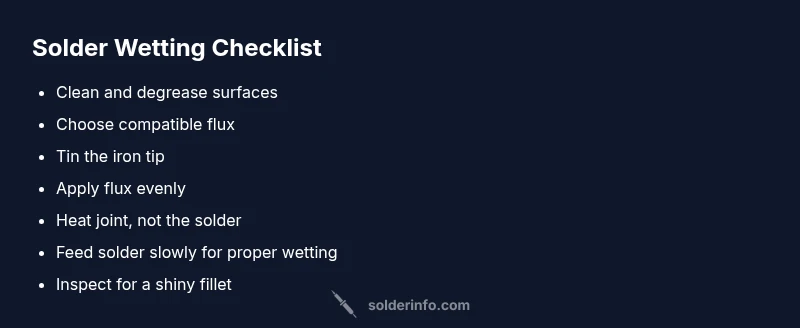
- Clean, dry surface with isopropyl alcohol
- Abrade oxide to bright metallic surface
- Apply fresh, compatible flux in a thin, even layer
- Tin the iron tip and maintain a controlled heat
- Feed solder to the joint, not the iron tip
- Inspect for dull or grainy surfaces indicating oxidation
Steps
Estimated time: 20-40 minutes
- 1
Inspect and clean the joint
Examine the joint for oxidation, oil, or residue. Wipe with isopropyl alcohol and use a brass brush to remove oxide until the metal shines. Dry completely before continuing.
Tip: A clean surface is the most cost-effective repair—don’t skip this step. - 2
Choose and apply flux
Select flux compatible with your solder alloy and substrate. Apply a thin, even layer to the joint; avoid pooling flux, which can hinder heat transfer.
Tip: If flux is old or dry, replace it before proceeding. - 3
Pre-tin the iron tip
Heat the iron and wipe the tip clean, then apply a small amount of solder to create a smooth, shiny coating. This improves heat transfer to the joint.
Tip: A well-tinned tip heats more evenly and resists oxidation during work. - 4
Heat the joint, not the solder
Bring the joint to temperature with the iron, then feed a small amount of solder into the joint so it flows along the surface. Remove heat as soon as the joint wets.
Tip: Avoid applying solder directly to the iron tip; this causes poor wetting. - 5
Reflow and inspect
Let the joint cool naturally and inspect for a shiny, concave fillet. If dull or cracked, rework with a clean surface and fresh flux.
Tip: A marginal joint can be improved by reheating and re-wetting with a small amount of solder. - 6
Test with a jig or scrap piece
Before final assembly, test the technique on scrap material to confirm wetting, heat control, and flux performance.
Tip: Always test first to avoid wasting parts. - 7
Control heat and avoid overheating
Maintain a steady heat and avoid long contact with flux, which can burn and cause residue buildup.
Tip: If you see blackened flux, stop and rework with fresh flux. - 8
Safety and cleanup
Ventilate the workspace and wear eye protection. Clean up flux residues after joint cooling as directed by flux manufacturer.
Tip: Safety first: flux vapors can be irritating.
Diagnosis: Solder won't wet or stick to joint after surface prep
Possible Causes
- highSurface oxidation or contamination
- highInadequate heat transfer or wrong temperature
- mediumIncompatible or expired flux
- mediumUsing the wrong solder alloy for the substrate
- lowMoisture or oil on hands/parts
Fixes
- easyThoroughly clean and de-oxidize surfaces with a brass brush or fine abrasive, then re-clean with isopropyl alcohol
- easyEnsure iron is properly heated and well-tinned; adjust temperature to the solder's spec and maintain consistent heat during wetting
- easyApply a fresh, compatible flux in a thin layer; avoid dried-out flux or residue buildup
- mediumUse the correct alloy for the substrate (lead-free electronics vs leaded where appropriate) and verify solder compatibility
- easyDry components and workspace; avoid moisture and fingerprints that can interfere with wetting
Quick Answers
Why isn't solder sticking to copper pads or wires?
Non-wetting typically results from oxidation or surface contamination. Clean the metal, reapply flux, and ensure the joint is heated to the proper temperature before attempting to reflow. Using the correct flux and avoiding oil or moisture on surfaces are essential.
Non-wetting is usually caused by oxidation or surface contamination. Clean the metal, reapply flux, and ensure proper heating before trying again.
Is flux essential for solder to wet properly?
Yes. Flux reduces surface tension and prevents oxidation, enabling solder to flow and wet metal surfaces. Use flux appropriate for your solder alloy and substrate, and clean residues after work if required by the flux type.
Flux is essential; it reduces surface tension and prevents oxidation to help solder wet the surface.
Can reheating a joint fix a cold joint?
Reheating with fresh flux and proper heat can repair a cold joint. Remove old solder, re-clean, reapply flux, and reflow slowly to ensure full wetting before cooling.
Yes, reheating with fresh flux and proper heat can fix a cold joint—rework carefully.
Lead-free vs leaded solder: which should I use?
Both can wet well with proper technique. Lead-free solder generally requires higher temperatures. Follow the alloy’s recommended flux and temperature range to achieve good wetting.
Lead-free solders may need higher heat; pick the alloy that matches your project and flux.
What should I do if the joint still won't wet after cleaning?
Reassess all factors: surface prep, flux type, heat control, and alignment. Try a fresh test joint on scrap, adjust flux, and reflow with steady heat. If issues persist, you may need different materials.
If it still won’t wet, recheck prep, flux, and heat, and test on scrap.
How can I prevent wetting problems in future projects?
Develop a consistent workflow: clean surfaces, use appropriate flux, maintain proper heat, and avoid contamination. Practice on scrap pieces to tune timing and technique.
Create a reliable routine: clean, flux, heat, and practice on scraps.
Watch Video
Top Takeaways
- Ensure surfaces are clean and oxide-free
- Apply fresh, compatible flux and control heat
- Tin tips and feed solder to the joint
- Test on scrap before finalizing joints
- Follow safety and cleanup practices