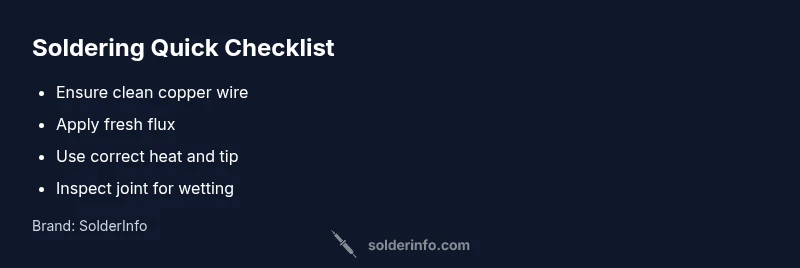
Why Solder Won't Stick to Wire: A Troubleshooting Guide
Discover practical steps to fix solder not sticking to wire. This urgent guide covers prep, flux, heat, and common mistakes to get reliable joints.


The most likely cause is surface contamination or oxidation on the wire, plus improper flux or heat. Clean the wire, reapply fresh flux, and heat the joint correctly; tin the wire and use the right solder for the type. If the joint wets, you’ve fixed it; if not, proceed with deeper checks.
Why the Solder Won't Stick to Wire
When you ask why is my solder not sticking to wire, the quickest way to assess the problem is to look at surface cleanliness, oxidation, and whether the heat you apply lands on the joint rather than the wire itself. Copper wire forms a native oxide layer that can resist wetting, and many wire-insulation coatings carry oils or sulfur compounds that repel solder. If you rush the approach, you’ll end up with cold joints or tacky fillets. This guide, informed by the SolderInfo team, walks you through diagnosing and fixing the issue with minimal risk to components and insulation. The keyword here is wetting: solder must spread smoothly across copper to form a reliable joint, not bead up or ball away. The first thing to check is the preparation: is your wire clean and stripped properly? Is your flux current and appropriate for the solder alloy you use? Are you using the right temperature profile for leaded vs lead-free solder? With careful prep and correct technique, most surface-related sticking issues disappear.
Prep and Cleaning Before Soldering
Good soldering starts with clean metal. Remove any oxide and oils from the wire surface using isopropyl alcohol and a brass brush or fine abrasive pad. Stripping should expose bare copper for a small length, typically 3-6 mm for thicker wires and 1-2 mm for fine enamel-coated wire. Then twist stranded wire to keep strands together; this improves contact area for solder. Check insulation to ensure no coating remains near the exposed copper that could melt or burn. Choose the right flux—rosin-core for electronics or paste flux for joints with heavy oxidation. Apply a thin, even layer to the exposed wire and the joint area. If flux has dried out or changed color, replace it; expired flux loses activator potency and wetting ability. Remember: wetting is the key, not simply applying heat.
Diagnostic Flow: Quick Symptom-to-Diagnosis Map
Start with the symptom: solder won’t wet the wire. If you see dull, crumbly deposits or the solder beads up rather than flows, suspect surface contamination or insufficient heat. Check: is the flux new and properly applied? Is the wire copper or coated? Are you using the appropriate solder for your wire? If the link remains, review the equipment: is the tip clean, and is the iron set to the right temperature? If you still can’t achieve wetting after re-cleaning and re-wetting, move to the next steps: re-strip the wire, fresh flux, reheating the joint, and ensuring you don’t heat the wire insulation. If after these steps the solder still won't stick, consider whether the wire is too small or enamel-coated and requires gnawing off or tinning first.
Step-by-Step Fix for the Most Common Cause: Inadequate Wetting
This section expands on the practical actions. Start with cleaning, reapplying flux, and tinning, then reheat with consistent temperature. Focus on wetting the joint rather than dragging solder to the wire. Ensure the joint gets enough heat while shielding insulation.
Safety, Prevention, and Best Practices
Always wear safety glasses and work in a well-ventilated area. Use flux appropriate for your solder and wire; avoid expired flux that loses activity. Keep a clean work surface, and store solder and flux away from heat sources. For enamel-coated wires, sand or burn through the enamel before attempting to solder. Never touch hot components with bare hands, and never force a joint—if it won’t wet after repeated tries, pause and re-evaluate.
Troubleshooting when Problems Persist
If none of the above fixes work, recheck the tool and materials: ensure the tip is clean and in good condition, verify the solder hallmarks for lead-free composition, and confirm the wire is compatible with the chosen flux. Sometimes a change of flux or solder alloy solves persistent sticking issues. If you’re working on critical electronics or delicate insulation, consider seeking professional guidance to prevent damage.
What the Quick Fix Looks Like in Practice
A properly wetted joint shows a shiny, smooth fillet that covers the wire and the pad. It should flow evenly without gaps, not bead or dull. A good joint also passes a light tug test—gently trying to move the wire should not separate the joint. If you see a dull or grainy surface, rework with fresh flux and better heat control. Remember, wetting is the key to durable, reliable connections.
Steps
Estimated time: 25-35 minutes
- 1
Prepare tools and workspace
Clear a clean area, turn on the iron, and select a small, sharp tip. Verify safety equipment is ready and that you have fresh flux and solder within reach.
Tip: A tidy workspace reduces mistakes and helps you focus on wetting the joint. - 2
Prepare the wire
Strip the insulation properly, twist strands, and clean the bare copper. Ensure the exposed length matches the wire gauge and that there is no residual coating.
Tip: Twisting prevents stray strands from impeding wetting. - 3
Apply flux and tin
Apply a thin coat of flux to the exposed copper and the pad. Lightly tin the wire to form a conductive surface that wetting can spread over.
Tip: Tinning creates a ready surface for quick wetting. - 4
Heat and apply solder
Place the iron on the joint and feed solder into the joint edge. Avoid applying solder directly to the iron or wire, which can cause cold joints.
Tip: Keep the tip clean and avoid overheating insulation. - 5
Inspect and rework if needed
Look for a smooth, shiny fillet that covers the seam. If dull or gaps appear, reapply flux and reheat before finishing.
Tip: A good fillet indicates proper wetting and a strong bond. - 6
Cool and test
Let the joint cool naturally and inspect with a magnifier. Do a gentle tug test to confirm mechanical strength and continuity.
Tip: Rushing cooling can cause a brittle joint.
Diagnosis: Wire solder won’t wet or stick to the conductor
Possible Causes
- highOxidation or contamination on the wire surface
- mediumExpired or improper flux
- mediumInsufficient heat or incorrect tip temperature
- lowEnamel coating on the wire or dirty insulation near the joint
Fixes
- easyClean and re-strip the wire, reapply fresh flux, and re-try with proper heat
- easyTin the wire lightly after flux, then join while both surfaces are heated
- easyReplace flux with a fresh, appropriate type and ensure correct solder choice
- mediumIf enamel is present, remove it carefully or use a different wire designed for soldering
Quick Answers
Why is my copper wire not taking solder?
Most often it’s oxidation, oil, or contamination on the surface, combined with insufficient heat or wrong flux. Cleaning and re-fluxing usually fixes the issue.
Oxidation or contamination on the wire surface is the common reason solder won’t wet copper. Clean, re-flux, and reheat.
Can enamel-coated wires cause solder not to stick?
Yes. Enamel must be removed or burned off at the joint area before soldering, otherwise the solder won’t wet properly.
Enamel on wires blocks wetting; remove enamel before soldering.
Does lead-free solder require a hotter iron?
Lead-free solder can require higher heat and more careful flux usage. If you’re not getting wetting, adjust temperature and flux effectiveness.
Lead-free usually needs a bit more heat and good flux for proper wetting.
Should I twist the wire before soldering?
Twisting helps maintain contact and prevents strands from splaying, which improves wetting and joint quality.
Twist the wires so they stay together for a solid joint.
When should I replace flux?
If flux looks dry, discolored, or smells off, replace it. Expired flux loses activator and wetting capability.
Replace flux if it’s old or dried out to ensure good wetting.
What if the joint still won’t stick after steps?
Re-evaluate the wire type, insulation, and flux choice. If issues persist on a critical project, consult a professional.
If it still won’t wet, consider professional help.
Watch Video
Top Takeaways
- Clean before soldering and re-strip if needed
- Use fresh flux and tinning to improve wetting
- Maintain proper heat without melting insulation
- Always inspect fillets for smooth, shiny joints
- If in doubt, seek professional help for critical connections