Bad copper solder joint: diagnose, repair, and prevent leaks
Learn how to diagnose and fix a bad copper solder joint in plumbing with step-by-step guidance, safety tips, and prevention strategies to minimize leaks and failures in copper piping.


A bad copper solder joint is typically caused by inadequate surface preparation and flux residue which prevent proper bonding. The quickest fix is to shut off water, dry the area, clean the copper to a bright shine, reapply flux, and re-solder with even heat to form a solid fillet. After cooling, pressure-test the joint for leaks and inspect the bead for uniform coverage.
Understanding the stakes of a bad copper solder joint
A bad copper solder joint is more than a small drip — it can lead to ongoing leaks, water damage, and even mold growth in confined spaces. In plumbing, the bond between copper pipe and solder must form a continuous, corrosion-resistant seal. When the joint is compromised, you may notice damp patches, white mineral deposits, or a steady stream of water showing up under pressure. The risk isn’t limited to the moment of soldering; it extends to long-term reliability as the pipe cycles between hot and cold, expanding and contracting the metal. For the DIYer, recognizing symptoms early and understanding the repair workflow is essential. The keyword here is control: clean surfaces, fresh flux, steady heat, and complete coverage of the joint. As you work, remember that a properly formed fillet of solder is your best indicator of a durable repair. According to SolderInfo, disciplined prep and controlled heat dramatically improve outcomes for a bad copper solder joint.
Common causes of bad copper solder joints
A bad copper solder joint usually boils down to surface preparation, flux management, and heat control. Common culprits include corroded or oxidized copper, oily residues, and flux dried out before soldering begins. If the pipe wasn’t cleaned to a bright surface, the solder can’t wet properly, leaving a weak bond that leaks under pressure. Overheating the joint can anneal the copper, causing a brittle bond or burn-through, while insufficient flux can leave gaps that trap air and contaminate the joint. Another frequent issue is movement during cooling — even small thermal shifts can crack a marginal bead. Finally, pipe preparation matters: burrs, knicks, or misaligned fittings create stress points that reduce seal integrity. If any of these factors are present, a bad copper solder joint is likely. In practice, the fix is to re-clean, re-flux, and re-solder with attention to even heat distribution and a continuous bead.
Signs your joint has failed and what to check first
Look for visible signs such as per-wall dampness, dripping during use, or mineral residue around the joint from evaporated water. A failed joint may appear dull or have a rough, dry bead rather than a smooth, shiny fillet. Listen for a hissing or dripping sound when water pressure is applied. Smell can also be a clue if flux residue ages and corrodes. To distinguish a bad copper solder joint from a loose connection or a faulty valve, gently wiggle the pipe near the joint; any movement or air pockets often signals a bond problem. Remember, early detection helps avoid bigger problems later on. SolderInfo notes that reliable repairs start with clean surfaces and precise flux application.
Safety first: preparing to inspect and work on copper joints
Before you touch a copper joint, shut off the water supply and drain the line. PPE matters: wear eye protection and gloves, and ensure good ventilation to avoid inhaling fumes from flux and solder. Work in a well-lit area with a clear workspace; keep a fire extinguisher nearby when using a torch. Have a plan for securing the pipe so it won’t shift during heating, and avoid overheating adjacent fittings. A clean, organized workspace reduces errors and helps you assess the joint more accurately. The goal is to create a bond that wets evenly across the entire circumference, producing a uniform fillet that you can see and feel.
Diagnostic flow: initial checks you can perform (before disassembly)
Start with the simplest checks: verify the water is fully shut off, isolate the affected run, and clean the joint surface. Inspect for oxidation or grease that might impede wetting. Check if the joint bead has split, cracked, or left gaps around the circumference. If leaks persist after a quick reseal, you may be dealing with a more severe issue that requires removal and replacement of the joint or a section of pipe. Always test with pressure after repairs. SolderInfo emphasizes controlled heat and proper flux as keys to success when diagnosing a bad copper solder joint.
Step-by-step repair overview (what you’ll do during the fix)
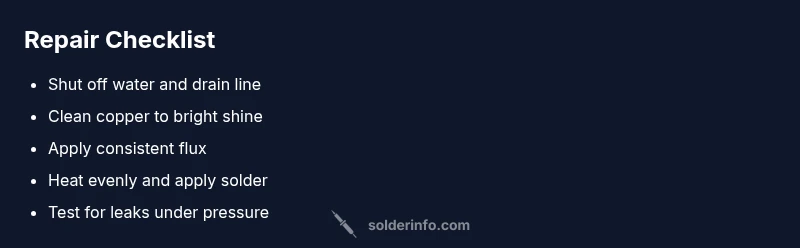
This section outlines the typical approach to repairing a bad copper solder joint, focusing on a straightforward resolder rather than full pipe replacement when feasible. The core steps are cleaning the surfaces, applying fresh flux, heating evenly, and applying solder with a steady hand. You’ll verify the joint with a pressure test and inspect for a clean, continuous bead. If the joint is damaged beyond reuse, you’ll need to replace the section of pipe and reassemble with the correct fittings. The emphasis throughout is on safety, proper technique, and testing the seal before returning the line to service.
Tools, materials, and best practices you should have on hand
Prepare a basic toolbox for copper soldering: a propane/Map torch, melten flux, lead-free solder rated for copper, a wire brush, emery cloth, sandpaper, flux remover, and a pressure gauge for testing. Use the right size fittings to ensure a snug fit without over-tightening, which can distort the copper. Always choose lead-free solder for potable water lines and select flux designed for copper. Keep the work area clean and dry, and avoid breathing flux fumes or fumes from overheated solder. By maintaining clean surfaces and correct material selection, you improve the odds of a long-lasting repair. SolderInfo recommends confirming the fit with a dry run before heating.
A simple, repeatable test to confirm success
After re-soldering, allow the joint to cool undisturbed, then perform a pressure test by gradually repressurizing the line and watching for any drips over several minutes. Inspect the joint bead from multiple angles to ensure full coverage and absence of gaps. If any moisture escapes, repeat the process, focusing on cleaning, fluxing, and heat distribution. Record the results for future maintenance so you know when to re-check. A systematic approach to testing helps you catch a bad copper solder joint before it causes water damage.
Prevention: how to avoid a bad copper solder joint in the future
Prevention starts with consistent prep: clean, deburr, and dry the pipe surfaces; apply Flux uniformly; ensure you never over-heat or under-heat the joint; and recheck the fit after cooling. Use the correct solder and flux for copper piping and keep a clean torch technique to avoid scorching. Consider replacing pitted sections with new copper tubing and properly supported clamps to limit movement. By following these best practices, you reduce the likelihood of a bad copper solder joint reoccurring and increase system reliability. The SolderInfo perspective emphasizes disciplined prep and controlled heat for durable results.
Steps
Estimated time: 60-90 minutes
- 1
Shut off water and prep workspace
Turn off the water supply to the affected area and let the line drain completely. Clear the workspace of flammable materials and put on eye protection and gloves. Secure the pipe so it cannot move during heating. This reduces the risk of creating a new weak joint.
Tip: Keep a bucket handy to collect any residual water during draining. - 2
Clean and deburr the copper
Use a wire brush and abrasive pad to clean the copper surface until it shines. Remove oxidation and ensure there are no oils or fingerprints left on the surface. A bright, clean surface is essential for good wetting by the solder.
Tip: Do a quick dry wipe with a clean cloth to remove loose dust before fluxing. - 3
Apply flux evenly and position fittings
Apply a thin, even coat of flux to both the pipe and fitting. A consistent flux layer helps the solder flow and forms a solid seal. Position the fittings for proper alignment and anticipate where the joint bead will form.
Tip: Avoid applying flux too thickly near areas that will be shielded by the fitting. - 4
Heat the joint and apply solder
Warm the joint evenly with the torch, keeping the flame moving to prevent overheating any one spot. Touch the solder to the joint and let capillary action draw it in; remove the heat as soon as the solder flows completely around the joint.
Tip: Never touch the hot pipe with your bare hands; use tongs or a cloth-wrapped glove. - 5
Cool, inspect, and clean excess flux
Allow the joint to cool naturally, then wipe away flux residue with a damp cloth. Inspect the bead for a uniform, continuous fillet with no gaps. Look for any pinholes or cracks that could indicate a failed bond.
Tip: If the bead looks dull or irregular, reheat and add a small amount of solder to fill gaps. - 6
Pressure test the joint
Gradually repressurize the line and observe for several minutes to confirm there are no leaks. If you see moisture, repeat cleaning and soldering as needed. A successful test confirms the repair integrity.
Tip: Start with lower pressure and work up gradually to avoid shock on the system. - 7
Evaluate adjacent joints
Inspect nearby joints for progressive wear or oxidation that could signal a broader issue. If other joints show similar signs, plan a larger repair strategy rather than tackling one joint at a time.
Tip: Address multiple joints in one session to reduce future leak risk. - 8
Document and schedule preventive checks
Record the repaired joint details and set a reminder for periodic inspection, especially after seasonal changes. Proactive checks help catch early signs of wear before they leak.
Tip: Create a simple maintenance log for your copper piping system.
Diagnosis: Visible dampness or a leak at a copper solder joint
Possible Causes
- highIncomplete cleaning of copper surface
- highFlux not properly applied or contaminated flux
- mediumOverheating causing joint annealing and weak bond
- lowUndersized or damaged joint due to movement
Fixes
- easyShut off water, dry joint, re-clean surface, reapply flux, and re-solder with even heat
- easyEnsure copper is clean to bright finish; scrub until shiny before fluxing
- mediumCheck for joint damage; replace fittings or pipe if the bead is cracked
Quick Answers
What is considered a bad copper solder joint?
A bad copper solder joint shows leaks, a dull bead, or gaps around the joint. It usually results from poor surface prep, flux issues, or overheating during soldering. A thorough inspection helps determine if re-soldering or pipe replacement is needed.
A bad copper solder joint leaks or has an uneven bead due to poor prep, flux issues, or overheating, and may require re-soldering or replacing the pipe.
Should I re-solder or replace the joint?
If the joint shows only minor defects and the pipe is sound, re-soldering is usually sufficient. If the copper has deep pitting, significant corrosion, or the joint cracks, replacing the joint or a section of pipe is the safer choice.
If it’s just a small issue, re-solder. If the pipe is corroded or cracked, replace it.
Can a bad copper solder joint contaminate water?
Properly soldered joints using lead-free solder should not contaminate drinking water. However, a failed joint can introduce contaminants from flux residues or corrosion products; always clean flux residues after soldering.
A correctly soldered lead-free joint is safe, but a failed joint can cause leaks and residue buildup that you should clean.
What tools do I need to fix a copper solder joint?
You’ll need a torch, flux, lead-free solder, a brush or cloth, emery cloth, a pipe cutter or hacksaw, and safety gear. Having a pressure gauge helps test the repair before reactivating the water supply.
Tools include a torch, flux, lead-free solder, and safety gear; a gauge helps with testing.
Is it safe to solder copper indoors?
Soldering indoors is common, but it requires good ventilation and adherence to fire safety. Keep flammables away, wear PPE, and have a fire extinguisher within reach. If you’re unsure, consult a professional.
Soldering indoors is okay with ventilation and safety measures; otherwise, seek help.
How long does a typical re-solder take?
A typical re-solder repair, including safety setup and testing, usually takes about 45-90 minutes depending on access and pipe length. More complex replacements can take longer.
Most repairs take under two hours, depending on access and pipe length.
Watch Video
Top Takeaways
- Shut off water before inspecting or repairing.
- Clean, flux, and heat evenly for durable joints.
- Test joints under pressure after repairs.
- Replace damaged sections when needed to prevent future leaks.
- Document repairs and schedule preventive checks.