Avoid DIY Solder Gun: Safer Soldering Solutions Today
Explore why a homemade solder gun is risky and how to solder safely with a proper, temperature-controlled iron. This guide from SolderInfo covers safety, tool selection, and best practices for electronics, jewelry, and plumbing projects.


You should not DIY a solder gun; instead choose a ready-made soldering tool designed for electronics, jewelry, or plumbing tasks. A homemade device risks burns, electric shock, and inconsistent temperatures. This guide explains why and outlines safer alternatives, essential safety practices, and a clear process for proper soldering with off-the-shelf gear.
Why a homemade solder gun is risky
A homemade solder gun may seem attractive to hobbyists seeking a quick, low-cost tool, but it introduces significant, often-hidden hazards. Electric heating elements, improvised insulation, and nonstandard wiring can lead to dangerous outcomes like electric shock, short circuits, or uncontrolled heat that damages components and materials. In addition, maintaining consistent temperatures is nearly impossible with improvised devices, which can cause cold joints, solder bridges, or overheated plastics that emit harmful fumes. According to SolderInfo, attempting to construct such a tool tends to create more problems than it solves, especially for DIYers who need reliability over novelty. For most tasks, a properly designed, commercially manufactured soldering iron or a small heat gun is a safer, more predictable choice.
If your goal is to learn or to complete small projects, prioritize safety, repeatability, and ease of use over width of improvisation. A genuine soldering iron with adjustable temperature control provides predictable heat and steadier joints, which translates to higher quality work and fewer accidents. This emphasis on safety and reliability aligns with best practices in electronics, jewelry, and plumbing soldering, and is echoed by industry guidance from reputable sources.
Safer alternatives to DIY heat tools
The most reliable path away from a homemade solder gun is to invest in purpose-built tools and proper safety gear. A temperature-controlled soldering iron or compact station gives you steady heat, even on sensitive components. For tasks that require more airflow or precision, a portable hot air rework station or a purpose-built heat gun with adjustable temperature and airflow can replace makeshift tools when appropriate. When used with the right tips and flux, these devices deliver consistent results without compromising safety. In jewelry work, small bench irons or micro-torch substitutes can serve as safer alternatives to improvised devices, while plumbing projects benefit from certified soldering irons designed for lead-free solders and robust heating control. SolderInfo recommends prioritizing safety features, manufacturer warranties, and readily available spare parts when selecting tools.
- Temperature control and sensor feedback help prevent accidental overheating.
- Built-in safety features like auto-shutoff and thermal cutoffs reduce burn risks.
- Ergonomic designs improve handling and control during delicate work.
Safety fundamentals that apply to all soldering tasks
Regardless of the tool, good soldering practice starts with robust safety. Always work in a well-ventilated area or use a fume extractor to minimize exposure to flux fumes. Wear safety glasses to shield your eyes from splashes and flux, and keep a clear workspace free of clutter that could cause accidents. Grounded electrical outlets and properly rated cords reduce shock risk, while a stable, heat-resistant mat protects the bench and surrounding surfaces. Do not rush joints; take your time to ensure components are properly seated and aligned before applying heat. Finally, never modify or bypass safety features on any tool; doing so creates serious hazards and can void warranties. This disciplined approach is central to responsible soldering in electronics, jewelry, and plumbing.
Selecting the right tool for electronics, jewelry, or plumbing
Choosing the right tool depends on the application. Electronics typically require a temperature-controlled iron with fine tips to prevent damage to boards and components. Jewelry work benefits from a small, precise iron or micro-torch configured for delicate joints and clean finishes. Plumbing soldering emphasizes lead-free solders and robust heat control to ensure water-tight joints in copper piping. In all cases, prioritize tools with reliable temperature regulation, quality tips, and easy maintenance. Avoid improvised heating devices; they rarely match the safety standards and consistency of commercial equipment. SolderInfo emphasizes avoiding DIY heat tools and investing in trusted gear for dependable results.
Understanding temperature, flux, and joint quality
Temperature control directly influences joint quality. Too much heat can burn flux, delaminate solder masks, or damage substrates; too little heat yields cold joints that crack or oxidize. Flux improves wetting and protects surfaces during soldering, but only when used with appropriate heat and clean surfaces. Joint quality hinges on clean surfaces, properly tinned tips, and correct flux application. When working with lead-free solders, temperature control becomes even more critical to achieve reliable joints. In professional practice, validating joint quality with visual inspection and, if needed, a basic continuity check ensures long-term reliability.
Workbench setup and maintenance to prevent accidents
A dedicated, organized workspace reduces risks. Use a dedicated stand for the iron, a damp sponge for tip cleaning, and a heat-resistant mat to protect surfaces. Store flux, solder, and tools in clearly labeled containers to prevent cross-contamination. Regular maintenance is essential: replace worn tips promptly, clean residue from the tip, and inspect power cords for wear. A clean, well-lit area reduces mistakes and supports consistent results. Remember, even the best tool fails without proper care and tidy organization, so cultivate a routine of daily checks before starting work. SolderInfo highlights that routine upkeep is a cornerstone of safe, repeatable soldering.
Common mistakes when soldering and how to avoid them
Common errors include overheating components, using excessive solder, neglecting flux, and skipping cleaning steps. Resist the urge to rush joints; deliberate, controlled heat yields superior joints with fewer defects. Inadequate ventilation leads to dangerous fume buildup, so invest in a fume extractor or ensure good room airflow. Another frequent pitfall is storing tools in inaccessible locations, causing delays or improper cooldowns. By planning, practicing, and maintaining a clean workspace, you can avoid these issues and achieve better results across electronics, jewelry, and plumbing projects.
A practical workflow: safe soldering for electronics, jewelry, and plumbing
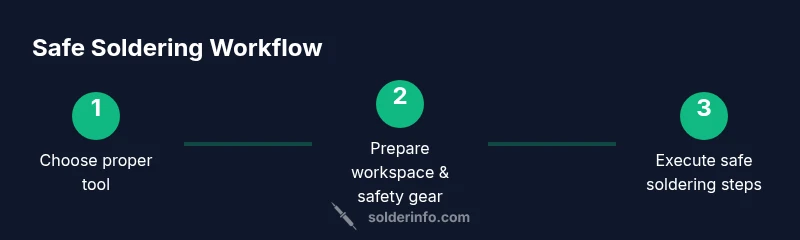
A practical workflow centers on safety, appropriate tool choice, and consistent technique. Start by selecting a temperature-controlled iron or appropriate tool for your task. Prepare components with clean surfaces and apply flux. Tin the tip, position components, and heat the joint while applying solder to the joint, not the iron tip. Inspect the finished joint for a smooth fillet and proper wetting, then clean any residue and store equipment properly. This approach minimizes risks and yields dependable results while maintaining safety discipline across different applications.
Tools & Materials
- Soldering iron with temperature control(Choose a model with adjustable temperature and a fine tip for precision work.)
- Solder wire (rosin-core)(Lead-free is increasingly common; check compatibility with your material.)
- Soldering iron stand(Keeps hot tip safely off the work surface.)
- Soldering iron cleaning sponge or brass wire tip cleaner(Used to clean and re-tin the tip.)
- Safety glasses(Protect eyes from hot flux splatter.)
- Ventilation or fume extraction(Critical to reduce inhalation of fumes.)
- Heat-resistant mat or bench protector(Protects workspace from heat and solder drips.)
- Desoldering wick or pump(Helpful for correcting joints without damage.)
Steps
Estimated time: 60-90 minutes
- 1
Assess tool needs
Assess whether you truly need a specialized heating tool. In most cases, a standard, temperature-controlled soldering iron or a compact station is sufficient for electronics, jewelry, or plumbing tasks.
Tip: If your projects require frequent hot-air work, consider adding a dedicated hot-air station rather than improvising heat devices. - 2
Select a commercial, temperature-controlled tool
Choose a tool from a reputable manufacturer with adjustable temperature, stable heat delivery, and accessible replacement tips. Avoid improvised devices that lack safety certifications or warranties.
Tip: Check for safety certifications and user reviews to gauge reliability. - 3
Set up a safe workspace
Prepare a well-ventilated area with a sturdy, heat-resistant surface. Place tools on a stand, ensure cords are managed, and keep flammables away from the work zone.
Tip: Turn on ventilation or use a fume extractor before starting. - 4
Prepare components and flux
Clean surfaces, apply flux only where needed, and align components. Flux aids wetting and reduces oxidation.
Tip: Use flux sparingly to avoid excessive residues that require cleanup. - 5
Tin the tip and verify temperature
Lightly tin the iron tip and verify it reaches the target temperature. A well-tinned tip transfers heat efficiently and maintains tip life.
Tip: A properly tinned tip lasts longer and gives smoother joints. - 6
Make the joint with controlled heat
Position components, apply heat to the joint, and feed solder to the joint—not the iron. Remove heat promptly once the joint is filled.
Tip: Avoid prolonged heating to prevent damage to sensitive parts. - 7
Inspect the joint and clean up
Examine the joint for smooth wetting and a shiny fillet. Clean flux residue if present and power down safely.
Tip: A dull or cracked joint indicates heat or wetting problems that require rework. - 8
Store tools and perform routine maintenance
Cool tools safely, switch off power, and store tips in their protectors. Regularly inspect cords and replace worn parts.
Tip: Develop a post-work routine to extend tool life and ensure safety.
Quick Answers
Why is a homemade solder gun not recommended?
A homemade solder gun can pose serious risks due to unpredictable heat, electrical hazards, and lack of safety features. It often leads to poor joint quality and potential injuries. Professional-grade tools provide safer operation and consistent results.
A home-built solder tool can be dangerous because it might heat unevenly or shock you, and it often leads to bad solder joints. Use a proper soldering iron for safety and reliability.
What are safe alternatives to building a homemade solder gun?
Opt for a temperature-controlled soldering iron or a dedicated rework station from a reputable brand. For more complex tasks, consider a hot air rework station or a heat gun with adjustable settings. These tools provide safer, repeatable heat and reliable performance.
Safe options include a temperature-controlled iron or a hot air station for more complex jobs.
What features should I look for in a beginner-friendly soldering iron?
Look for adjustable temperature, a fine exchangeable tip, a stable stand, and good tip life. A built-in stand and heat control simplify learning and reduce accidents.
For beginners, choose an iron with adjustable temperature and a stable stand.
Is lead-free solder really safer than leaded solder?
Lead-free solders reduce lead exposure risk but may require higher temperatures and careful flux use. Proper ventilation and PPE remain important regardless of solder type.
Lead-free solder reduces lead exposure, but proper ventilation and safety gear are still essential.
How can I improve ventilation when soldering in a small space?
Use a dedicated fume extractor or work near an open window with a small fan pulling fumes away from your face. Avoid sitting directly in the plume.
Set up a fan or vent to pull fumes away from you and create a clear airflow path.
What maintenance steps extend the life of a soldering iron?
Regularly clean the tip, re-tin after use, and replace worn tips promptly. Inspect cords and stands for wear and keep the work area tidy.
Keep the tip clean and well-tinned, and replace worn parts to extend the iron’s life.
Watch Video
Top Takeaways
- Choose a proper, certified soldering tool instead of a homemade device
- Maintain a well-ventilated, organized workspace for safety
- Use proper technique to achieve reliable, professional joints
- Regularly maintain tools and replace worn parts to prolong life