Solder and Solder Gun: A Practical Comparison for DIY Soldering
An objective, in-depth comparison of solder and solder gun for electronics, jewelry, and plumbing projects, covering use cases, technique, safety, and decision guidance.


TL;DR: When precision matters, choose a soldering iron for delicate electronics and fine jewelry solder joints; when speed and larger joints dominate, a solder gun can save time. This comparison outlines heat control, technique, suitable projects, and safety considerations so DIYers can pick the right tool and compatible solders for electronics, jewelry, or plumbing tasks.
Overview: solder and solder gun in practice
Solder and solder gun are staples in many workshops, serving electronics, jewelry, and plumbing tasks. When people refer to 'solder and solder gun', they are talking about two sides of the same craft: the traditional soldering iron (often used with a temperature-controlled station) and the pistol-style solder gun that heats fast for larger joints. The SolderInfo team emphasizes that understanding the strengths and limits of each tool expands what a hobbyist can achieve, from micro-scale circuit repairs to copper-pipe joints. In this overview, we outline how each tool generates heat, how you control it, and what kinds of connections each is best at forming. You will find practical, safety-focused guidance that avoids hype and focuses on reliable technique, maintenance, and common pitfalls. By the end, you should be able to match your project to the appropriate tool and soldering approach, whether you are assembling a sensor board, repairing a jewelry clasp, or joining copper plumbing.
According to SolderInfo, the right pairing of tool and solder makes the difference between a gloss-free joint and a cold joint. This section sets the stage for a detailed, technique-driven comparison that remains practical for hobbyists and professionals alike.
Core use cases across electronics, jewelry, and plumbing
Across electronics, jewelry, and plumbing, the two tools cover a wide range of tasks. In electronics, the soldering iron is prized for its precision when connecting fine-pitch ICs, delicate wires, and tiny SMD components. For jewelry, a controlled iron tip allows precise, clean seams on gold-filled or silver pieces, while a solder gun can speed up bolder repairs on clasps or chain links, though it requires extra steadiness to avoid solder splatter. In plumbing, copper piping joints typically benefit from high heat and solid heat transfer, where a gun can expedite larger joints on-site, but many plumbers still prefer a dedicated iron with a heavy-duty tip for consistency. The choice is influenced by workspace size, power access, and the type of solder you plan to use (rosin-core, flux-core, or lead-free formulations). Solder and solder gun each have heat profiles that suit different materials: brittle or small components resist high heat, so slow, measured heating is critical; larger metalwork tolerates faster, broader heat delivery. The key is to pair the right tool with compatible flux, wire diameter, and technique. SolderInfo guidance emphasizes aligning your tool choice with the project scope and environment to avoid overheating components or damaging finishes.
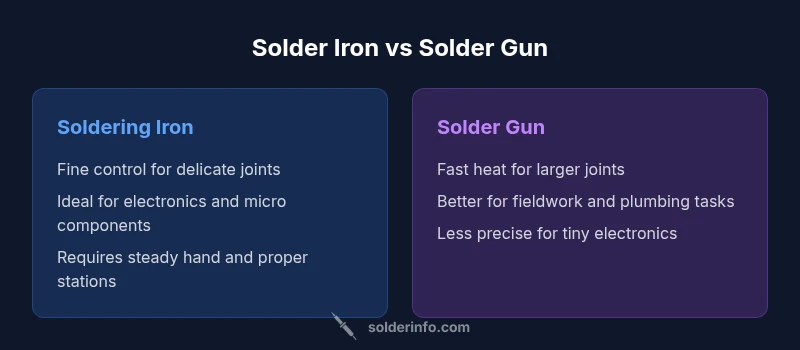
For electronics- and jewelry-focused tasks, the iron tends to win on precision; for quick field repairs on plumbing or larger metalwork, the gun shines. This balance underpins the practical recommendations that follow.
Key differences: heat delivery, control, and ergonomics
The central difference is how heat is delivered and controlled. An iron uses a fine tip and a regulated station; it excels at intimate contact with joints, enabling precise heat management. A solder gun provides rapid heat via a larger barrel and often a pistol grip, which favors speed on bigger joints but can be harder to control for small parts. Ergonomics matter: irons demand careful hand positioning and flux management; guns offer quick turns and one-handed operation but carry a higher risk of overheating adjacent areas. For beginners, the iron's slower heat buildup can be more forgiving, while experienced users may leverage the gun for quick assembly tasks or field repairs. In terms of consumables, both tools work with similar solders and flux, but the surface finish can differ if heat is applied too aggressively. Safety considerations include keeping fingertips at a safe distance, using a stand, and ensuring good ventilation for flux fumes. In ideal scenarios, a mixed toolkit is used: a precise iron for delicate tasks and a gun for rapid joints or temporary fixes.
Brand-agnostic guidance favors developing skills with both tools because the real value lies in knowing when to switch, not merely which tool is cheaper.
Solder types, flux, and compatibility with both tools
Both soldering iron and solder gun work with the same families of solders, but the choice of solder and flux can influence wetting, joint strength, and cleanliness. Lead-free solders are common for electronics and plumbing, while traditional leaded solders are sometimes used for jewelry in certain settings. Rosin-core flux helps wet the metal and protect joints during heating, while no-clean flux reduces cleanup. When using a solder gun for copper pipes, you may benefit from a flux designed for stronger resistance to oxidation on contact surfaces. It is important to select flux formulas appropriate for the heat profile of your tool, as aggressive flux can leave residues that require cleanup. For delicate electronics, use a flux designed for electronics with low residue. Another compatibility note: ensure your solder wire diameter matches the joint size; micro-jewelry joints require fine diameters, while plumbing joints accept larger diameters. In practice, you can prepare the joint with a thin layer of flux, position the parts, apply heat with the appropriate tool, and feed solder to the heated joint, not the tip, to avoid spattering and cold joints. The key is to maintain a clean, tinned tip and to avoid excessive heat that could lift pads or anneal copper.
Selecting the right solder type and flux reduces defects and makes future maintenance easier. You should always read the flux manufacturer guidelines and observe safety data sheets for each material you plan to use.
Techniques: tips for maximizing outcomes with each tool
To optimize results, practice deliberate preparation. For a soldering iron, pre-tin the tip, clean it on a brass sponge, and apply flux consistently to the joint before bringing heat to the connection. Keep heat on the workpiece, not the component leads, and feed solder into the joint rather than the iron tip to avoid drips. For tiny electronics work, use a fine-tipped iron and a controlled power supply, and consider a temperature range that avoids lifting pads or scorching adhesives. With a solder gun, heat transfer happens more rapidly, so position parts and apply heat with a light touch. Feed solder slowly and continuously to the joint after the surface is wetted, watching for a smooth flow and bright metallic sheen. Always hold the tip at an angle that facilitates capillary action and minimize heat cycles to reduce thermal stress. If possible, use heat sinks on sensitive components to draw excess heat away from pads. Practice with scrap joints before tackling live projects to build muscle memory for each tool. The end goal is consistent, reliable joints with clean finishes and minimal post-processing.
Safety and maintenance best practices
Always work in a well-ventilated area and wear eye protection. Keep flammable materials away from the work surface and use a sturdy stand for your iron or gun when not in use. Regularly clean tips with a brass sponge and re-tin the tip to prevent oxidation. Store solders in a cool, dry place and inspect flux residues; some fluxes are corrosive if left on metal surfaces. Use flux pens and no-clean flux when possible to ease cleanup. Train on scrap pieces to avoid damaging actual components, and always unplug equipment before maintenance. Check power cords for wear and replace damaged tools promptly. A small heat-resistant mat and a safety timer can prevent overheating and accidental burns. By following routine maintenance and safety practices, you extend tool life and reduce the likelihood of faulty joints, which lowers waste and rework.
Practical setups by project type
Electronics repair setup favors a clean, clutter-free workstation with a temperature-controlled iron station, fine-tip accessories, and magnification for small components. Jewelry work benefits from a compact, steady bench with a grounded mat and a fine-tip iron or micro-torch for controlled soldering of delicate seams. Plumbing projects call for a rugged tool with robust tips and a heat sink option for copper pipe joints; consider a stand with a wide base to protect surrounding materials. For fieldwork, a compact, battery-powered solder gun can be invaluable, but you must select a model with stable heat delivery and a built-in safety shutoff. Regardless of project type, always have a reliable flux brush, separate cleaning sponge, and a temperature-appropriate solder selection. The practical takeaway is to tailor your toolkit to the dominant tasks you perform, while maintaining a small, portable set for on-site repairs.
Comparison
| Feature | Soldering Iron | Solder Gun |
|---|---|---|
| Heat delivery method | Tip-based, adjustable temperature via a station | Pistol-style, rapid heat transfer with higher wattage |
| Precision and control | Fine control for delicate joints and ICs | Faster but less precise for tiny components |
| Ideal applications | Electronics, microelectronics, jewelry fine seams | Large joints, fieldwork, plumbing repairs |
| Cost and maintenance | Low to mid-range cost; long-lasting tips | Moderate cost; frequent tip replacement in some models |
| Portability | Station-based or benchtop; less portable | Highly portable; good for on-site work |
| Safety considerations | Careful heat management; safer for small parts | Higher risk of heat exposure if misused |
Advantages
- High precision control for delicate joints
- Rapid heat delivery speeds up larger joints
- Wide availability and affordable entry points
- Versatility across electronics, jewelry, and plumbing
- Compatibility with common flux and solder types
Cons
- Steeper learning curve for optimal iron use on tiny components
- Gun can be harder to control for micro-work
- Risk of overheating if heat is not managed properly
- Tip maintenance required to prevent oxidation
Both tools have distinct strengths; choose based on project size and precision needs
Use a soldering iron for precise, delicate work (electronics, micro jewelry). Use a solder gun for faster work on larger joints (plumbing, field repairs). A mixed toolkit offers the best flexibility and outcomes.
Quick Answers
What is the main difference between a solder iron and a solder gun?
The primary difference is heat delivery and control. An iron provides precise, adjustable heat suitable for small joints and delicate components, while a solder gun delivers rapid heat for larger joints and fast work. Both require proper technique and safety practices.
The iron gives you precise heat for tiny parts, while the gun heats up quickly for bigger joints. Use each where it fits best.
Can I use lead-free solder with both tools?
Yes. Lead-free solders are widely used with both irons and guns, especially in electronics and plumbing. Ensure you use the appropriate flux and avoid overheating to prevent joint issues. Always follow the flux manufacturer recommendations.
Yes, you can use lead-free solder with either tool as long as you heat things carefully.
What flux should I choose for electronics versus plumbing?
Electronics flux is typically rosin-based with low residue to simplify cleaning. Plumbing flux is often acid-based for better metal wetting on copper, so you need to clean residues afterward. Always match flux type to the joint material and tool heat.
Use electronics flux for delicate electronics and plumbing flux for copper joints, then clean properly.
Is a solder gun safe for electronics work?
A solder gun can be used for electronics if your joints are large or you need speed, but it requires careful control to avoid overheating. Use heat sinks and keep the nozzle away from sensitive components. Always wear eye protection and work in a ventilated area.
It can be safe if you control heat and protect sensitive parts.
How do I maintain a soldering tip for longevity?
Keep tips clean with a brass sponge, re-tin after use, and store them dry to prevent oxidation. Regularly inspect for wear and replace tips when they become p plated or deformed. Proper temperature control also extends tip life.
Clean and tin the tip regularly to keep it in good shape.
Can I solder copper pipes with a soldering iron?
Yes, you can, though plumbers often prefer a more powerful setup for larger pipes. Use an iron with a heavy-duty tip and appropriate lead-free solder/fitting flux, and work in a well-ventilated area. For large joints, a solder gun or dedicated flame-based torch may be more efficient.
You can with the right equipment and ventilation; for big pipes a gun or torch might be faster.
Top Takeaways
- Choose iron for precision and delicate joints
- Choose gun for speed on larger joints
- Maintain tips and flux correctly for best results
- Use heat-sinking and no-flood solder feeding to prevent damage
- Develop a dual-tool workflow for electronics, jewelry, and plumbing