Solder Without Solder: Practical Alternatives for Joints
Explore reliable methods to join metals without traditional solder, including conductive epoxy, conductive tapes, and mechanical bonds. Learn when to use each approach, safety tips, and how to test reliability across electronics, jewelry, and plumbing projects. SolderInfo Analysis, 2026.


You can join metals without traditional solder by using conductive adhesives, mechanical fasteners, or heat-activated joints. Each method requires clean surfaces, proper curing or tightening, and assessing electrical and mechanical needs. Choose the approach based on whether your project prioritizes conductivity, flexibility, or permanence, and follow safety guidelines for heat and adhesives.
Solder Without Solder: Core Concepts
The phrase solder without solder describes a family of joining methods that bypass traditional solder alloys. Instead, it emphasizes adhesives, mechanical bonds, and heat-activated joining. For many hobbyists and professionals, these approaches reduce heat exposure to sensitive components, enable rapid prototyping, or simplify repair work. In electronics, jewelry, and plumbing, the right method balances electrical performance, mechanical strength, environmental exposure, and long-term reliability. You’ll see options ranging from conductive epoxies to crimps and strong adhesives that cure with heat, light, or UV. The goal is to form a bond that conducts where needed, resists vibration, and withstands the operating environment without relying on melted solder. According to SolderInfo, starting with clean surfaces and a clear plan dramatically improves success rates for solder-free joints. Before you pick a method, map your requirements: current rating, temperature, moisture, movement, and access for inspection. Then choose a technique that aligns with those constraints. Finally, establish cure times and test results so you can compare performance across projects. This is a practical guide to solder without solder.
Why Choose Solder-Free Methods
There are several compelling reasons to consider solder-free joining methods: avoiding heat damage to temperature-sensitive components, enabling rapid prototyping and field repairs, reducing fumes and chemical exposure, and sometimes achieving a reversible bond for repairs or upgrades. For hobbyists, these methods also provide a hands-on way to iterate designs without waiting for soldering steps. For professionals, the choice hinges on the electrical requirement (how much current you need to carry), the anticipated life of the joint under vibration or humidity, and how you will inspect or service the joint later. The SolderInfo team emphasizes that evaluating your project constraints upfront leads to better outcomes, whether you’re assembling electronics, crafting jewelry, or sealing plumbing connections.
Common Alternatives at a Glance
- Conductive epoxy or silver-filled adhesive: Creates a conductive bond without melting metal. Pros include low heat and versatility; cons include cure time and potential lower current capacity. Test for resistance after curing.
- Conductive copper tape or films: Useful for surface bridges and quick prototypes. Pros are simplicity and speed; cons include thin bond area and potential delamination under flex.
- Mechanical joints (screws, rivets, clamps): Very reliable for structural loads and vibration resistance. Pros include reversibility and easy inspection; cons include added bulk and potential aesthetic impact.
- Crimp connectors and heat-shrink bonding: Provide strong, quick electrical paths without heat. Pros include strong mechanical grip; cons include tool needs and potential for improper crimping if not done correctly.
- Thermal compression or solderless braze methods: Use heat-activated pastes or alloys designed for non-traditional bonding. Pros include robust bonds for certain metals; cons include specialized equipment and higher costs.
Choosing among these depends on conductivity needs, mechanical stress, and service environment. Always consult material data sheets and perform tests that reflect real operating conditions.
Surface Prep, Safety, and Quick Checks
Effective solder-free joints start with clean, dry surfaces. Remove oils, fingerprints, and oxides with isopropyl alcohol and lint-free wipes. Lightly roughen metal surfaces with a clean abrasive pad to improve adhesion, then re-clean. Wear chemical-resistant gloves and safety glasses when handling adhesives or solvents. Work in a well-ventilated area and observe cure times for any adhesive you use. After bonding, check continuity with a multimeter where applicable and inspect for gaps or misalignment. Temperature exposure and humidity can affect long‑term reliability, so plan for environmental conditions your project will face.
Brand note: To meet safety and reliability expectations, always record the materials used, cure times, and test results for future reference.
Electronics, Jewelry, and Plumbing Guidelines
- Electronics: Conductive epoxies can bridge thin wires or contact pads without heat damage, but ensure the adhesive’s resistance rating matches your circuit. Use adhesives rated for electronics and avoid covering active pads unintentionally.
- Jewelry: Solder-free approaches work well for costume or artistic pieces where heat sensitivity is a concern. Mechanical bonds or UV-curable adhesives can secure stones and metal components without traditional soldering.
- Plumbing: For water or gas systems, prioritize mechanical joints or rated two-part epoxies designed for pressure and chemical resistance. Do not rely on adhesives that aren’t approved for potable water lines or pressure systems.
When in doubt, test a small sample under the same conditions as your final piece and confirm bonding strength and leak resistance before committing to a full build.
Material Compatibility and Longevity
Material compatibility governs how long a solder-free joint will last. Some adhesives better bond to copper and brass than to aluminum or stainless steel; others tolerate thermal cycling well but may degrade in humid environments. Check the cure chemistry, temperature tolerance, and electrical conductivity of the chosen method. If your project moves or vibrates, design for flexibility or incorporate mechanical fasteners to supplement the bond. Periodic inspection helps identify early signs of failure, such as cracking, delamination, or corrosion nearby the joint.
AUTHORITY SOURCES
To ground these practices in widely accepted safety and material science norms, consult these sources:
- OSHA safety guidelines for working with adhesives and solvents: https://www.osha.gov
- NIST materials testing standards and compatibility resources: https://www.nist.gov
- Nature (major publication) article on advanced conductive adhesives: https://www.nature.com
Troubleshooting and Maintenance
If a solder-free joint fails, identify the failure mode first: mechanical loosening, adhesive degradation, or corrosion at the interface. Rework by cleaning and reapplying a fresh bond, or switch to a different method that better suits the operating environment. If a conduction path becomes intermittent, verify contact area and ensure there is no oxidation at the interface. Regular maintenance checks can catch creeping failures before they escalate, especially in vibration-prone or outdoor installations.
Tools & Materials
- Conductive epoxy or silver-filled adhesive(Choose a product rated for electronics and compatible with the metals you’re bonding; cure time varies by product.)
- Conductive copper tape or conductive adhesive tape(Optional bridge for surface-level connections or prototyping.)
- Isopropyl alcohol (70-99%)(Cleans oils and oxides before bonding.)
- Lint-free wipes(Prevents fiber contamination on joints.)
- Nitrile gloves( protects hands from solvents and adhesives.)
- Safety goggles(Eye protection when handling chemicals or heated tools.)
- Precision clamps or binding aids(Keeps parts aligned during curing.)
- Small crimp tools or mechanical fasteners (tiny screws, rivets)(Useful when mechanical bonds are preferred.)
- Heat source or curing setup (hot air, UV light, or controlled oven)(Only if using heat-activated or UV-curing adhesives.)
Steps
Estimated time: 20-40 minutes
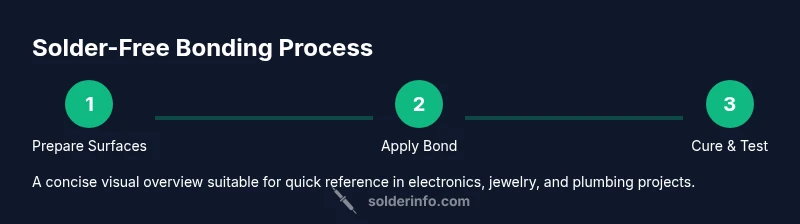
- 1
Prepare surfaces
Wipe surfaces with isopropyl alcohol until dry. Lightly roughen the metal with a clean pad if advised by the adhesive data sheet, then re-clean to remove dust. This improves adhesion and reduces the chance of filmy residues interfering with the bond.
Tip: Ensure both surfaces are free of oil and oxide before applying adhesive. - 2
Select the bonding method
Choose based on electrical load, vibration, and environment. For electronics, prefer a silver-filled epoxy with suitable cure characteristics; for jewelry, consider UV-curable adhesives or mechanical bonds; for plumbing, rely on approved epoxies or mechanical joints.
Tip: Match the adhesive or fastener to the metals involved and the expected service conditions. - 3
Apply adhesive or set fasteners
Dispense a minimal, evenly distributed amount of adhesive, or install a fastener with a controlled torque. Avoid excessive adhesive that could short adjacent pads or creep under load.
Tip: Use a micro applicator for precision and avoid pipette-like application that can flood the joint. - 4
Secure and cure
Position parts so that bond lines are straight and parallel where needed. Allow the adhesive to cure fully per the manufacturer’s guidelines; if using heat or UV curing, ensure proper exposure without overheating nearby components.
Tip: Support the assembly during curing to prevent shift or sagging. - 5
Test the joint
After cure, test continuity (if conducting) and perform a light mechanical test to check bond strength. Inspect for air gaps, cracks, or misalignment that could worsen over time.
Tip: Document results for future reference or iterative improvements. - 6
Document and store
Record chosen materials, curing conditions, and test outcomes. Store materials as recommended by the supplier to maintain performance over time.
Tip: Keep a small bench notebook or digital note with project details.
Quick Answers
Can I replace solder with epoxy in all cases?
Epoxy can replace solder in some scenarios, especially where heat must be avoided or fast prototyping is needed. It may not handle high current or high-temperature environments as well as solder. Always verify the adhesive’s electrical and mechanical specs before committing.
Epoxy can replace solder in some cases, but verify electrical and mechanical specs before using it for important connections.
Will conductive epoxy conduct like traditional solder?
Conductive epoxies exist and can conduct, but their resistance and current-carrying capability are often less than metal solder joints. They are best for low-to-moderate current paths and signaling connections, with care taken to avoid excessive resistance.
Conductive epoxy can conduct, but usually not as well as solder for high-current paths.
Is solder-free bonding reliable for jewelry?
Solder-free bonding in jewelry can be reliable for non-load-bearing joins and decorative elements. For structurally stressed parts, consider mechanical bonds or tested adhesives designed for jewelry applications and routinely inspect for wear.
Solder-free bonding can be reliable in jewelry for non-load-bearing areas; inspect and use proper adhesives for stress points.
Can I use these methods for plumbing?
Some two-part epoxies are rated for plumbing, but many bonds are not pressure-rated. Prefer mechanical joints or approved epoxies specifically rated for potable water and pressure. Always follow local codes.
Only use plumber-approved joints or epoxies for plumbing; mechanical joints are often safer for pressure.
What safety precautions should I take?
Wear gloves, goggles, and work in a well-ventilated area. Read adhesive data sheets for curing times and fumes. Keep heat sources away from flammable materials and test in a contained setup.
Wear protective gear, read the product sheet, and keep the workspace ventilated.
Is solder-free bonding reversible if needed?
Some adhesives offer reversible bonding with specialized removers, but many are permanent once cured. If reversibility is important, consider mechanical joints or low-residue adhesives with documented removal methods.
Some bonds can be reversed with special removers; others are permanent, so plan accordingly.
Watch Video
Top Takeaways
- Assess project requirements before choosing a method
- Prepare surfaces meticulously for best bonding
- Test bonds under real-world conditions prior to final use
- Respect cure times and safety to ensure reliability
- Document materials and results for future projects