How to Solder Without Soldering Wire: A Practical Guide
Learn practical methods to join metals without traditional solder wire using paste, flux, and reflow. This comprehensive guide covers electronics, plumbing, and jewelry with safety tips, step-by-step instructions, and troubleshooting.


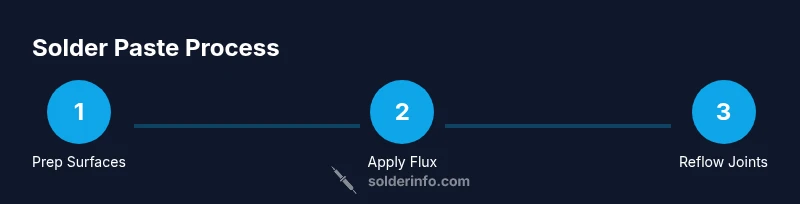
How to solder without soldering wire is possible when you use solder paste and a heat source. By applying flux and reflowing, you can join metals without traditional wire. This guide shows when paste is appropriate, how to apply flux, and how to reflow joints safely. You'll learn paste-based methods for electronics, plumbing, and jewelry, plus safety steps and inspection tips. SolderInfo's experts share practical approaches you can follow today.
Why Soldering Without Wire Is Sometimes the Best Choice
In electronics, jewelry, and plumbing, there are situations where traditional solder wire is unwieldy or impractical. Using solder paste with flux and heat allows very precise joints on tiny components, reflows for SMT work, and repairs where wire would be bulky. According to SolderInfo, modern pastes and reflow techniques can achieve reliable wetting when surfaces are clean and properly prepared. However, paste-based methods require careful temperature control, good ventilation, and proper application to avoid cold joints or bridging. By understanding the core physics—wetting, surface tension, and alloy flow—you can predict how a joint should look after cooling: a smooth, shiny fillet with minimal residue. Always start on sacrificial test boards to dial in your process before touching real parts. This approach is particularly useful for hobbyists who work with delicate boards, jewelry pieces, or copper plumbing joints where traditional solder wire would be cumbersome. The broader lesson is that the same soldering fundamentals apply, even when you’re not using a spool of solder wire.
Paste-Based Methods: When to Reach for Paste Over Wire
Solder paste combines solder particles with flux in a printable form. It’s designed for precision joints on delicate electronics and surface-mount components, where wire would be impractical. In many cases, paste can be a faster, cleaner option for multi-pin devices, micro-attachments, and jewelry repairs that require discreet joints. Conductive epoxy is another paste-like alternative, useful for non-traditional substrates or when mechanical strength is prioritized over perfect electrical conductivity. However, epoxy-based joints may require longer cure times and can be harder to rework. For plumbing, paste-based approaches exist but are less common than traditional copper-solder wire or brazing methods; consult manufacturer guidance for compatibility with your pipe material. The key is to assess pad geometry, substrate material, and the level of mechanical stress the joint will endure. SolderInfo emphasizes that the choice between paste, epoxy, and mechanical fastening should be driven by the task, not by a single universal solution. Always test on scrap pieces before committing to a critical repair.
Essential Materials and Workspace Prep
To solder without wire effectively, you’ll need clean surfaces, appropriate flux, and the right heat source. Stock up on rosin or water-soluble flux to promote wetting and reduce oxidation. Solder paste should be matched to your substrate (for electronics, electronics-grade pastes; for jewelry, metal-compatible pastes). A hot air rework station or a precise heat gun is often used to reflow the paste and form a reliable joint; some jewelry repairs may be completed with a specialized torch or micro-burner if you know the metal’s melting characteristics. Cleanliness cannot be overstated: remove oils, fingerprints, and oxidation with isopropyl alcohol before applying paste. Keep a clean, ventilated workspace and use eye protection. SolderInfo’s team notes that preparation dramatically affects joint quality, particularly when you’re avoiding solder wire.
Safety, Quality, and Inspection
Flux fumes and hot surfaces require proper ventilation and PPE. Work in a well-ventilated area, wear safety glasses, and avoid inhaling fumes from flux and pastes. After reflow, inspect joints for proper wetting, smear, or bridging. A good joint should show a smooth, uniform fillet and consistent coloration across all joints. If a joint looks dull or rough, it may indicate insufficient wetting or overheating. Use a magnifying glass or loupe to assess the fillet shape and wetting angle. Cleaning after soldering helps prevent corrosion and residue buildup; wipe surfaces with isopropyl alcohol and it’s often helpful to rinse with distilled water if permitted by the flux type. SolderInfo recommends validating electrical continuity with a multimeter once the joint cools.
Application Scenarios: Electronics, Plumbing, and Jewelry
Electronics benefit from paste-based reflow for surface-mount devices and fine-pitch components where wire is not feasible. For jewelry, paste-based methods can join metal pieces with delicate features, offering cleaner aesthetics and less heat distortion. In plumbing, solder paste can assist with certain non-traditional joints, but standard copper-solder wire or brazing remains common due to broader mechanical strength requirements. Each material set behaves differently under heat, so it’s important to tailor flux, paste, and heat profile to the substrate. The critical steps are consistent fluxing, precise paste application, stable clamping, and controlled heating to prevent thermal shock. SolderInfo’s guidance centers on mastering these fundamentals to achieve reliable joints across materials.
Common Mistakes and How to Avoid Them
Bridging occurs when paste flows between adjacent pads. Prevent this by using the right amount of paste and spaced pads; apply with a stencil or precise applicator. Inadequate flux can cause poor wetting; re-apply flux if needed and reflow. Overheating paste leads to blistering and oxidation; control heat with short pulses and a steady hand. Insufficient cooling can produce brittle joints; allow joints to cool naturally or use a controlled cooldown. Always practice on sacrificial test pieces to refine your technique before working on critical parts. SolderInfo emphasizes that patience and precision are the true skills behind successful paste-based soldering.
Tools & Materials
- Solder paste (lead-free or leaded)(Choose a paste compatible with your substrate; dispense with syringe or stencil.)
- Flux (rosin-core or resin-based)(Promotes wetting and oxidation resistance.)
- Hot air rework station or heat gun(Set appropriate temperature; avoid scorching.)
- Isopropyl alcohol (at least 70%)(Clean residues after soldering.)
- Substrates/tools (PCB, metal pieces, clamps)(Ensure surfaces are flat and secure during reflow.)
- Safety gear (goggles, gloves)(Protect from fumes and hot surfaces.)
- Solder paste stencil or applicator(Helpful for precise SMT pads.)
- Soldering tweezers or picks(Position components precisely without touching hot paste.)
Steps
Estimated time: 30-60 minutes
- 1
Prepare the workspace and materials
Clear the area, lay out your flux, paste, and heat source. Ensure you have good ventilation and eye protection. Pre-read the flux instructions and confirm compatibility with your substrate.
Tip: Use a dedicated workstation mat to prevent paste contamination. - 2
Apply flux to joints
Apply a thin, uniform layer of flux to the joints where paste will be deposited. Flux improves wetting and protects against oxidation during heating.
Tip: Avoid over-fluxing; too much flux can lead to spatter and residue. - 3
Deposit solder paste on pads
dispense or stencil the paste onto the pads precisely. Ensure that the amount covers the pad but does not bridge adjacent features.
Tip: For SMT pads, use a stencil to maintain consistent volumes. - 4
Position the components
Carefully place components onto the prepared joints. Use tweezers to keep them aligned and avoid contacting hot paste.
Tip: Work on sacrificial boards to confirm seating before final assembly. - 5
Reflow the joints
Apply controlled heat with the hot air station until the solder paste reflows to form a uniform fillet. Move heat slowly to avoid thermal shock.
Tip: Use short heat pulses and monitor until the paste glows lightly and then solidifies. - 6
Cool and inspect
Allow joints to cool undisturbed, then inspect for smooth fillets and absence of bridging. Use a magnifier to check wetting and surface finish.
Tip: If bridging is present, reflow with slight repositioning or remove excess paste. - 7
Clean and test
Wipe residues with isopropyl alcohol and test continuity or resistance of the joint. Confirm mechanical integrity before final use.
Tip: Document any anomalies for future reference.
Quick Answers
Is solder paste suitable for all soldering tasks?
Paste-based soldering excels for many SMT joints and delicate repairs, but it isn’t ideal for high-current wires or heavy metal joints. For those applications, traditional solder wire or brazing may be better fits. Always assess the joint requirements and substrate before choosing paste.
Paste works well for small, delicate joints but isn’t the best for heavy wires. Check the task requirements before choosing a method.
Can I use solder paste for plumbing repairs?
There are plumbing pastes designed for specialty joints, but most copper pipe work uses solder wire or brazing rods with flux. For standard plumbing, follow manufacturer guidance. Paste can be part of a repair on non-pressurized areas only if the product specifies compatibility.
Plumbing typically uses solder wire or brazing rods. Only use paste if the product guarantees compatibility.
What safety gear should I use?
Wear eye protection and gloves, and ensure good ventilation when heating flux and solder pastes. Keep flammable materials away and work on a stable surface. Safety first prevents injuries and exposure to fumes.
Put on goggles and gloves and work in a ventilated area.
Why does my joint look dull or grainy after cooling?
A dull or grainy joint often indicates incomplete wetting or overheating. Check flux quality, ensure proper paste volume, and reflow with careful temperature control. Clean surfaces before rework and re-test.
Dull joints usually mean wetting issues or overheating; try reflow with careful heat control.
Do I need a hot air station for all paste-based work?
A hot air station or precise heat source is commonly required for paste-based soldering, especially on SMT joints. Some jewelry repairs can be done with a small torch, but heat control is essential to avoid damage.
A hot air station is typically necessary for consistent paste reflow.
How can I evaluate joint quality without specialized equipment?
Visually inspect for a clean, smooth fillet and uniform color. Use a magnifier if available, and test electrical continuity. If uncertain, repeat the process on a test piece until you’re confident.
Look for a smooth fillet and test continuity; use a test piece if unsure.
Watch Video
Top Takeaways
- Choose the right paste and flux for your material.
- Apply light, even amounts to avoid bridging.
- Control heat to promote clean wetting and smooth fillets.
- Inspect joints with magnification and test electrically.
- Practice on scrap pieces before real repairs.