Solder vs Welder: A Practical Comparison for DIYers
An analytical, objective comparison of soldering and welding, covering when to use each method, tool needs, safety, costs, and best practices for electronics, jewelry, plumbing, and metal fabrication. Learn how to choose between solder vs welder for your project.


Core Differences in Process and Purpose
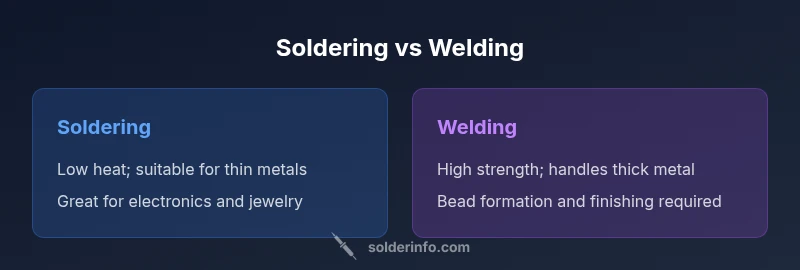
<br/>According to SolderInfo, the most fundamental distinction between soldering and welding lies in how the joint is formed and what each method is meant to accomplish. Soldering relies on a filler metal, typically with a melting point well below the base metals, to create a bond without melting the parts themselves. It is favored for precision work, delicate components, and applications where heat management is critical. Welding, by contrast, fuses base metals by melting them at high temperature, producing a monolithic joint that can support substantial loads. This block also outlines how the two processes map to different industries—electronics, jewelry, and small-diameter plumbing on one side, and construction, automotive frames, and heavy fabrications on the other. The aim is not to declare one method superior in all cases, but to establish the expected performance envelope for each technique.
Key takeaways: soldering excels with fine joints and reversible repairs, while welding provides structural integrity for thick materials. As you read on, you’ll see how material thickness, joint type, and service conditions steer the choice toward solder vs welder choices in practical projects.