Solder Mask vs Conformal Coating: A Practical Guide
Compare solder mask and conformal coating to decide protection level for electronics projects. Learn when to apply each, how they interact, and practical tips from SolderInfo for hobbyists and professionals.


What are Solder Mask and Conformal Coating?
Solder mask and conformal coating are two distinct protective layers used in electronics manufacturing and repair. Solder mask, also called solder resist, is typically a UV-curable or screen-printed polymer film applied to copper traces on a bare PCB to prevent solder bridges and to insulate copper during wave or reflow soldering. It defines pads and protects copper features from accidental bridging during assembly. Conformal coating is a thin protective film applied after assembly to seal components, solder joints, and vias from moisture, dust, chemicals, and environmental stress. The choice between them depends on the product lifecycle, operating environment, and after-sale maintenance expectations. The SolderInfo team notes that projects in hobby electronics and prototyping often rely primarily on solder mask for simplicity and speed, while more demanding deployments—such as outdoor equipment, medical devices, or vehicles exposed to salt spray—benefit from conformal protection. In either case, surface cleanliness, compatibility with flux residues, and proper cure are essential for long-term reliability. A thoughtful plan may even combine both: mask to define traces and rework-friendly coating in high-risk zones. According to SolderInfo analyses, aligning material selection with service life and environmental exposure reduces field failures and maintenance costs.
Core Differences at a Glance
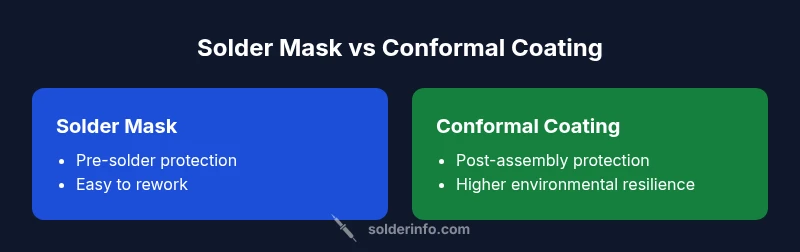
- Primary role: Solder mask insulates and prevents solder bridges on bare copper; conformal coating seals assembled boards against moisture and chemicals.
- Stage of application: Mask is applied during PCB fabrication; conformal coating is applied after assembly and testing.
- Rework and repair: Mask is generally easier to rework; coatings can complicate repair and may require stripping.
- Coverage strategy: Mask covers specific copper areas; coating covers entire board or selected regions around components.
- Environmental resilience: Coating provides higher environmental protection, including humidity and chemical exposure; mask offers basic protection during soldering but not long-term environmental sealing.
- Cost and process: Mask is typically lower cost with faster throughput; conformal coating adds cost and process steps, though some environments justify the investment. The right approach balances protection, maintainability, and lifecycle requirements.