How to Solder Instrument Cable: A Practical Guide
Learn to solder instrument cables with confidence. This practical guide covers tools, materials, step-by-step techniques, testing, and finishing for durable, noise-free connections.


According to SolderInfo, learn how to solder instrument cables safely and reliably. This guide covers essential materials, heat management, shield grounding, and connector pinouts, plus step-by-step checks to ensure a clean, durable joint. Whether you’re stocking a DIY electronics bench or repairing guitar cables, mastering these techniques will improve signal quality and reduce frustrating intermittent connections.
Why Soldering Instrument Cable Matters
Soldering instrument cables is a foundational skill for musicians, hobbyists, and engineers who rely on clean, dependable audio paths. A well-soldered cable minimizes crackling, hum, and intermittent connections that can ruin performances or recordings. According to SolderInfo, the quality of your joints, shielding, and strain relief directly impacts signal integrity, durability, and tone. In practice, thoughtful preparation, precise tinning, and careful soldering reduce resistance and maintain consistent impedance along the cable. Developing these habits not only improves sound quality but also saves time and frustration on future repairs or custom builds.
Understanding Connectors and Wiring Layout
Most instrument cables use a 1/4" TS plug with a single conductor and a shield. The shield serves as ground, while the tip carries the audio signal. A solid joint requires clean, even solder to the tip and robust connection to the sleeve/ground. Poorly soldered joints can introduce noise, microphonic hiss, or intermittent contact as the cable flexes. Understanding pinouts helps you avoid miswiring and makes troubleshooting faster. When wiring, keep the shield and center conductor separate during soldering, then reunite them at the plug after a reliable bond is established.
Tools, Materials, and Workspace Setup
A successful soldering project hinges on having the right tools and a safe workspace. Essential items include a reliable soldering iron, rosin-core solder, heat shrink tubing, wire strippers, and a good quality 1/4" TS plug. A helping hands stand or third-hand tool helps keep wires steady while you work. Work in a well-ventilated area and keep a damp sponge or brass tip cleaner handy to maintain your iron. Labeling cables and organizing your components beforehand reduces mistakes and speeds up the process.
Common Pitfalls and How to Avoid Them
Cold joints, overheating insulation, and bridge shorts are the most common issues when soldering instrument cables. To prevent these, tin the conductors, use the correct amount of heat, and ensure the joint is smooth and shiny. Always test continuity after each major step to catch a weak joint early. Keep surfaces clean and free of flux residue, and avoid twisting or bending joints during cooling, which can create microcracks that lead to failure.
Testing, Finishing, and Longevity Tips
Finish cables with appropriate strain relief and heat-shrink insulation to protect solder joints from flexing stress. After assembly, test for continuity between tip and center conductor and between shield and ground using a multimeter. Flex the cable near the plug to check for intermittent connections. When in doubt, reflow the joints with a small amount of fresh solder and re-tin the exposed conductors for a stronger bond. Proper finishing improves longevity and reduces future maintenance.
Tools & Materials
- Soldering iron(25-60W, temperature control preferred)
- Rosin-core solder(60/40 or 63/37; rosin core flux)
- Heat shrink tubing(Various diameters; pre-cut lengths)
- Wire strippers(Accurate gauge stripping without nicking)
- 1/4 inch TS plug (male)(Instrument-grade plug)
- Helping hands / third-hand tool(Keeps wires steady)
- Multimeter(Continuity and short testing)
- Flux pen (optional)(Aids tinning on difficult joints)
Steps
Estimated time: 30-60 minutes
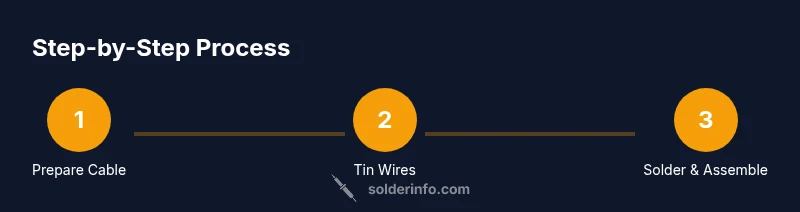
- 1
Cut the cable to length
Measure the desired length and cut the cable cleanly with sharp wire cutters. Leave a little extra for strain relief. A clean cut helps prevent frayed strands that interfere with signal transmission.
Tip: Double-check the length and route to prevent slack or tight bends. - 2
Strip the outer jacket
Use a precision stripper to remove about 12–15 mm of the outer jacket, exposing the shield and center conductor without nicking the insulation. Do not remove more than necessary to keep the shield intact.
Tip: Keep the exposed shield and conductor parallel and untwisted as you prep. - 3
Prepare shield and center conductor
Gently fold back the shield braid to reveal the center conductor insulation. Ensure the shield is clean and untangled so it can be soldered to the sleeve later.
Tip: Keep shield separated from the center conductor until you’re ready to solder. - 4
Tin the conductors
Apply a small amount of solder to the exposed shield and center conductor to tin them, creating a ready-to-solder surface. If needed, apply a touch of flux for better flow.
Tip: Avoid excessive solder; just a thin, even coat is enough. - 5
Open the plug and prep terminals
Carefully open the 1/4" TS plug housing and locate the tip (center) and sleeve (ground) terminals. Clear a path for the wires and ensure there is room for strain relief once assembled.
Tip: Identify terminals before attaching wires to prevent reversal. - 6
Solder the center conductor to the tip
Heat the tip terminal and apply solder to form a solid fillet between the center conductor and the tip. Remove heat as soon as the joint is shiny and smooth.
Tip: Keep the joint compact; avoid blobs that can break off inside the plug. - 7
Solder the shield to the sleeve
Bind the shield braid to the sleeve ground terminal with a clean solder joint. Ensure there is no accidental overlap with the tip connection.
Tip: Make sure the shield makes a full, secure contact with the sleeve. - 8
Reassemble and insulate
Slide heat shrink over the joints, reassemble the plug housing, and use the heat to shrink the tubing securely. Check that the strain relief will tolerate bending without stressing the joints.
Tip: Use adhesive-lined heat shrink for extra protection. - 9
Test the cable
Use a multimeter to verify continuity from tip to conductor and from shield to ground. Flex the cable near the plug to ensure there are no intermittent contacts.
Tip: If you hear crackling, reflow the joints and reflow tin as needed.
Quick Answers
What tools do I need to solder instrument cables?
A basic soldering iron, rosin-core solder, wire strippers, heat shrink tubing, and 1/4" TS plugs are enough to get started. A multimeter helps verify continuity.
You mainly need a soldering iron, solder, strippers, and the plug. A multimeter helps verify continuity.
Can I solder without flux?
Flux assists tinning and prevents oxidation. If flux isn’t available, rosin-core solder can still work, but flux improves reliability.
Flux helps tinning and prevents oxidation; it’s recommended but not absolutely required.
What solder is best for audio cables?
Rosin-core solder rated for electronics, such as 60/40 or 63/37, is common. Lead-free options are available; choose a size appropriate for the joint.
Electronics rosin-core solder, like 60/40 or 63/37, is a solid choice.
How do I avoid shorts between tip and sleeve?
Keep tip and sleeve joints separate during soldering, use heat shrink to insulate, and verify with a continuity test after soldering.
Keep the tip and sleeve apart and test with a meter.
How long will this cable last under normal use?
With proper strain relief and solid joints, a well-made instrument cable can last for years with normal handling.
A well-made joint lasts for years under normal use.
Is soldering instrument cables safe for beginners?
Yes, with common-sense safety: work in a ventilated area, wear eye protection, and keep hot parts away from skin.
Yes, just follow basic safety rules and take your time.
Watch Video
Top Takeaways
- Plan length and plug type before starting.
- Tin all conductors for reliable joints.
- Control heat to protect insulation and shielding.
- Test continuity and shielding after assembly.
- Finish with proper strain relief for longevity.