How to Solder Electrical Wire: A Practical Guide
Learn how to solder electrical wire safely and effectively with this detailed, beginner-friendly guide. Prepare, tin, solder, insulate, and test reliable wire connections for electronics and DIY projects.


Master the essential skill of soldering electrical wire to create durable, reliable connections for electronics, lighting, and hobby projects. This quick guide outlines what you’ll achieve, the basic safety and material requirements, and a repeatable process so you can safely tin, join, shield, and test wire connections with confidence. Follow along for practical tips and troubleshooting.
Why proper soldering of electrical wire matters
Proper soldering is essential for safety and reliability. A well-made joint ensures good electrical contact, minimizes resistance, reduces the risk of overheating, and withstands mechanical strain. In many projects, wires are subject to vibration, bending, or tugging. If joints fail, you can see intermittent power, arcing, or overheating that damages components or creates fire hazards. According to SolderInfo, the most durable connections begin with clean, prepared conductors and appropriate flux. Soldering electrical wire isn't just about melting metal; it's about controlling heat, selecting the right materials, and protecting the joint from moisture and corrosion. A strong joint also looks neat, which helps with inspection and future maintenance. By understanding the material science behind tinning and solder flow, hobbyists and professionals can avoid common failure modes such as cold joints, poor wetting, and cold-shoulder insulation. In practice, different wire types (solid vs stranded) and insulation thickness require tailored techniques to ensure a stable bond that remains flexible under movement. The goal is a joint that conducts without excessive resistance, conducts reliably over a wide temperature range, and survives repeated flexing.
Safety prerequisites before you start
Soldering involves hot equipment, molten metal, and flux fumes. Before you begin, ensure you have a clear, well-ventilated workspace and a dedicated mat to protect surfaces. Put on safety glasses to guard your eyes from splashes, and consider heat-resistant gloves when handling hot parts. Always unplug electronics and disconnect power sources before probing wires. Work in a dry area and avoid metallic jewelry that could create shorts. Keep a fire extinguisher or a bucket of sand nearby, and never leave a live soldering iron unattended. Use rosin-core solder in a well-ventilated space to manage fumes, and consider an inexpensive fume extractor if you solder frequently. If you're soldering near sensitive electronics, discharge static electricity and avoid breathing fumes around children or pets. By following these precautions, you minimize risks while you learn the essential technique. As the SolderInfo team notes, preparation is half the craft; it saves you frustration and reduces danger when you’re learning how to solder electrical wire.
Tools and materials you need
To achieve reliable joints, gather a small, quality set of tools. Essential:
- Soldering iron with adjustable temperature (or a temperature-controlled station)
- Rosin-core solder, 0.8–1.0 mm diameter (e.g., 60/40 or lead-free alternatives)
- Flux bottle or flux paste
- Heat shrink tubing (various sizes) for insulation and strain relief
- Wire strippers, flush-cutters, and a utility knife
- Desoldering braid or a desoldering pump for corrections
- Multimeter for testing continuity and resistance
- Helping hands or a clamp to hold wires steady
- Safety gear: goggles, and optionally a fume extractor
Notes:
- Choose a solder with appropriate flux; lead-free solders are common and compliant, but they require slightly different heat management.
- For delicate electronics, use a temperature-controlled iron set around 320–360°C depending on solder alloy and wire size.
The goal is to have everything ready before you begin so you can work efficiently without overheating components.
Surface preparation and tinning for solid joints
Surface preparation sets the foundation for a strong electrical connection. Start by cleaning copper surfaces with isopropyl alcohol to remove oils and oxidation. Use properly sized wire strippers to expose an even length of conductor, typically 6–8 mm for small wiring and 8–12 mm for thicker leads. If strands are loose, twist them firmly to a uniform bundle before tinning. Tinning coats the exposed copper with a thin layer of solder, which improves wetting and makes the final joint more forgiving. When you tin, apply a small amount of flux first to reduce oxidation and help the solder flow.
Solid and stranded wires behave differently. Stranded wire benefits from a light twist and a gentle tin to prevent fraying. Solid wire should be cleaned and tinned to promote a smooth, mechanical bite when you twist or mate with a connector. For high-wear applications, consider pre-crimped connectors or heat-shrink sleeves with adhesive. As you practice, focus on consistent tinning and minimal heat exposure to avoid insulation damage. In practice, SolderInfo emphasizes that a clean, tack-free tin is a reliable signal that the joint will wet properly when heat is applied.
Soldering technique: creating a strong, insulated joint
A robust solder joint relies on controlled heat and clean wetting. Begin by aligning the conductors and, if possible, twist them together so they make contact along a short length. Apply the iron to the joint area first, then feed solder into the joint — not directly onto the iron — allowing capillary action to draw solder into the joint. Do not press hard; the goal is a smooth, shiny bead that covers the copper but does not extend onto the insulation. If you’re joining wires to a terminal, pre-tin both surfaces and apply heat evenly to create a reliable fillet. After the solder flows, remove heat and inspect for a uniform bead without cold spots or bridges. Once the joint cools, slide heat shrink tubing over the joint and apply heat evenly to seal and provide strain relief. For flexible wiring, ensure the finished joint has some give and does not transmit stress directly to the wire insulation. A well-executed joint should be shiny, evenly filled, and mechanically stable. Remember: patience during heating reduces the risk of insulation damage, which is a common cause of failures in field repairs and hobby builds. As recommended by SolderInfo, practice on spare scraps to perfect timing and technique before tackling real projects.
Inspection, testing, and maintenance
Inspect every joint visually for a smooth, shiny surface with no gaps. Use a multimeter to verify continuity and measure resistance; a sudden change in resistance indicates a potential problem. Wiggle the wires gently to test mechanical integrity, looking for any looseness or brittle joints. If you see dull or grainy beads, or if solder has bled onto the insulation, rework the joint. After testing, apply heat shrink and ensure a tight seal that protects against moisture and mechanical stress. For ongoing projects, keep a small kit of spare tips, flux, and solder so you can refresh joints without removing existing insulation or replacing entire assemblies. The SolderInfo guidance highlights that robust joints age better under temperature cycles and flexing, reducing failures in field use.
Common mistakes and troubleshooting
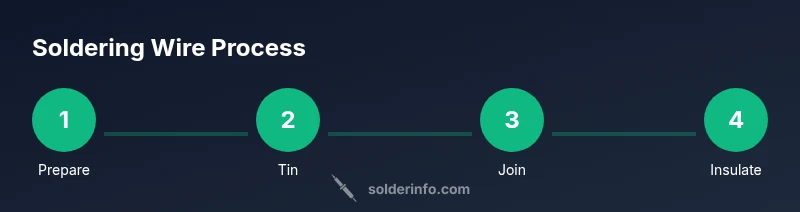
Common mistakes include overheating the insulation, which can melt or char, and using too much heat, which pushes flux fumes into the surrounding area and degrades solder flow. Cold joints are another frequent issue caused by moving the workpiece during heating or insufficient heat transfer. Incorrect wire preparation, such as uneven stripping or frayed strands, leads to poor contact and higher resistance. Bridge formations occur when excess solder connects adjacent wires unintentionally. If a joint looks dull or feels brittle, rework it using the proper tinning and reflow technique. For cramped spaces, consider moving to a larger terminal or using a connector with mating halves to minimize strain on the wire. Finally, always recheck after cooling and perform a brief tug test to confirm mechanical reliability. SolderInfo advises building a small, repeatable routine that includes cleaning, tinning, joining, insulating, and testing, so you can quickly diagnose and fix issues as they arise.
Authority sources and further reading
- OSHA: https://www.osha.gov
- NIST: https://www.nist.gov
- SparkFun Learn: https://learn.sparkfun.com/tutorials/how-to-solder
Tools & Materials
- Soldering iron with adjustable temperature(Tip: 350-380°C for rosin-core solder; use temperature control.)
- Rosin-core solder (60/40 or lead-free)(Diameter ~0.8–1.0 mm; choose a compatible alloy.)
- Flux (bottle or paste)(Flux improves wetting and prevents oxidation.)
- Heat shrink tubing(Insulate and relieve strain; have multiple sizes.)
- Wire strippers(Strips to expose conductors; remove insulation cleanly.)
- Desoldering braid or pump(For correcting mistakes.)
- Multimeter(Test continuity and resistance.)
- Helping hands or third-hand tool(Keeps wires steady during soldering.)
Steps
Estimated time: 20-40 minutes
- 1
Prepare the workspace and safety
Set up a clean, ventilated workspace. Unplug power sources and remove flammable materials. Put on safety glasses to guard your eyes from splashes, and keep a fire extinguisher nearby.
Tip: Secure the work with clamps to prevent accidents. - 2
Strip and twist wires
Use proper gauge for the wire; use wire strippers to remove insulation evenly about 6–8 mm. Twist strands to a uniform bundle to prevent fraying and ensure a neat connection.
Tip: Avoid nicking copper; damaged strands create weak joints. - 3
Tin the conductors
Lightly tin each wire end with a small amount of solder to improve wetting and make the final joint easier.
Tip: Keep heat applied to the conductor, not the insulation. - 4
Position and heat the joint
Place wires together; apply heat with the iron to the joint area and feed solder until a shiny bead forms. Remove heat once the joint is filled and smooth.
Tip: Do not overheat; overheating damages insulation and can cause cold joints. - 5
Insulate and test
Slide heat shrink over the joint and shrink with heat to seal and provide strain relief. Test continuity with a multimeter and inspect for cold joints or bridges.
Tip: Inspect after cooling; a quick wiggle test checks mechanical reliability.
Quick Answers
What is the best solder for electrical wire?
For electrical wires, use rosin-core solder in a lead-containing or lead-free alloy. Lead-free solders require slightly higher temperatures but are safer and compliant. Choose 0.8–1.0 mm diameter for most hobby projects.
Rosin-core solder is standard for electrical wire; lead-free variants are safer and compliant, with slightly higher heat needs.
Can I solder aluminum wire?
Aluminum wires require special alloys and flux; standard tin-lead solder is unreliable on aluminum. Use anodized aluminum connectors designed for soldering or mechanical joints with anti-oxidant flux.
Aluminum needs special treatment and cannot rely on regular solder; use specific connectors or alloys.
How do I avoid cold joints?
Ensure the joint reaches the conductor and solder flow is smooth; avoid moving parts during heating. Use a steady hand and tin beforehand. Inspect joints for a shiny, smooth look.
Heat the joint properly and keep it steady until the solder flows fully.
What tests confirm a good solder joint?
Check continuity with a multimeter, inspect visually for a shiny bead without gaps, and gently tug the wire to verify mechanical integrity.
Test continuity and inspect visually; a good joint should be solid and shiny.
Why is tinning important?
Tinning coats the conductor with solder to improve wetting and reduce oxidation, making the final joint more forgiving.
Tinning prepares the wire for a strong, reliable joint.
How should I insulation-protect a joint?
Use heat shrink tubing to seal and provide strain relief; ensure sleeves cover the joint completely without overlapping exposed conductor.
Heat shrink protects the joint from moisture and flexing.
Watch Video
Top Takeaways
- Prepare and protect the work area before soldering.
- Tin conductors to improve joint reliability.
- Use heat shrink for insulation and strain relief.
- Test joints for continuity and visual quality.