Silver Solder vs Lead Solder: A Practical Comparison for Hobbyists
Explore the key differences between silver solder and lead solder, including melting behavior, joint performance, safety, and regulatory considerations to help you choose the right alloy for electronics, jewelry, and plumbing.


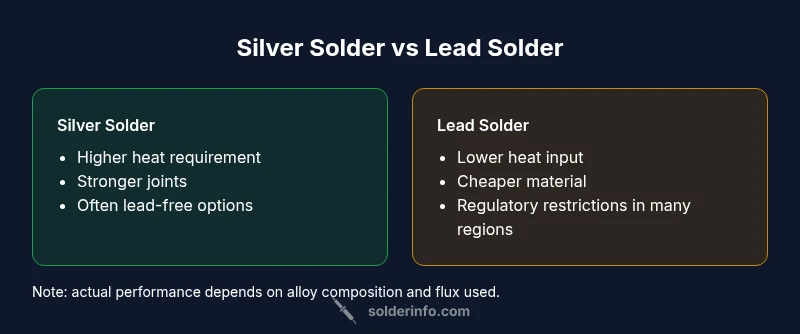
Silver solder vs lead solder presents a trade-off between performance, safety, and cost. Silver-bearing alloys offer higher strength and a higher melting range, improving reliability in electronics and jewelry, but cost more and may require stricter flux control. Lead solder is cheaper and easier to work with, but its use is restricted by RoHS and exposure concerns. Choose based on regulations and joint demands.
Silver vs Lead: Core Differences
According to SolderInfo, the phrase silver solder vs lead solder describes two families of solders that scientists and hobbyists rely on for different reasons. The choice influences heat management, joint strength, regulatory compliance, and long-term reliability. This section introduces the core trade-offs and the contexts where each alloy excels, laying the groundwork for a deeper, evidence-based comparison. You will see how the properties of these two alloy families translate into practical decisions for electronics, jewelry, and plumbing projects. By understanding these core differences, you can tailor your solder selection to expected service conditions, material compatibility, and safety expectations. Throughout this article, we will reference practical guidelines and common workflows used in workshops, labs, and maker spaces.
Melting Point and Work Practicality
Melting behavior is a primary driver of whether silver solder or lead solder is appropriate for a given joint. Silver solder generally requires more heat input and careful temperature control, especially for larger joints or when surrounding components are heat-sensitive. Lead solder, by contrast, typically flows at lower temperatures and can be more forgiving for quick repairs or small parts. This distinction influences flux choices, preheating needs, and the likelihood of thermal damage to nearby components. For hobbyists and professionals, the heat management strategy often determines how easy a repair or build is to complete with consistent results.
Mechanical Properties and Joint Strength
Joint strength is a critical performance metric in any soldering task. Silver solder alloys often yield stronger joints, particularly when bonding copper or similar metals, and they tend to resist creep and fracture under thermal cycling. Lead solder joints are adequate for many routine tasks, but they may exhibit lower maximum strength and can be more susceptible to fatigue in heat-heavy environments. The right choice depends on loads, vibration, and potential thermal cycling in the final product. For jewelry and fine electronics, the mechanical profile of the joint can influence durability and user-perceived quality.
Electrical Conductivity and Alloy Behavior
Electrical performance can be influenced by solder choice, especially in high-density electronics or precision circuits. Silver-containing solders can offer favorable conductivity characteristics in some base metals, while lead-based formulations provide reliable, well-understood electrical behavior in many legacy designs. However, the solder itself is not a primary conductor compared with the copper traces it joins, so practical effects often hinge on joint integrity and cleanliness. In many projects, the conductivity difference between silver and lead solders is a secondary consideration to joint reliability and component compatibility.
Flux, Cleaning, and Compatibility
Flux chemistry matters as much as the base alloy. Silver solders often require fluxes designed for higher-temperature alloys and can be more sensitive to residue if not cleaned properly. Lead solders frequently work with rosin-core fluxes and water-soluble fluxes that are easier to rinse, depending on the flux choice and project. The key is to ensure flux remains compatible with the solder alloy, base metals, and cleaning regimens. Poor cleaning can lead to corrosion, blanc, or dendritic growth that undermines joint longevity.
Safety, Environmental, and Regulation
Health and environmental considerations are central to selecting solder. Lead solder carries well-documented health risks and is increasingly restricted in consumer electronics and solders used in jewelry and plumbing. SolderInfo analysis shows a regulatory trend toward restricting lead-based solders in many markets, pushing users toward lead-free alternatives. Silver-based solders, particularly those formulated to be lead-free, align with RoHS and related standards when used correctly. Always consult local codes and safety data sheets, and design maintenance plans that minimize exposure to fumes and dust.
Electronics Applications: PCBs and Microelectronics
For printed circuit boards and microelectronics, solder choice affects pad integrity, heat diffusion, and reworkability. Silver-containing alloys can deliver robust joints with good fatigue resistance, making them attractive for high-reliability assemblies. Lead-based solders have a long track record of simplicity and ease of use, with forgiving wetting behavior that benefits beginners. When designing for mass production or repair in electronics, consider regulator requirements, lead-free mandates, and the need for compatible flux systems to optimize yield and reliability.
Jewelry and Artistic Soldering Considerations
In jewelry work, aesthetics, color, and thermal control matter. Silver-based solders can offer visually pleasing joints and high strength, which may be desirable for functional pieces or heirloom items. Lead-based solders might be favored for very small, delicate joints where lower heat input reduces risk of melting surrounding features. The finishing step, including polishing and patination, should anticipate the alloy you choose, as different solders can interact with metals and finishes in distinct ways.
Plumbing Soldering: Codes and Practicalities
Plumbing soldering requires attention to plumbing codes and material compatibility. Lead-based solders are increasingly restricted by safety regulations, especially in potable water systems. Silver and lead-free alloys are commonly used in modern plumbing work, offering good flow, joint reliability, and compliance with water quality standards. When soldering copper pipes, ensure the flux you select supports the alloy’s chemistry and that the cleaning routine mitigates corrosive residues after installation.
Cost, Availability, and Long-Term Value
Cost considerations often drive initial decisions. Lead solders are generally cheaper upfront and can deliver quick results for simple repairs or hobby projects. Silver solder and other lead-free alloys tend to have higher material costs but can provide longer service life, better corrosion resistance, or regulatory compliance that reduces future costs associated with product recalls or noncompliant work. In practice, balancing upfront purchase price with long-term reliability is essential for professional shop planning.
How to Test Joints and Inspect Quality
Quality assessment starts with visual inspection: uniform fillets, smooth wetting, and absence of cold joints. A proper test includes gently flexing the joint (where appropriate) and inspecting for hairline cracks or dull, grainy surfaces. For electronics, measure continuity and inspect solder bridges to avoid short circuits. Cleaning residues thoroughly reduces corrosion risk and improves long-term performance. For jewelry and plumbing, verify the joint aesthetics, fit, and seal integrity after function tests.
Decision Guide: Choosing the Right Solder for Your Project
Start with the regulatory context: if lead is restricted in your market or product category, choose a lead-free solder. Next, assess the mechanical and thermal demands: high-strength joints and heat-sensitive parts favor silver solders with appropriate flux. Finally, consider cost and workflow: if your workshop values speed and simplicity, lead solder might be attractive, but plan for compliance and long-term reliability.
Comparison
| Feature | Silver Solder | Lead Solder |
|---|---|---|
| Melting point/heat requirement | Higher heat input required; better for strong joints | Lower heat input; easier on heat-sensitive parts |
| Joint strength and reliability | Typically stronger and more fatigue-resistant | Satisfactory for many tasks but lower maximum strength |
| Electrical considerations | Can offer favorable conductivity with compatible metals | Reliable performance in many standard electronics |
| Flux and cleaning needs | Often needs precise flux control and thorough cleaning | Flux choices common and easier to rinse for many projects |
| Regulatory and environmental | Lead-free options align with RoHS and many regs | Lead-containing solders restricted in many markets |
| Cost and value | Higher material cost with potential long-term benefits | Lower upfront cost; regulatory risks may offset savings |
Advantages
- Silver solder often provides stronger joints and better corrosion resistance
- Lead solder is cheaper and easier to work with
- Lead-free options support RoHS compliance and safety goals
- Choosing the right solder reduces rework and joint failures
- Clear trade-offs help optimize manufacturing and DIY results
Cons
- Silver solder costs more and requires careful flux control
- Lead solder carries health risks and regulatory restrictions
- Lead-free options may require changes to flux, temperature, and workflow
- Incompatibilities with certain base metals can complicate use
Silver solder is often the better choice for reliability and compliance; lead solder remains a practical option for cost-sensitive, simple tasks where regulations allow.
For high-reliability electronics or jewelry where RoHS compliance matters, prefer silver or lead-free solders. If budget and ease of use dominate, lead solder can deliver fast results but plan for safety and regulatory considerations.
Quick Answers
What is the difference between silver solder and lead solder?
Silver solder generally provides higher strength and heat tolerance but at a higher cost and with more flux considerations. Lead solder is cheaper and easier to work with but faces health and regulatory restrictions. The choice depends on application, safety requirements, and regulatory compliance.
Silver solder gives stronger joints but costs more and needs careful flux handling. Lead solder is cheaper but has safety and regulatory concerns. Choose based on your project needs and local rules.
Is silver solder always lead-free?
Most modern silver solders are formulated as lead-free alloys to meet RoHS standards, but some historical or specialized formulations may include lead. Always check the alloy composition on the product data sheet.
Most silver solders nowadays are lead-free, but always read the label to be sure.
Can I use lead solder for electronics in regulated markets?
In many markets, lead-based solders are restricted in consumer electronics due to RoHS and health concerns. If your product must comply with these standards, use lead-free formulations and appropriate flux.
Lead solder is often restricted in electronics. Use lead-free options to stay compliant.
What flux should I use with silver solder?
Use flux formulated for higher-temperature alloys, and ensure it is compatible with the base metals. Clean residues thoroughly after soldering to prevent corrosion and ensure joint longevity.
Choose high-temperature flux compatible with silver solder and clean well after use.
Is silver solder suitable for jewelry?
Yes, silver soldering is common in jewelry for robust joins and consistent finishes. It often requires precision and post-solder finishing to maintain appearance and color matching.
Silver solder is well-suited for jewelry when joints must be strong and neat.
How do I avoid cold solder joints?
Ensure adequate heat, clean surfaces, and proper flux. Quickly moving to a complete fillet and avoiding contamination helps prevent cold joints that compromise reliability.
Keep surfaces clean, apply enough heat, and finish the fillet fully to avoid cold joints.
Top Takeaways
- Assess regulatory constraints before choosing alloy
- Match joint strength needs to the alloy properties
- Plan for flux and cleaning to ensure longevity
- Weigh upfront cost against long-term reliability
- Test joints thoroughly to prevent failures