Difference Between Solder and Silver Solder: A Practical Guide
Learn the core differences between tin-based solder and silver solder, including composition, melting behavior, typical uses, flux needs, and safety considerations for electronics, plumbing, jewelry, and metalwork.


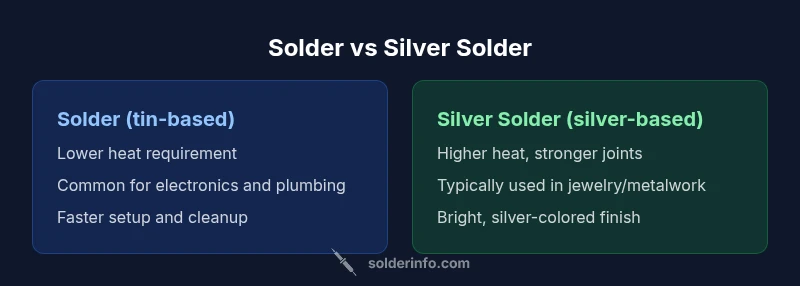
According to SolderInfo, the difference between solder and silver solder hinges on composition, melting behavior, and intended use. Solder is typically tin-based and used for electronics and plumbing, while silver solder is a higher-temperature, silver-containing alloy favored for jewelry and metalwork. Knowing these distinctions helps you choose the right material for a given base metal and project.
What is solder? Historical context and definitions
Solder is an alloy designed to fuse two pieces together at relatively low temperatures. Historically dominated by tin–lead compositions, modern practice has shifted toward lead-free tin-based solders for safety and environmental reasons. In electronics, plumbing, and basic metal crafts, 'solder' is a broad term that covers a family of tin-based alloys that melt around the lower end of typical metalworking temperatures. This context matters because many beginners encounter the term while planning a repair or fabrication project. When someone asks about the difference between solder and silver solder, they are often comparing a general-purpose joining alloy with a specialized, higher‑temperature alternative used for metalwork and jewelry. The SolderInfo approach emphasizes matching material properties to the base metal and service conditions to ensure durable joints.
What is silver solder? Its specific role and chemistry
Silver solder is a family of alloys that contains a substantial amount of silver, often paired with copper and other elements. This alloy is formulated for higher-temperature applications and a bright, metallic joint appearance. In jewelry making, watch repair, and certain metalwork projects, silver solder provides strong bonds and color-matched joints to precious metals. Unlike common electronics solders, silver solder typically requires different flux and heating techniques to prevent oxidation and to achieve a clean, continuous joint. Many professionals favor it for aesthetic visibility of the joint and for its structural integrity under stress.
Composition and melting behavior: how they differ
The core distinction between these materials rests in composition and how they behave under heat. Tin-based solders (the common kind of solder) are designed for easy flow at relatively modest temperatures and are especially forgiving for electronics and plumbing joints. Silver solder, by contrast, includes a meaningful share of silver and other alloys, which raises the melting temperature and alters flow characteristics. From a craft perspective, this means you need precise heat control with a hotter flame or longer dwell time to ensure proper wetting and a seamless joint. According to SolderInfo, understanding these compositional differences helps prevent joint failure caused by overheating or insufficient wetting, particularly when working with metals that oxidize quickly.
Flux and cleaning: how usage differs
Flux acts as a chemical barrier against oxidation and a wetting aid for solder. For tin-based solders, rosin-core fluxes or water-soluble fluxes are common in electronics, while plumbing work may rely on flux types tailored for copper joints. Silver solder requires flux that can tolerate higher temperatures and resist oxidation, such as borax-based pastes or specialized liquid fluxes designed for jewelry or metalwork. After soldering, proper cleaning is essential to remove flux residues that can corrode metals or cause discoloration. This section highlights the importance of choosing the right flux for the solder type and the material being joined.
Typical applications: electronics vs metalwork/jewelry/plumbing
Electronics and basic piping are the realm of tin-based solders due to their low heat requirements and compatibility with delicate components. Silver solder shines in jewelry making, watch repair, and metalwork where a durable joint and color match are priorities. The higher heat of silver solder can risk damage to sensitive electronics or heat-sensitive substrates, so practitioners reserve it for appropriate projects. Solder types also influence cleaning and post-processing—electronics favors residue-free finishes, while jewelry can embrace the bright metallic appearance achieved by silver solder.
Bond strength and joint design
Strength and joint design vary with the alloy, base metals, and technique. Tin-based solders typically provide adequate bonds for lightweight electronic and plumbing joints, especially when proper pad preparation and flux are used. Silver solder bonds are generally stronger and stiffer, supporting higher mechanical loads and metalworking aesthetics. However, achieving this strength depends on clean surfaces, appropriate heat input, and correct fillet formation. The design of the joint (fillet size, gap, and fit) interacts with the chosen alloy to determine reliability over time.
Surface preparation and compatibility with metals
A clean, oxide-free surface is essential for both solder types but more critical for silver solder where surface oxides can impede wetting at higher temperatures. Copper, brass, and certain steels are commonly joined with tin-based solders in electronics or plumbing, while silver solder is preferred for sterling silver, gold-filled pieces, and certain non-ferrous metals in jewelry and metalwork. Preparation steps typically include mechanical cleaning, flux application, and ensuring the base metal temperature does not exceed the material’s tolerance. Proper surface prep minimizes defects such as cold joints or incomplete wetting.
Heating, temperature control and technique
Tin-based solders are forgiving of slower heating and require less aggressive temperature control, which is convenient for beginners and delicate components. Silver solder demands careful heat management and a steady, higher-temperature application to avoid thermal shock and oxidation. Practitioners use a controlled heat source, flux to protect surfaces, and a strategy to prevent overheating of delicate portions of the joint. The precise approach varies by alloy and base metal, but the common goal is reliable wetting and a clean, continuous joint.
Colors, appearance, and corrosion considerations
Joint appearance matters in visible metalwork and jewelry. Tin-based solders typically produce a more muted joint color that blends with the surrounding material, especially with lead-free varieties. Silver solder creates bright, silver-colored joints that can aesthetically match precious metals or polished surfaces. In terms of corrosion, flux residues and oxide formation drive environmental durability; proper flux choice and post-solder cleaning mitigate tarnish and corrosion risks, preserving joint integrity and appearance.
Safety, health, and environmental concerns
Both solders and silver solders can present health and environmental considerations, particularly regarding lead content and flux fumes. Lead-based solders are restricted in many electronics applications due to health concerns, while lead-free tin-based solders reduce exposure but still require ventilation. Silver solder introduces higher temperatures and potential exposure to fine metal particles; appropriate PPE, good ventilation, and proper disposal of flux residues are essential. SolderInfo emphasizes following local safety guidelines and using lead-free options wherever feasible.
Practical tips and common mistakes to avoid
Common mistakes include overheating joints, neglecting surface preparation, and selecting the wrong flux for the alloy. For electronics, avoid using silver solder where heat-sensitive components are present, and ensure a clean PCB surface. In metalwork, avoid rushing the process—improper heat control can cause dull, brittle joints. Practitioners should practice on scrap pieces, test joints, and gradually scale up complexity as confidence grows. According to SolderInfo, consistent technique and careful material selection are the keys to success.
Choosing between solder and silver solder: decision guide
When deciding between solder and silver solder, consider use case, base metal, desired appearance, and mechanical load. For electronics, plumbing, and quick repairs, traditional tin-based solder is typically best. For jewelry, luxury metalwork, or where a bright, durable joint is required, silver solder is often the superior choice. A quick assessment of temperature tolerance, oxidation risk, and aesthetic goals helps guide the selection.
Comparison
| Feature | Solder (tin-based) | Silver Solder (silver-based) |
|---|---|---|
| Melting Point | lower melting point (tin-based alloys) | higher melting point (silver-based alloys) |
| Typical Uses | electronics and plumbing | jewelry and metalwork |
| Joint Appearance | neutral or dull finish | bright, silver-colored finish |
| Flux Requirements | rosin-based or water-soluble flux commonly used | borax paste or specialized flux for jewelry/metalwork |
| Base Metal Compatibility | copper, steel, PCB surfaces typical | copper, sterling/silver-containing metals common |
| Ease of Use | more forgiving; easier heat control | requires careful temperature management |
| Strength/Durability | adequate for light loads; good for electronics | high strength when performed correctly |
Advantages
- Lower upfront cost and broad availability
- Easy to learn for electronics and plumbing tasks
- Faster repair cycles for common joints
- Wide range of lead-free options
- Good balance of performance and convenience for hobbyists
Cons
- Lower mechanical strength for high-load joints
- Not ideal for high-temperature or heavy jewelry work
- Lead-containing options pose health risks; lead-free variants still require care
- Can be less visually striking on metalwork compared to silver solder
Silver solder excels in high-strength, color-matched joints for metalwork; conventional solder dominates electronics and plumbing.
Choose silver solder for durable, aesthetically bright joints in jewelry or high-end metalwork. Opt for tin-based solder for electronics and plumbing where speed, cost, and low-temperature processing matter.
Quick Answers
What is the main difference between solder and silver solder?
The main difference is composition and intended use. Tin-based solder melts at a lower temperature and is common in electronics and plumbing, while silver solder contains silver and requires higher heat for metalwork or jewelry. These factors influence performance, appearance, and compatibility with base metals.
Tin-based solder is for electronics and plumbing; silver solder is for metalwork and jewelry. The choice hinges on heat, strength, and appearance.
Can silver solder be used in electronics?
Silver solder is generally not ideal for delicate electronics due to higher heat and potential damage to components. It is used in jewelry and metalworking where strong, bright joints are desired. For electronics, stick to standard tin-based or SAC lead-free solders and proper flux.
Silver solder isn't usually good for electronics because of heat; use electronics solder instead.
Is lead-containing solder still used?
Lead-containing solders have become restricted in many applications, especially electronics, due to health and environmental concerns. Lead-free tin-based solders are now common, while silver solder remains a separate family used for metalwork. Always follow local safety rules when handling any solder that contains lead.
Lead solders are restricted in many uses; prefer lead-free options when possible.
Do I need special flux for silver solder?
Yes. Silver solder typically requires a flux that withstands higher temperatures and prevents oxidation, such as borax paste. This differs from standard rosin flux used with many tin-based solders. Proper flux ensures good wetting and a strong joint.
Use borax paste or specialized flux with silver solder for best results.
Are there safety concerns with fumes or lead?
Soldering fumes can irritate the respiratory system, and lead-containing solders pose significant health risks. Work in well-ventilated areas and use lead-free options whenever feasible. Follow PPE guidelines and proper disposal practices.
Ventilate well and choose lead-free options when possible.
How do I choose between them for a project?
Start with the project requirements: temperature tolerance, appearance, and load. Electronics favors tin-based solder for ease and cost, while metalwork or jewelry benefits from silver solder for strength and color matching. If in doubt, test on scrap pieces first.
Match the solder to the project: electronics with tin-based, metalwork with silver solder.
Top Takeaways
- Assess project needs: temperature tolerance and appearance
- Match solder type to base metal and environment
- Use appropriate flux and clean residues thoroughly
- Reserve silver solder for metalwork where strength and color matter
- Prefer tin-based solder for electronics/plumbing for ease and safety