Difference Between Solder and Lead: A Practical Comparison
Explore the difference between solder and lead, including composition, safety, regulatory guidance, and practical guidance for electronics, plumbing, and jewelry. Learn how lead content affects melting, handling, and compliance.


Lead-free solders and traditional leaded solders differ primarily in composition and regulatory status. The difference between solder and lead is that solder is the alloy used to join metals, while lead is a toxic element that may be present in some solders. In electronics, RoHS pushes lead-free options; in plumbing and jewelry, practices vary by tolerance and safety.
Why the difference matters in practice
The difference between solder and lead is not merely semantic—it governs how you choose materials, what safety precautions you take, and which regulations apply to your project. In everyday shop work, solder varieties vary by alloy composition, handling temperature, and risk profile. According to SolderInfo, the distinction between solder and lead translates directly into a decision matrix: if your work touches consumer electronics or potable water systems, choosing lead-free solders is typically mandatory or strongly advised. For hobbyists, plumbers, and jewelers, the context often dictates the safest and most reliable option. This section lays out how the difference between solder and lead shapes practice, from initial material selection to final joint reliability. Expect to see how the topic intersects with safety training, waste disposal, and long-term performance across electronics, plumbing, and jewelry applications.
Historical context and regulatory landscape
Understanding the difference between solder and lead requires looking at how regulations have evolved. Lead in solders became a concern as a health hazard and environmental toxin, prompting regulatory actions around the world. In electronics, many regions implemented RoHS compliance standards that push users toward lead-free solders and restrict the use of certain lead-containing alloys. In plumbing, historical practice often involved lead-containing solders, but modern codes increasingly require lead-free formulations for drinking water systems. The difference between solder and lead here is codified by policy: while older installations may still exist, new work generally prioritizes lead-free options to minimize exposure risks and disposal challenges. The SolderInfo team notes that regulatory clarity improves safety, waste management, and consumer confidence across markets.
Technical fundamentals: composition, alloys, and behavior
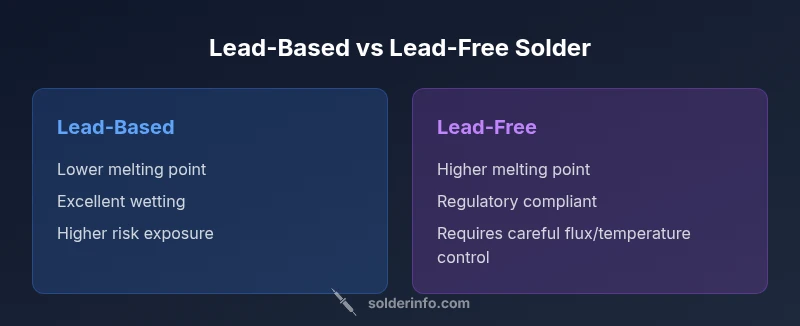
The difference between solder and lead is most tangible in the chemistry of the alloys. Solder is an alloy designed to melt and flow between metal surfaces to form a bond as it cools. Lead can be a component in some solders (tin-lead alloys) that historically provided good wetting and low melting behavior. Lead-free solders, by contrast, commonly use tin with silver and copper or other additives. The practical effect is that lead-containing solders often wet surfaces more readily and require less heat, while lead-free formulations demand careful flux choice and precise temperature control to achieve reliable joints. In all cases, the goal is a clean, void-free joint with good mechanical strength and electrical continuity.
Safety, environmental impact, and regulatory compliance
The difference between solder and lead has significant safety implications. Lead exposure can occur via fumes, skin contact, or dust, making proper ventilation, PPE, and hygiene essential. Lead-containing solders require careful handling, disposal, and avoidance of potable water contact in many jurisdictions. Lead-free solders reduce exposure risk and align with environmental policies, though they may introduce different health and safety considerations, such as higher processing temperatures and tin whisker formation in some alloys. The environmental footprint tends to be lower with lead-free materials when managed responsibly, but recycling and waste handling must still follow local rules. Soldering environments should emphasize containment, good flux management, and compliant waste streams.
Applications across electronics, plumbing, and jewelry
The difference between solder and lead becomes especially important when selecting a material for a specific domain. In electronics, lead-free solders are the norm in new designs due to RoHS and supply chain expectations; legacy boards may still use tin-lead alloys under exemptions. In plumbing, lead-containing solders are increasingly phased out for potable water lines, with many jurisdictions mandating lead-free compositions to safeguard public health. In jewelry, low-melting alloys or specialized solder formulations are chosen for jewelry-specific constraints like color, malleability, and skin safety. Across all three domains, the difference between solder and lead guides decisions about processing temperatures, flux types, and post-solder cleaning to ensure durable joints.
How to choose between solder types: reading labels, RoHS, flux compatibility, performance considerations
Choosing between solder types hinges on understanding the difference between solder and lead and applying it to practical decisions. First, verify regulatory requirements—RoHS compliance is a primary driver in electronics and plumbing in many regions. Second, assess component compatibility and required operating temperatures; lead-free solders typically need higher peak temperatures and may alter wetting behavior. Third, evaluate flux compatibility and cleaning needs; poor flux management can lead to poor joints regardless of lead content. Finally, consider long-term reliability and repairability; lead-free joints can be more challenging in repairs on legacy boards or vintage plumbing. The bottom line is that most new work benefits from lead-free options, with older, exempt use cases assessed case by case.
Comparison
| Feature | Lead-based solder | Lead-free solder |
|---|---|---|
| Melting behavior | Lower melting point (lead-based) | Higher melting point (lead-free) |
| Wetting and flow | Excellent wetting with tin-lead | Good wetting with proper flux and temperature control |
| Regulatory status | Restricted under RoHS in many regions | Generally compliant with RoHS, favored for new designs |
| Availability and cost | Traditionally cheaper, very wide availability | Often slightly more expensive, growing availability |
| Mechanical properties | Soft, ductile joints | Can be more brittle; requires careful design |
| Health and environmental impact | Contains toxic lead; disposal requires care | Lower toxicity profile; easier disposal in many regions |
| Best for | Legacy electronics or exemptions where lead is allowed | Modern electronics, plumbing, and jewelry applications |
Advantages
- Supports regulatory compliance with lead-free options
- Reduces health risks from lead exposure
- Lower environmental impact with responsible disposal
- Widely available and standardized for modern markets
- Improves safety for hobbyists and professionals
Cons
- Lead-free solders can require higher temperatures
- Some lead-free formulations may be harder to work with
- Tin whiskers risk in certain Pb-free alloys if not managed
Lead-free solders are the safer default choice for new work, with lead-based options retained only where exemptions apply
Lead-free alternatives align with current safety and regulatory trends. Use lead-based solders only when you must satisfy legacy requirements or exemptions, and ensure proper handling and disposal of any lead-containing materials.
Quick Answers
What is the difference between solder and lead?
The difference between solder and lead is that solder is an alloy used to join metals, whereas lead is a toxic metal that may be present in some solders. The term 'solder' refers to the joining material, while 'lead' refers to a potential component. Modern practice prioritizes lead-free solders for safety and compliance.
Solder is the joining alloy, and lead is the toxic metal sometimes found in solders. Today, most work uses lead-free options for safety and compliance.
Is lead in solder dangerous?
Yes, lead exposure can be hazardous, especially via fumes and dust. Use proper ventilation, avoid ingestion, and follow disposal guidelines. Handling lead-containing solders with care minimizes risk.
Yes. Lead can be harmful if inhaled or ingested; use ventilation and proper PPE.
Are there regulations restricting lead in solders?
Yes. Many regions restrict lead in solders through RoHS and related regulations. These rules influence what alloys are allowed in electronics, plumbing, and consumer products.
Yes, RoHS and similar rules limit lead in solders in many markets.
What are lead-free alternatives and their pros/cons?
Lead-free solders typically use tin-silver-copper or similar alloys. They comply with regulations but may require higher processing temperatures and careful flux management. Performance can vary with joint design and flux choice.
Lead-free alloys like tin-silver-copper are common; they comply with rules but may need higher temps.
Can I use lead-based solder in vintage electronics?
In some cases, vintage electronics may permit lead-based solder under certain regulatory exemptions. However, you should assess local disposal requirements and safety considerations for any legacy work.
Yes, in some legacy gear, lead solder is acceptable if you comply with local rules.
Top Takeaways
- Check regulatory requirements; choose lead-free options when RoHS applies.
- Lead-free solders require proper flux and temperature control for good joints.
- Lead-based solders offer low melting points but pose health risks.
- Read solder labels to confirm lead content before use.
- Dispose of lead-containing waste according to local hazardous waste rules.