Melting Point of 95 5 Solder: Sn-Pb Guide
Learn the melting point of 95 5 solder (Sn-Pb 95/5), its melting range, how impurities affect it, and practical soldering tips for electronics using lead-containing alloys.


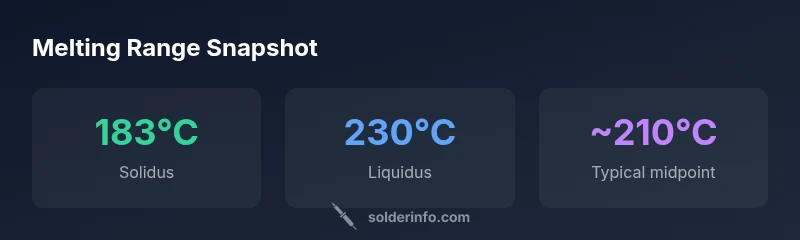
Melting point of 95 5 solder refers to the Sn-Pb 95/5 alloy. It does not have a single melting temperature because it is non-eutectic. The solidus is typically around the high 170s to mid-190°C, while the liquidus lies in the low-to-mid 230°C range, giving a melting window roughly 183–230°C. Exact figures vary with impurities and processing; consult supplier data for precise values.
What 95/5 Solder Is and Why It Matters
95/5 solder refers to a tin-lead alloy with roughly 95 percent tin and 5 percent lead by weight. This composition is a traditional lead-containing solder used in electronics, plumbing, and jewelry casting, where allowed by regulation and project requirements. It sits on the tin-rich side of the Sn-Pb binary system, which means its melting behavior is influenced by the tin content. According to SolderInfo, this alloy provides reliable wetting and predictable flow when heat and flux are properly controlled. For hobbyists and professionals, 95/5 solder offers a balance of manageable thermal mass and consistent joints, but it does require careful fluxing, appropriate heat input, and thorough cleaning to avoid cold joints or solder defects. In many electronics contexts, 95/5 was common before RoHS restrictions shifted preference to lead-free alloys. When you start a project with 95/5, plan your heat profile and post-solder cleaning to ensure repeatable performance across rework cycles.
Melting Behavior: Non-Eutectic Nature and the Temperature Window
Sn-Pb systems exhibit a eutectic point at roughly 183°C for the 63/37 composition, which melts at a single temperature. In contrast, the 95/5 composition is non-eutectic, so it does not melt at a single temperature. The solidus (start of melting) for most 95/5 batches tends to sit in the high 180s to mid-190°C range, while the liquidus (complete melting) lies in the low-to-mid 230°C range. This creates a melting window during which the alloy exists as a mixture of solid and liquid. Practical observations show solder begins to flow around 185–195°C and wets/flows more fully by 210–230°C, though exact values depend on impurities, flux residue, and prior tinning of surfaces.
Impurities, Manufacturing Tolerances, and Their Effects
Even small amounts of impurities or flux residues can shift the melting window of Sn-Pb 95/5. Trace copper, nickel, or zinc from boards and components can alter wetting and spreading behavior. Also, the presence of activators in flux can lower or raise effective temperatures by altering surface energy during heating. Manufacturers may also adjust tin purity or add trace alloys to improve joint quality or corrosion resistance, which nudges both solidus and liquidus temperatures. As a result, the practical melting range is not a fixed line but a band that shifts slightly with each batch. For critical applications, always verify the supplier’s datasheet for the exact solidus and liquidus values and conduct your own preproduction solderability tests.
Soldering Profiles: How to Work with 95/5 in Practice
When soldering with Sn-Pb 95/5, follow a controlled heat profile to avoid thermal shock and tombstoning of small components. Preheat gradually to reduce board stress, then aim for a peak soldering temperature within the 210–230°C range, staying for a brief period to prevent overheating components. Use a high-quality flux compatible with tin-lead alloys, and ensure surfaces are clean and tinned where appropriate. After soldering, quench or cool gradually to prevent thermal stress. For lead-containing solders, maintain proper ventilation and follow local regulations on disposal of lead-containing waste. Lead content requires careful handling and safe disposal practices, especially in school or industrial environments.
Safety and Compliance for Lead-Containing Solders
Lead-containing solders pose health and environmental risks if mishandled. Use appropriate ventilation, avoid inhaling fumes, and wash hands after handling solder. Store materials securely away from children and pets. Follow local regulations on disposal of lead-containing waste and consider RoHS-compatible alternatives where required. For electronics assembly, ensure that all components and boards are tested for solderability and cleanliness before rework. Regularly inspect flux residues and remove them with appropriate cleaners to prevent long-term corrosion or residue-induced reliability issues.
95/5 vs Other Solders: A Quick Comparison
The 63/37 eutectic solder (63% Sn, 37% Pb) melts at a single temperature around 183°C, offering a sharp melting point and simple reflow behavior. In contrast, Sn-Pb 95/5 has a broader melting range, beginning near the mid-180s°C and finishing near the low-230s°C, which requires more nuanced heat control. Compared with lead-free alternatives, which typically melt at higher temperatures (often above 210°C and up), 95/5 is easier to work with on older boards, but it is not RoHS-compliant in many jurisdictions. The right choice depends on regulatory requirements, component tolerances, and the soldering equipment available.
Troubleshooting Common Issues with 95/5 Solder
Common problems include cold joints from insufficient heat or poor fluxing, solder bridges from excessive flow, and tombstoning of small components on fine-pitch boards. To mitigate these, ensure proper flux, preheat the board, and control the peak temperature to just above the solidus without prolonged exposure at high heat. Clean boards after soldering to remove flux residues, inspect joints under magnification, and rework any suspicious joints with fresh solder and flux. If casting or filleting unusual geometry, check that the pad design and stencil or hand-soldering approach match the solder’s flow characteristics.
Melting range data for Sn-Pb 95/5 solder (approximate; varies with impurities)
| Property | Value | Notes |
|---|---|---|
| Melting range (Sn-Pb 95/5) | 183°C – 230°C | Solidus to liquidus range; varies with impurities |
| Solidus (approx.) | 185–195°C | Start of melting; near eutectic region |
| Liquidus (approx.) | 210–230°C | Fully liquid phase achieved |
| Lead content | 5% Pb by weight | Lead-containing solder; RoHS considerations vary by region |
| Typical reflow peak | 210–235°C | Common practice for PCB assembly |
Quick Answers
What is 95/5 solder and how does it differ from other Sn-Pb alloys?
95/5 solder is tin-lead alloy with roughly 95% tin and 5% lead by weight. Unlike the eutectic 63/37 solder, it has a melting range rather than a single melting point, typically starting above 183°C and finishing higher, depending on impurities. This provides predictable wetting but requires careful heat management.
95/5 solder is a tin-lead alloy with a melting range, not a single temperature. It starts melting around the mid-180s Celsius and finishes higher, depending on impurities.
Is Sn-Pb 95/5 lead-free?
No. Sn-Pb 95/5 contains lead. Lead-free solders are typically Tin-Silver-Cossion or Tin-Copper alloys and are required in RoHS-compliant environments in many regions. Check regulatory requirements before choosing this alloy.
No. 95/5 contains lead. Lead-free options are available if regulations require them.
How does 95/5 compare to 63/37 solder?
63/37 is a eutectic alloy that melts at a single temperature around 183°C, offering a sharp transition. 95/5 has a broader melting range with solidus around 185–195°C and liquidus around 210–230°C, requiring different heat control strategies.
63/37 melts at a single temperature about 183°C, while 95/5 melts over a range, roughly 185 to 230°C.
Can I use 95/5 on lead-free boards?
Lead-containing solders can be used on boards not restricted by RoHS, but applying them to lead-free boards may conflict with regulations. Ensure compatibility with components and flux and consider future RoHS compliance.
Lead-containing solder may not be allowed on RoHS-compliant boards; check regulations and component compatibility.
What are safe handling and disposal practices for 95/5 solder?
Handle with ventilation and gloves; avoid inhaling fumes. Collect and dispose of lead-containing waste according to local regulations and environmental guidelines.
Use proper ventilation and dispose of lead-containing waste per local rules.
“When working with Sn-Pb 95/5, understanding the melting range is essential for reliable joints. Always verify the exact solidus and liquidus for your batch and apply a proper heat profile.”
Top Takeaways
- Know the melting range, not a single point, for 95/5 solder.
- Expect solidus around mid-180s to mid-190s °C and liquidus around 210–230 °C.
- impurities and flux affect the exact temperatures observed.
- Use controlled heat profiles and proper flux to avoid cold joints.
- Follow safety and disposal guidelines for lead-containing solders.