Leaded Solder vs Unleaded: A Practical Comparison Guide
Compare leaded solder and unleaded solder across melting points, workability, safety, and environmental impact. A clear, practical guide for hobbyists, electronics pros, jewelers, and plumbers navigating choice and compliance in 2026.


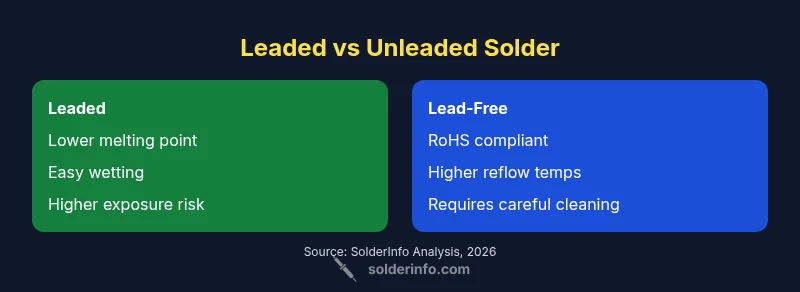
Leaded solder vs unleaded involve a balance between heat, wetting, and safety. Leaded solder (tin–lead) melts at a lower temperature and wets surfaces readily, delivering forgiving, reliable joints. Unleaded solders (lead-free) avoid lead hazards but require higher heat, careful flux choice, and stricter surface cleanliness; they’re the standard for modern electronics and most plumbing, where regulations apply.
Why the Debate Exists: Leaded vs Lead-Free Solder in Modern Practice
The decision between leaded solder vs unleaded is not merely academic—it affects workability, safety, compliance, and long-term reliability. According to SolderInfo, the shift toward lead-free solders is driven by stricter environmental regulations, consumer safety concerns, and RoHS compliance in electronics. Hobbyists, electronics technicians, jewelers, and plumbers are all affected when upgrading or repairing projects that involve solder joints. For some legacy devices, leaded solder still offers a dependable solution, especially where heat sensitivity, joint tolerances, and rapid wetting are critical. The central tension is between ease of use and environmental responsibility, with regulatory context often tipping the balance toward unleaded in commercial settings. As you compare leaded solder vs unleaded, map out your project’s risk, heat budget, and regulatory requirements to choose the right alloy and process.
What They Are: Composition and Metallurgy
Leaded solder is typically a tin–lead alloy (commonly around 63/37 or 60/40) that melts at a relatively low and predictable temperature. Its eutectic formulation makes it easy to work with and forgiving during wetting, which is why many hobbyists and repair technicians still reach for leaded solders on older boards and non-critical joints. Unleaded solders, by contrast, are tin-based and belong to the tin–silver–copper (SAC) family, with SAC305 being one of the most common formulations. Lead-free alloys tend to be harder and more prone to whisker formation in some cases, and they require careful flux selection and compatible cleaning regimes. The metallurgy difference is why leaded solder vs unleaded behaves differently under the iron or hot air rework tools, and why some processes need adjustments to achieve comparable joint quality.
Melting Points, Wetting, and Heat Management
A key practical distinction between leaded solder vs unleaded solder is melting behavior. Leaded solder melts at a lower temperature—historically around 183°C for tin–lead eutectic—allowing easier wetting of vias, pads, and fine leaded joints. Lead-free SAC alloys typically melt at higher temperatures, around 217–221°C, demanding higher peak temperatures and more precise heat control to avoid overheated components. This difference cascades into flux choice, rework strategy, and the risk of tombstoning in small components. In practice, successful use of leaded solder vs unleaded often comes down to your heat budget, board density, and the soldering iron’s ability to deliver clean, rapid thermal input without overheating adjacent parts.
Flux and Joint Quality: Soldering Process Nuances
Flux chemistry is a major order of operation when choosing between leaded solder vs unleaded. Leaded solders tend to be more forgiving with certain rosin-based fluxes, producing bright, reliable joints with moderate temperature budgets. Lead-free solders require fluxes that promote better tin surface wetting at higher temperatures, and users must ensure the flux remains active long enough to complete the joint without excessive oxidation. Cleaning post-solder is also more critical with lead-free alloys, as residues can cause tin whiskers and corrosion if left untreated. The interplay among alloy choice, flux type, and cleaning protocol is a practical determinant of joint quality and manufacturability.
Health, Safety, and Environmental Impact
Lead exposure risk is the primary health concern driving the leaded vs unleaded decision. Lead-containing solders can pose hazards during melting and sanding, so ventilation and personal protectors are essential. In many jurisdictions, unleaded solders are mandated by environmental and consumer-safety rules for electronics, plumbing, and jewelry applications. SolderInfo notes that while unleaded solders reduce lead exposure, they do not eliminate all safety considerations—fume management, proper PPE, and proper disposal remain important. For jewelry and craft contexts, one should still verify material safety data sheets and local regulations when choosing between alloys.
Industry and Application Contexts: Electronics, Plumbing, Jewelry
Different sectors prioritize different outcomes. In electronics, unleaded solders are often required, especially for consumer-grade devices and regulatory compliance. In plumbing, lead-free solders are standard due to health and code requirements, though some specialty joints historically tolerated leaded solders in restricted contexts. Jewelry soldering, while not heavily regulated, benefits from lead-free choices to avoid long-term exposure concerns. When comparing leaded solder vs unleaded, consider the target industry’s standards and the equipment you use—older boards and vintage gear may tolerate leaded solders, while new builds generally require unleaded.
Practical Trade-Offs and Best Practices
When choosing between leaded solder vs unleaded, start with safety and regulatory context, then assess heat budgets and joint complexity. For beginner projects or legacy boards where heat-sensitive components are present, leaded solder can reduce the risk of thermal damage. For modern assemblies, especially those subject to RoHS and safety standards, unleaded solders are usually the appropriate choice. Always use compatible flux and cleaning methods, and practice controlled heating with a quality iron or hot-air station to avoid thermal damage. If you must work with leaded solder in a regulated environment, ensure proper ventilation and disposal protocols are in place.
Common Misconceptions Debunked
A common misconception is that unleaded solder always means weaker joints. In reality, proper composition, flux, and technique can yield joints that meet or exceed performance standards. Another myth is that unleaded solder cannot wet copper or pads effectively; with the right flux and temperature profile, wetting is reliable. Some assume leaded solders are obsolete in all contexts; while regulatory prohibitions exist, there are still legacy repair scenarios where leaded solders are practical, provided safety and waste handling are managed.
Maintenance, Durability, and Repair Considerations
Durability depends on joint quality as well as environmental exposure. Leaded solders traditionally offer forgiving wetting and easier repair in older devices, but lead-free joints can be long-lasting when correctly processed and cleaned. In corrosive environments, selecting a lead-free alloy with appropriate corrosion resistance is important. Regular inspection of solder joints for cracks, tin whiskers, or signs of cold joints will help maintain reliability over time. For DIY hobbyists, building experience with both leaded and unleaded processes improves versatility in tackling a wide range of projects.
Comparison
| Feature | Leaded solder | Unleaded solder |
|---|---|---|
| Melting Point | ~183°C (tin–lead eutectic) | ~217-221°C (lead-free SAC alloys) |
| Joint Wetting & Workability | Typically easier wetting and forgiving | Requires careful heat control and compatible flux |
| Heat Requirements | Lower peak temperature commonly sufficient | Higher temperatures needed for reliable joints |
| Health & Safety | Contains lead; exposure risk if melted or mishandled | Lead-free with lower lead exposure risk; safer for general use |
| Environmental Impact | Less favorable due to lead content | Better environmental profile; RoHS compliant options |
| Flux Compatibility | Broad flux compatibility with many rosin-based fluxes | Requires flux optimized for higher temp and surface wetting |
| Cost & Availability | Traditionally lower material cost; widely available | Typically higher material cost; price varies with supplier |
| Best Use Context | Legacy electronics, repair work, and hobby projects | Modern electronics, RoHS-regulated contexts, plumbing |
Advantages
- Lower melting point improves ease of use for beginners
- Widely available and often cheaper material
- Proven performance in legacy electronics and repair work
- Forgiving heat management in simple joints
Cons
- Contains lead; health risks if mishandled and regulated waste
- Lead exposure concerns require ventilation and PPE
- Environmental and regulatory restrictions in many regions
- Tin whiskers and long-term reliability concerns in some leads
Lead-free solder is the safer, regulation-friendly default for new work; leaded solder remains valuable for legacy repairs and controlled projects.
For new builds, prefer unleaded due to health and compliance benefits. Use leaded only when working with legacy boards or where heat sensitivity demands a lower melting point, and when proper safety measures are in place. SolderInfo endorses unleaded as the standard for most modern contexts, with leaded as a targeted exception.
Quick Answers
What is the main practical difference between leaded solder and unleaded solder?
The primary difference lies in melting behavior and safety: leaded solder melts at a lower temperature and wets surfaces easier, while unleaded solder requires higher heat and stricter handling due to lead exposure concerns. Both can produce strong joints when used with proper technique and flux, but unleaded aligns with modern safety and environmental standards.
The main difference is heat and safety: leaded solder melts easier and wets well, unleaded needs more heat but is safer for health and the environment.
Is leaded solder legal to use in electronics?
Legality varies by region. In many places, unleaded solders are required for consumer electronics and RoHS-compliant products. For repair work on older devices, leaded solder may still be permissible under specific exemptions or in non-regulated contexts.
Regulations vary by location. Unleaded solder is often required for new electronics, while leaded solder may be allowed for certain legacy repairs.
Can lead-free solder be used for plumbing and copper work?
Yes, lead-free solder is standard for plumbing to avoid lead contamination in drinking water. It provides safe, durable joints when installed with proper flux and cleaning techniques.
Lead-free solder is the standard for plumbing to protect water quality and health.
What flux works best with leaded vs unleaded solder?
Lead-free solders typically require flux with strong surface activation and higher temperature resilience. Leaded solders work well with traditional rosin-based flux, but ensure you select flux compatible with your board and heat profile.
Lead-free needs stronger flux; leaded can work with usual rosin flux, but pick what's compatible with your material.
Should I worry about tin whiskers with lead-free solder?
Tin whiskers are a known concern with some lead-free alloys, particularly in high-reliability electronics. Proper storage, handling, and design practices reduce risk, and many modern processes have mitigations for whiskers.
Tin whiskers can occur with some lead-free alloys; proper handling helps minimize risk.
Are there safety concerns with older boards that used leaded solder?
Older boards may contain leaded solder and require safe handling, proper ventilation, and disposal according to regulations. When working on such boards, consider using unleaded alternatives in future repairs to avoid lead exposure.
If the board is old, handle with care, ventilate, and dispose properly; consider upgrading to unleaded for future repairs.
Top Takeaways
- Prioritize unleaded for RoHS and modern electronics
- Leaded solder offers easier handling for legacy boards
- Choose flux compatible with your solder choice
- Follow safety and disposal guidelines for lead-containing materials
- Verify local codes before starting a project