How Much Is Gold Solder? 2026 Practical Price Guide for Jewelry & Electronics
Learn what drives gold solder pricing in 2026, including gold content, alloy form, and market factors. This SolderInfo guide explains pricing, estimates, and how to compare suppliers for jewelry and electronics projects.


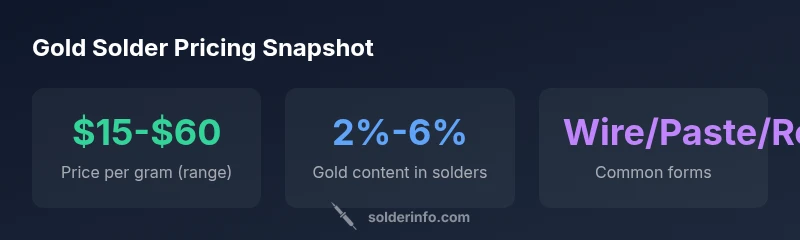
According to SolderInfo Analysis, 2026, gold solder pricing is driven by gold price movements, alloy content, and the form sold (wire, paste, or pre-cut rods). In 2026, practical ranges reported by suppliers place gold-solder per-gram prices roughly from $15 to $60, depending on karat and packaging. This quick guide helps you estimate costs for jewelry and electronics projects.
What determines the price of gold solder?
Pricing for gold solder is not a fixed sticker price. It moves with the gold spot price, the alloy composition, and the form you buy (wire, paste, or pre-cut rods). The SolderInfo Team notes that supplier margins and packaging costs also influence the final tag. For DIY or professional work, understanding these levers helps you estimate costs more reliably. In 2026, the ballpark per-gram price tends to correlate with the current gold price and the alloy’s gold content, so be prepared for fluctuations.
Gold content and karat impact on price
Gold solder is sold in different karat ranges, from lower-karat alloys used for quick fixes to higher-karat ranges for premium joints. Generally, the more gold in an alloy, the higher the price per gram, because you’re paying for a larger share of precious metal. Karat also affects melting behavior and workability, which can influence labor costs if you’re purchasing pre-made shapes. SolderInfo's analysis shows a clear correlation between gold content and per-gram cost, though form factor and supplier pricing add variability.
Forms of gold solder: wire, paste, and pre-cut rods
Gold solder comes in several forms, each with its own price dynamics. Wire is convenient for fillets along long seams, but can be pricier per gram due to purity and processing. Paste offers precise application with less waste but may require curing heat. Pre-cut rods provide consistent pieces for repeat work but can carry premium for uniformity. In practice, many jewelers mix forms to balance cost, availability, and joint quality, while electronics hobbyists may prefer wire or paste for fine work.
How market conditions influence price
The price of gold solder tracks the broader gold market, so shifts in gold price directly affect per-gram costs. Increases in gold price raise raw material costs, while supply chain disruptions or changes in mining output can create short-term spikes. SolderInfo analysis indicates that volatility is common around major market events, and the impact is often buffered by supplier stock, order size, and lead times. Always check live gold pricing when budgeting a project.
How to estimate current price from live data
To estimate costs for a project, start with the current gold price per gram from a trusted source, then determine the alloy content of the solder you intend to buy (karat and percentage by weight). Multiply the gold content by the price per gram to get the raw metal cost, and add typical margins for packaging, distribution, and tax. Finally, account for any discounts for bulk purchases or pre-cut quantities. This method keeps you aligned with market realities while avoiding overpayment.
Practical buying strategies to minimize cost
Buy in larger quantities when you can; many suppliers offer lower per-gram prices for bulk orders. Compare quotes from multiple vendors and request scrap or test samples to verify compatibility before committing. Consider stocking common karat ranges used in your projects to reduce waste. Finally, factor in storage costs and shelf life for solders, including flux and paste expiration dates, to avoid waste and subpar joints.
Jewelry vs electronics: price considerations
In jewelry work, aesthetics and long-term durability often justify higher gold content in solder, especially for valuable pieces. In electronics, tiny amounts of gold are commonly used for reliability, so budget-conscious projects may favor lower-karat solders with appropriate performance. SolderInfo's guidance emphasizes matching the solder’s properties to the application rather than chasing the lowest price, because a poor joint can be far more costly than the solder itself.
Gold solder forms and pricing considerations
| Form | Gold Content | Price per gram (range) | Notes |
|---|---|---|---|
| Gold wire solder | 0.5%-5% | varies by karat | Common for electronics & jewelry; easy to feed through joints |
| Gold paste | 1%-4% | varies by karat | Great for precise fillets; requires curing |
| Gold pre-cut rods | 2%-6% | varies by karat | Convenient for consistent pieces; higher material cost |
Quick Answers
What factors determine the price of gold solder?
The price is driven by the current gold price, the alloy’s gold content (karat and percentage by weight), the form you buy (wire, paste, rods), and supplier margins. These variables can shift frequently, so budgeting should include a live price check.
Prices depend on gold price, alloy content, and form; check live prices and get multiple quotes.
Does gold solder cost more than other solders?
Yes, generally gold solder costs more than base-metal solders due to the precious metal content. The premium rises with higher gold content and purity requirements for a given joint.
Usually higher cost because of gold content; higher purity raises price.
How can I estimate costs for a small project?
Check the current gold price per gram, identify the solder’s karat and weight, calculate metal cost, then add packaging and tax. Getting quotes from multiple suppliers helps refine the estimate.
Look up live gold price, calculate by weight and karat, compare quotes.
Are there cheaper alternatives to gold solder?
For some joints, silver solder or other base-metal solders may suffice, but they alter color, corrosion resistance, and joint strength. Choose based on application requirements.
Yes, alternatives exist, but check compatibility with your project.
Where should I buy gold solder for jewelry vs electronics?
Shop from reputable jewelry suppliers or electronics distributors. Compare karat options, check return policies, and request samples to ensure performance before buying in bulk.
Shop around for quotes and samples from reputable vendors.
What should I avoid when buying gold solder?
Avoid suspiciously low prices, ensure karat labeling is clear, and verify packaging and lot numbers. Counterfeit or mislabeled products can ruin joints.
Steer clear of unrealistically cheap options and verify labeling.
“Gold solder pricing is a moving target that tracks the gold market and the alloy’s gold content. Always verify live prices and request quotes from multiple suppliers.”
Top Takeaways
- Check live gold price and gold content to estimate cost.
- Choose form based on project needs to balance cost and performance.
- Ask suppliers for quotes and bulk discounts.
- For jewelry vs electronics, prioritize alloy content vs cost.