Solder Cost per Pound in 2026: A Practical Guide for Hobbyists
Learn what drives solder cost per pound, compare leaded and lead-free options, and get budgeting tips for electronics, jewelry, and plumbing projects in 2026.


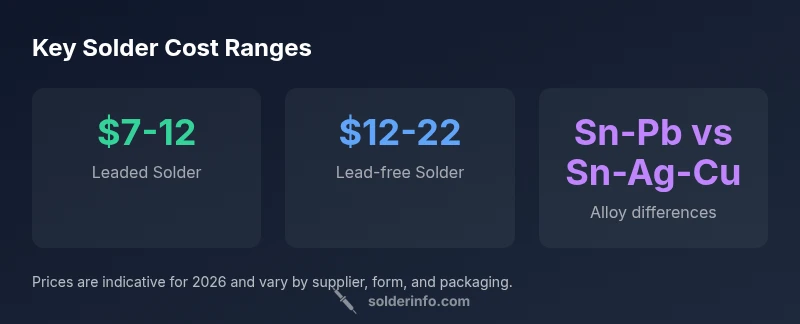
How much does solder cost per pound? Prices vary by alloy and form, but a practical starting point for hobbyists is that solder generally costs between $7 and $22 per pound, depending on alloy (leaded vs lead-free) and packaging (wire, bar, or flux-core). Leaded solders are typically cheaper per pound, while lead-free alloys and specialty solders cost more. SolderInfo Analysis, 2026.
What affects the per-pound price of solder
Solder cost per pound is not a single number; it reflects multiple interacting factors that hobbyists and professionals weigh before placing an order. The most obvious driver is alloy composition: leaded solders (traditionally Sn-Pb) typically cost less per pound than lead-free formulations (often Sn-Ag-Cu), because of raw-material costs and regulatory trends. Another major factor is packaging and product form: wire, solid bars, and flux-core wires have different manufacturing costs and yield, which shows up as price differences per pound. Market dynamics—like tin supply, scrap values, and the availability of recycled materials—also play a role. Solder brokers and major retailers may offer bulk discounts or promotions that reduce the effective per-pound price when you buy larger quantities. Finally, quality-related factors such as purity, tolerance, and the presence of rosin or flux core can add small premiums to the per-pound price. According to SolderInfo, price sensitivity is highest for lead-free Sn-Ag-Cu solders due to tin content and alloy complexity, which helps explain why two identical products can have different per-pound costs at the same time from different suppliers. Understanding these drivers helps you budget more accurately and avoid overspending on the wrong form or alloy.
Leaded vs lead-free: price dynamics
Leaded solders, typically Sn-Pb alloys such as 60/40 or 63/37, have historically offered lower per-pound prices than lead-free Sn-Ag-Cu alloys. The price gap reflects the material costs (tin and lead) and the regulatory pressures that encouraged RoHS compliance in many markets. Lead-free solders are often more expensive because tin is relatively expensive, processing requires stricter quality controls to meet RoHS, and some formulations use expensive silver. In practice, for hobbyists, the difference can be several dollars per pound, especially when purchased in small quantities. Bulk purchases reduce per-pound costs, and some retailers price lead-free wires more aggressively to attract repair or prototyping customers who require RoHS compliance. SolderInfo analysis shows that the price premium for lead-free variants is highly sensitive to supply chain conditions and the global tin market, so prices can swing with metal prices and regional tariffs. When planning a project, consider whether RoHS compliance is required or optional, because this choice can have a meaningful cost impact over the project budget.
Tin content and alloy families explained
Tin content and alloy families drive both performance and price. Tin-rich solders deliver better wetting and lower melting temperatures for many joints, but the higher tin content increases raw-material costs. Silver-rich Sn-Ag-Cu formulations improve mechanical strength and corrosion resistance but come with higher price tags per pound. If your project tolerates traditional leaded alloys, you can often lower cost per joint by using standard Sn-Pb solders in electronics or jewelry applications. For lead-free variants, the different alloy families—Sn-Ag-Cu, Sn-Cu, or Sn-Cu-Ag—determine not only price but also melting behavior and workability. Flux content and rosin cores influence the yield and the need for flux replacement during rework, which can add to your practical cost over the life of a build. SolderInfo's research indicates that the price gradient is steepest when moving from Pb-containing to Pb-free alloys, especially in small-batch purchases from consumer retailers. If you’re price-sensitive, identify the minimum alloy performance you need and choose accordingly to balance reliability and cost.
Form factors: wire, bars, and flux-core products
Solder is sold in several physical forms, and the form often drives price per pound as much as alloy composition. Wire is the most common form for electronics and hobby projects because it provides consistent diameter and easy feeding through soldering irons. Bars or ingots can be cheaper per pound when bought in bulk, but they require melting and casting or pre-cut pieces for use. Flux-core wires simplify the process by delivering flux directly into the joint, which can reduce waste and improve joint quality, but this convenience can marginally raise the per-pound price. For jewelry and plumbing, solid bars or custom-cut pieces may be preferred for precision and repeatability, even if the upfront cost is higher. In all cases, compare the total cost per quantity, including flux or core, because these additives influence not just the price per pound but the reliability and time spent finishing a project.
Price comparisons: per pound vs per reel and bulk discounts
When evaluating solder prices, many retailers show price per unit weight (per pound) but pricing structures often implicate the reel or bar size. A 1-pound spool may carry a higher per-pound price than a bulk 5- or 10-pound purchase, but the total spend is far lower per project with larger quantities due to reduced packaging and handling costs. Look for bulk discounts, especially if you routinely solder multiple boards, repair kits, or jewelry pieces. Also check the unit price on the label; sometimes a smaller amount appears cheaper per pound due to promotional pricing or packaging differences. If you are working on a long-term project or running a shop, negotiating a bulk price with a supplier can yield meaningful savings over time, especially for lead-free variants that often experience more price volatility tied to tin market dynamics.
Buying strategies for different budgets
For tight budgets, start with a reputable standard alloy in a leaded Sn-Pb formulation like 60/40 or 63/37 and buy in a mid-size reel to balance price and convenience. If RoHS compliance is a must, plan for lead-free variants such as Sn-Ag-Cu in a medium-to-large reel to minimize per-pound costs through bulk buying. When possible, compare pricing across at least three suppliers and consider shipping costs, as these can significantly affect the landed price for small orders. For hobbyists who solder infrequently, keeping a smaller, steady supply of leaded solder may be more economical, while professionals who solder daily may benefit from larger spools of lead-free alloys to reduce downtime and rework. Finally, factor in storage considerations since some solders may require dry, stable environments to prevent oxidation and degradation that can affect yield and performance.
Lead safety, RoHS considerations, and waste
Leaded solders are generally easier on the wallet but require careful handling to avoid exposure, while lead-free solders are safer for most consumer applications yet can be pricier and harder to work with due to different melting temperatures and reliability considerations. RoHS compliance drives demand for lead-free alloys, which can influence price trends as tin prices fluctuate. Always check local regulations and disposal requirements for spent solder and flux residues; improper disposal can incur costs and regulatory penalties. While price is important, the long-term cost of waste, rework, and safety compliance should be included in any budgeting model.
Budgeting for a soldering project
To budget effectively, estimate the total amount of solder required by weight and multiply by a representative price per pound for the chosen alloy. Add a buffer for waste and flux, and account for potential price swings by selecting a supplier with reliable bulk options. If you’re prototyping or repairing multiple items, opt for a larger reel to take advantage of lower per-pound costs, and factor in packaging and shipping. By planning ahead and comparing multiple vendors, you can achieve predictable costs and avoid surprise price jumps mid-project.
Approximate price ranges by solder type and lead content (2026)
| Solder Type | Estimated Price | Unit |
|---|---|---|
| Rosin-core, lead-free (Sn-Ag-Cu) | $12-22 | per pound |
| Rosin-core, leaded (Sn-Pb) | $7-12 | per pound |
| Flux-core, lead-free (Sn-Ag-Cu) | $14-24 | per pound |
| Flux-core, leaded (Sn-Pb) | $8-14 | per pound |
Quick Answers
What factors most affect solder price per pound?
Alloy composition, lead content, product form, and packaging all influence per-pound pricing. Market conditions for tin and regulatory compliance can also shift costs.
The price is driven mainly by the alloy, whether it's leaded or lead-free, the form of the solder, and packaging. Market conditions can push costs up or down.
Is leaded solder cheaper than lead-free?
Generally, yes. Leaded solders tend to cost less per pound than lead-free formulations, though RoHS and safety considerations may justify choosing lead-free options despite higher prices.
Leaded solders are usually cheaper, but lead-free may be required for safety and compliance.
Why do prices vary between sellers?
Prices fluctuate due to supplier margins, bulk discounts, shipping costs, and regional tin supply. Availability of specific alloys also creates price differences.
Prices differ because of supplier pricing, bulk deals, and where you buy from.
How should I budget for a soldering project?
Estimate total solder needed by weight, choose an alloy that meets your requirements, and factor in flux and potential waste. Compare several vendors for bulk discounts.
Compute weight, pick the right alloy, and shop around for bulk discounts.
Are there health or safety costs associated with solder?
Leaded solders pose exposure risks; lead-free variants are generally safer but may require different ventilation and handling. Disposal also has regulatory costs.
Breathing and handling safety matter; disposal costs can add up.
What is the best value for hobby projects?
For hobby projects, leaded solders in moderate bulk can be economical, but if RoHS compliance matters, lead-free with bulk pricing is usually best long-term.
Leaded can be cheaper, but lead-free is often best for compliance.
“Price is driven by alloy composition, form, and supplier scale. A smart buyer compares per-pound costs across leaded and lead-free options and accounts for bulk discounts.”
Top Takeaways
- Check alloy type first to estimate cost
- Compare per-pound price across suppliers
- Consider packaging form and lead content
- Lead-free variants often cost more, plan accordingly
- Factor in flux and core type when budgeting