Solder for Refrigeration Lines: A Practical Guide to Copper Tube Joints
Learn how to solder for refrigeration lines with copper tubing, flux, and lead-free solder. This step-by-step guide covers materials, safety, and troubleshooting to ensure leak-free joints in residential and commercial systems.


This guide shows you how to solder for refrigeration lines by preparing copper tubes, selecting flux and lead-free solder, and forming leak-proof joints. You’ll learn essential safety steps, applicable codes, and practical tips to achieve durable connections. Start with clean cuts, proper flux, and controlled heat for reliable refrigeration system performance.
Why soldering for refrigeration lines matters
Soldering for refrigeration lines is a critical skill for anyone maintaining or installing cooling systems. A secure solder joint in copper tubing prevents refrigerant leaks that can compromise efficiency, performance, and safety. When done correctly, soldered joints create a reliable, pressure-resistant connection that can withstand the vibrations and temperature swings typical of refrigeration equipment. This guide uses the phrase solder for refrigeration lines to emphasize the practical focus on copper tube joints, flux application, and heat control. For DIY hobbyists, technicians, and plumbers, mastering this skill reduces the need for costly repairs and ensures long-lasting service life. The SolderInfo team notes that understanding joint geometry, appropriate flux choice, and proper heat management are the foundation of durable results. By treating each joint as a sealed, worry-free connection, you enhance system performance and safety across residential and commercial refrigeration projects.
Key materials and joint types for refrigeration lines
In refrigeration work, copper tubing is the backbone of most systems. Joints are typically sweat-soldered or flare-fit, with sweat fittings requiring clean, flux-ready surfaces and even heat. When discussing solder for refrigeration lines, you’ll commonly encounter lead-free solder and rosin-core flux or flux paste designed for metal-to-metal joints under refrigerant pressures. Flare fittings provide robust, leak-tested seals that don’t rely solely on solder, but soldered sweat joints are still widely used in many sections of piping. The choice between sweat solder and flare fittings depends on system design, accessibility, and code requirements. For best results, ensure tubing ends are square, burr-free, and properly deburred before assembly, and always use fresh flux to promote good capillary action and a strong bond. Remember that compatibility with refrigerants and oils is essential, so verify the materials meet local codes and manufacturer specifications. This section lays the groundwork for successful, reliable joints you can trust under service conditions.
Safety and codes you must follow
Working on refrigeration lines involves pressurized systems and potentially harmful refrigerants. Always consult the local mechanical and plumbing codes before starting, and ensure you have the right permits if required. Adequate ventilation and eye protection are non-negotiable, as is the use of heat shields and insulated gloves when handling hot copper and solder. Use a properly rated torch and control the flame to avoid overheating fittings, which can weaken joints or damage surrounding insulation. If you’re new to this work, practice on spare sections of copper tubing and keep a leak-detection solution handy. Finally, verify that your materials and process comply with safety standards and manufacturer guidelines for the chosen refrigerant and system type.
Tools and materials you’ll need
A well-curated toolkit makes soldering for refrigeration lines faster and safer. You’ll need cutting tools, deburring tools, flux, lead-free solder, and a torch with adjustable flame. A flare wrench, a sturdy heat-resistant mat, and personal protective equipment (PPE) such as safety glasses and gloves are essential. Keep a pressure gauge or leak-detector solution nearby to test joints after assembly. By preparing your workspace and tools in advance, you reduce the risk of heat damage and ensure consistent joint quality across projects. This section helps you identify what to gather before you begin, so you can stay focused on the task at hand.
Copper tubing preparation
Preparation is the secret to leak-free joints when soldering for refrigeration lines. Start with square, clean cuts using a tube cutter designed for copper to minimize burrs. Deburr the inside and outside edges to prevent blocking the flow. Clean the tubing thoroughly with a cloth or solvent to remove oil, dust, and oxidation. Apply a thin, even layer of flux to the outside of the tubing to promote capillary action and improve solder wetting. When heat is applied, flux also helps torch heat distribute more evenly along the joint. Proper preparation reduces the risk of gaps or voids in the solder joint and improves overall reliability.
Flux, solder, and brazing alloys for refrigeration lines
Choosing the right flux and solder is crucial for durable joints in refrigeration lines. Use rosin-core or paste flux designed for copper-to-copper connections and compatible with lead-free solder. Lead-free solder typically comes in rosin-core or solid-core with flux applied externally; both options are suitable if they meet local code requirements. For many systems, a 0.040 inch diameter lead-free solder offers adequate flow characteristics without excessive heat. In areas with higher refrigerant pressures or environmental exposure, more robust brazing alloys may be used instead of solder; always verify compatibility with the refrigerant and system specifications. The goal is to achieve strong wetting, complete fill, and a smooth, uniform fillet.
Step-by-step soldering process for refrigeration lines
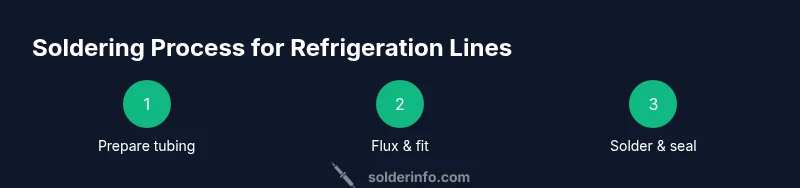
This core section walks you through the practical steps to create a reliable joint. Begin by securing the tubing and fittings and aligning them for a straight, square join. Apply flux sparingly but evenly to the joint surfaces, then heat the fitting and tube with a controlled, even flame from the torch. Feed lead-free solder into the joint at the hottest point, allowing capillary action to draw the solder into the seam. Avoid overheating, which can damage insulation and reduce joint strength. After soldering, cool the joint naturally and wipe away any excess flux. Finally, test the joint under pressure with appropriate equipment, following all safety guidelines and local codes. Remember that good technique and consistent heat management produce the most reliable results.
Troubleshooting leaks and post-work checks
Even well-executed joints can leak if deburring is poor, flux residue remains, or heat was uneven. Inspect joints for a smooth fillet and complete wetting around the circumference. Use a leak-detection solution or a pressure test with inert gas to confirm integrity. If a joint fails, rework the area by cleaning the joint, reapplying flux, and repeating the soldering process with careful heat control. After finishing, reinspect all joints and ensure insulation remains intact to prevent condensation and energy loss. Regular checks help maintain system efficiency and prolong service life.
Tools & Materials
- Propane/Butane torch with adjustable flame(Use a heat range suitable for copper tubing, with a stable, controllable flame.)
- Copper tubing cutter(Make clean, square cuts for best contact.)
- Deburring tool(Remove burrs from both ends to prevent leaks.)
- Flare nut wrench(Protect flare fittings from rounding and damage.)
- Flux (rosin-core flux or paste flux)(Apply thin, even layer to joints to promote wetting.)
- Lead-free solder (0.030–0.040 inch diameter)(Choose compatible solder for copper piping and refrigerant compatibility.)
- Safety gear (goggles, heat-resistant gloves)(Protect eyes, hands, and skin from heat and flux.)
- Measuring tools (ruler/calipers)(Ensure precise cuts and alignment.)
- Leak-test equipment (leak-detect solution or pressure gauge with inert gas)(Use for post-solder testing according to code.)
- Ventilated work area (adequate ventilation or fume extractor)(Refrigeration work can release fumes; ensure good air quality.)
Steps
Estimated time: 60-90 minutes
- 1
Prepare workspace and safety gear
Set up a clean, ventilated workspace. Don safety goggles, gloves, and ensure your torch has a secure fuel source. Verify you have all tools and materials within reach to minimize movement during the process.
Tip: Have a fire extinguisher nearby and double-check ventilation before starting. - 2
Cut and deburr copper tubing
Use a quality tubing cutter to create straight, square cuts. Remove burrs from both ends with a deburring tool to prevent damage to fittings and improve seal integrity.
Tip: Rotate the cutter slowly to avoid deforming the tube. - 3
Clean and flux the joint surfaces
Wipe the cut ends clean with a cloth and solvent to remove oils. Apply a thin, even layer of flux to the outside of the tube and the inner surface of the fitting to promote solder wetting.
Tip: Do not overflux; excess flux can create corrosion or wash away solder. - 4
Position and align fittings
Push the tube into the fitting fully and align the joint to ensure even solder distribution. Secure the assembly so it won’t shift while heating.
Tip: Check that the joint is straight and the tube is fully seated before heating. - 5
Apply heat evenly and introduce solder
Heat the joint with a steady, evenly distributed flame until the flux sizzles and the joint becomes tacky. Touch the solder to the joint and allow capillary action to draw the material into the seam.
Tip: Keep the flame moving to avoid overheating one spot. - 6
Cool, wipe, and inspect
Let the joint cool naturally, then wipe away flux residue. Inspect the joint for complete wetting and a smooth fillet around the circumference.
Tip: Do not twist or yank the tube as it cools; movement can cause micro-cracks. - 7
Test for leaks
Perform a leak test using an inert gas or leak-detection solution per local codes. If a leak is found, rework the joint with proper cleaning, fluxing, and heating technique.
Tip: Test at service pressures typical for the system and refrigerant class. - 8
Document and finalize
Record any joints serviced, tests performed, and results. Reinstall insulation and ensure all safety covers are in place before returning the system to service.
Tip: Label repaired sections for future maintenance references.
Quick Answers
Can I use electronics solder for refrigeration lines?
No. Refrigeration lines require lead-free solders and flux designed for copper and refrigerants, and sometimes brazing alloys depending on the system. Using electronics solder may not withstand refrigerant pressures or chemical compatibility.
Use lead-free solder and proper flux designed for refrigeration tubing; electronics solder is not suitable for refrigeration line joints.
What flux is best for refrigeration line joints?
Flux rated for copper-to-copper joints with lead-free solder is recommended. The flux should promote wetting without leaving corrosive residues; always follow manufacturer recommendations and local codes.
Choose rosin-core or paste flux suitable for copper joints and lead-free solder, and follow local code guidelines.
How do I test for leaks after soldering?
Use a leak-detection solution or a pressure test with inert gas, following local codes. If bubbles appear or a leak is detected, rework the joint with clean surfaces and proper heating.
Test the joints with a leak detector or inert gas pressure test per your codes, and rework any leaks promptly.
Is nitrogen purge recommended before soldering?
For some high-pressure or sensitive systems, purging with nitrogen can reduce oxide formation and improve solder quality. Check system requirements and safety procedures before use.
In certain setups, nitrogen purge helps prevent oxidation during soldering; confirm your system's needs first.
Can I reuse existing fittings after cleaning?
Yes, if fittings are undamaged and properly cleaned. Thoroughly inspect for scoring, cracks, or corrosion before reuse, and ensure a clean mating surface for a good seal.
Reusing fittings is possible if they’re undamaged and clean, but inspect carefully first.
What safety gear should I wear?
Wear safety goggles, heat-resistant gloves, and ensure adequate ventilation. Have a fire extinguisher nearby and keep work area organized to prevent accidents.
Goggles, gloves, and good ventilation are essential for safe soldering work.
Watch Video
Top Takeaways
- Prepare properly and wear PPE.
- Use square cuts, clean surfaces, and correct flux.
- Heat evenly and avoid overheating joints.
- Test joints before putting system back in service.