How to Solder Copper Tube: A Complete Plumbing Guide
Learn step-by-step how to solder copper tube for plumbing, including cutting, deburring, flux selection, heating technique, and leak testing to ensure durable, leak-free connections.


In this guide you’ll learn how to solder copper tube safely and reliably, from choosing the right flux and brazing rod to cutting, deburring, and heating with a torch. You’ll see a step-by-step process, troubleshooting tips, and safety precautions to prevent leaks. By the end, you’ll be confident performing clean, leak-free connections for plumbing projects.
Copper tube basics and why proper soldering matters
Copper tubing is a reliable plumbing material when joints are clean and properly brazed or soldered. Copper comes in wall thickness grades (commonly labeled M, L, and K in some regions) and in several outer diameters. For potable-water applications, most residential piping uses lead-free solders and flux that are compatible with drinking water. The quality of a joint hinges on clean surfaces, correct fit, and uniform heat. According to SolderInfo, the most common cause of leaks is a dirty joint or inadequate heating, not the solder amount. By understanding tube sizes, joint types, and the limits of your furnace or torch, you’ll choose the right approach for a durable connection.
Safety first when soldering copper tube
Soldering copper involves open flame and hot metal, so safety cannot be an afterthought. Work in a well-ventilated area and keep flammables away from the workspace. Wear safety goggles, heat-resistant gloves, and sturdy clothing. Have a fire extinguisher or a bucket of water nearby, and never leave a lit torch unattended. Ensure your work surface is stable and noncombustible. SolderInfo Team emphasizes that ventilation and protective gear are as important as technique, because even small sparks can ignite flammable vapors in enclosed spaces.
Choosing flux, solder, and alloys
Flux helps the copper surfaces chemically bond with the solder and protects the joint from oxidation during heating. For potable water, use a lead-free solder and a flux compatible with drinking-water systems. Flux comes in rosin, water-soluble, and no-clean forms; water-soluble fluxes can require thorough rinsing. The alloy choice matters: traditional copper-tin solders work for many systems, while certain phosphor bronze or copper-phosphorus brazing alloys are used for larger diameters or higher-pressure applications. Always follow local codes and manufacturer guidelines to ensure the joint remains safe for drinking water. This section aligns with SolderInfo guidance on selecting compatible flux and alloys.
Preparing the pipe: cutting, deburring, and cleaning
Begin by measuring and marking the cut length, then cut squarely with a tube cutter. Avoid nicks and squaring the cut ends. Deburr the inside and outside edges with a deburring tool or sandpaper until the edge is smooth. Wipe away any metal shavings and dry the ends thoroughly. Clean surfaces with a cloth to remove oil, fingerprints, or moisture. A clean surface and right cut angle are prerequisites for a strong, leak-free joint. Proper preparation reduces the risk of gaps and weak solder joints.
Fitting and fluxing joints
Dry-fit the pipe and fittings before applying flux to confirm a proper slide and alignment. Apply flux to the inside of the tube and the outside of the fitting; a thin, even coat is best. This prevents air pockets and ensures even capillary flow of the solder. If you’re working in tight spaces, consider an assistant to hold pieces in place while you flux. When flux is applied correctly, the joint will capillary-solder smoothly, forming a consistent bond across the full circumference.
Heating strategy: torch setup and heat control
Set up a stable heat source with a controlled, evenly distributed flame. Move the flame around the joint in a circular motion to avoid overheating one spot, which can anneal the copper and weaken the joint. Heat until the flux sizzles and the solder begins to melt at the joint, then apply the solder at the heated area. Do not directly heat the solder; heat the joint and allow the molten solder to flow into the joint by capillary action. Proper heat control prevents cold joints and minimizes oxidation.
Applying solder and forming a leak-tight joint
Feed the solder into the joint at the hottest area, allowing it to flow around the circumference. Stop once the joint is completely filled and the solder has formed a smooth bead around the joint. Avoid over-soldering, which can drip or create excess buildup inside the fitting. After removing heat, let the joint cool undisturbed for a minute or two. When it’s cool, wipe away flux residue and inspect for uniform coverage and a sealed appearance. Practice on scrap pieces to perfect timing and flow.
Cooling, cleaning, and testing for leaks
Let the joint cool naturally; cooling too quickly can trap stress. Wipe off flux residue with a damp rag once the joint has cooled and rinse any water-soluble flux residues according to the flux manufacturer’s instructions. Pressurize the system with a mild water test to check for leaks at joints. If you detect any leaks, reheat the joint and apply a small amount of solder, then re-test. Regular testing during installation is essential to prevent later failures.
Troubleshooting common issues
Common problems include cold joints, air pockets, and overheating. A cold joint shows a dull surface with poor capillary flow; reheat and apply more solder while maintaining even heat. Air pockets reduce bonding strength and can cause leaks, so ensure flux coverage is complete and joints are clean. Overheating copper can anneal the tube, making it softer and prone to deformation; maintain a consistent distance between the torch and the joint and avoid prolonged heat in one spot. If joints fail a pressure test, repeat the process with extra caution and ensure surfaces remain clean.
Practical tips for beginners
Practice on scrap pieces first to calibrate heat and flux usage. Keep clamps and tools within reach, and plan your flow path to minimize repositioning. Always double-check local code requirements for potable water installations. Consistent, methodical steps reduce the risk of leaks and promote durable joints. Following this approach helps new installers build confidence and achieve reliable results, as emphasized by the SolderInfo team.
Advanced techniques for tight spaces
When space is limited, pre-fit with temporary supports and use angled fittings or longer cup joints to reach proper heat. Apply flux to the inside of the tube end to help solder flow into restricted joints. Use a lighter, more controllable torch setting and work slowly to prevent joint defects. Advanced techniques may involve using distribution clamps or specialized tubing tools to maintain alignment while heating. Practice with leftover pipe to master the nuance of heat control in confined spaces.
SolderInfo's verdict: practical guidance for long-term reliability
Soldering copper tube successfully combines careful preparation, clean joints, correct flux, and precise heat. The SolderInfo team stresses that safety, code compliance, and proper testing are non-negotiable. With steady practice and adherence to the steps outlined, plumbers and DIY enthusiasts can achieve durable, leak-free copper connections that stand the test of time. Incorporate the recommended workflow into your regular projects and refer back to these guidelines as you gain experience.
Tools & Materials
- Copper tubing cutter(Choose a wheel-type cutter; ensure it cuts squarely and cleanly)
- Deburring tool(Efficiently removes burrs from inside and outside ends)
- Emery cloth or abrasive pad(Smooths cut surfaces before fluxing)
- Flux (lead-free, compatible with potable water)(Thin, even coating inside and outside joints)
- Lead-free solder or brazing alloy for copper(Choose solder or alloy suitable for potable water and tube size)
- Propane or MAPP gas torch(Adjust flame for a clean, evenly heated joint)
- Safety gear (goggles, heat-resistant gloves, long sleeves)(Protective equipment to prevent burns and splashes)
- Heat shield or fireproof mat(Helpful in small spaces or near flammables)
- Torch-safe clamps or vise(Keeps components stable while heating)
- Wet rag or bucket for cooling and cleanup(Useful for flux cleanup and quick cool-downs)
- Soap water or leak detection solution(For quick leak testing after cooling)
Steps
Estimated time: 45-60 minutes active; 60-120 minutes total including cool-down and testing
- 1
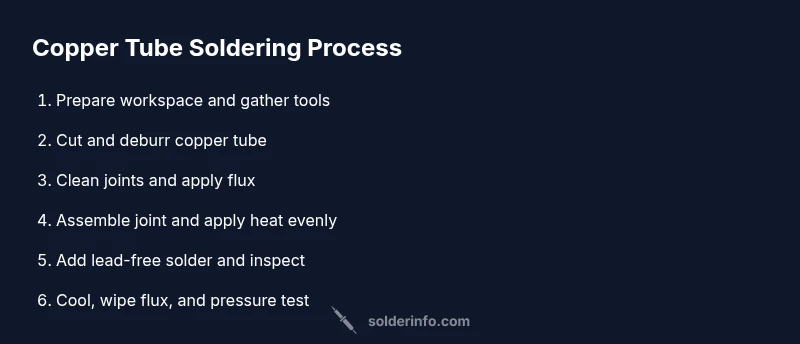
Prepare workspace and gather tools
Set up a well-ventilated area, secure clamps, and lay out all tools. Check that you have flux, solder, and a Torch with adjustable flame. Visualize the flow path for the joint, ensuring you can reach each joint without re-positioning heat sources.
Tip: Have a helper hold parts during fluxing for precise alignment. - 2
Cut the copper tube accurately
Measure the required length, mark clearly, and cut with the cutter. Keep the cut square and avoid crushing the tube. If necessary, remove burrs from the inside and outside edges.
Tip: Always cut square to avoid misalignment later. - 3
Deburr and clean the ends
Use a deburring tool to smooth the interior edge and remove any sharp burrs. Wipe the ends with a dry cloth to remove dust and oils that could interfere with bonding.
Tip: A clean surface is 90% of a good joint. - 4
Dry-fit the joint and apply flux
Assemble the tube and fitting to verify fit. Coat the inside of the tube and the outside of the fitting with flux for proper capillary action.
Tip: Do not over-flux; a thin, even layer is best. - 5
Heat the joint evenly
Position the torch so heat is distributed around the joint rather than focused in one spot. When the flux sizzles and the joint looks ready, move to the next step.
Tip: Maintain a calm pace to prevent overheating one area. - 6
Apply solder into the heated joint
Touch solder to the joint’s outer edge; let capillary action draw it around the circumference. Stop when the joint is fully filled and smooth.
Tip: Do not apply solder directly to the flame or tube surface; apply at the joint where heat concentrates. - 7
Cool and wipe away flux
Allow the joint to cool naturally, then wipe with a damp cloth and rinse flux residues if using water-soluble flux.
Tip: Quench too quickly can cause stress; avoid forced cooling. - 8
Test for leaks
Pressurize the system with water and inspect each joint for leaks. If needed, reheat and re-solder any suspect joints.
Tip: Check under pressure; sometimes slow leaks show up only when tested.
Quick Answers
What type of solder should I use for copper pipes?
Use lead-free solder or brazing alloy suitable for potable water and copper joints. Ensure the solder is compatible with pipe size and local plumbing codes.
Choose a lead-free solder or approved brazing alloy for your copper joints and always check local codes.
Should I flux copper pipe joints?
Yes. Flux prevents oxidation and promotes capillary flow of solder. Apply a thin, even layer to both the pipe and fitting surfaces.
Flux is essential for a good bond; apply a thin, even layer.
Can I solder copper pipe indoors safely?
Soldering indoors is possible with good ventilation, proper PPE, and removal of combustible materials. Follow safety guidelines to manage heat and fumes.
Indoor soldering is doable with ventilation and safety gear.
How do I test a copper joint for leaks after soldering?
After cooling, pressurize the system with water and inspect each joint. Look for drips or dampness; if needed, reheat and re-solder.
Test with water pressure and rework any suspect joints.
What is the difference between soldering and brazing copper tubes?
Soldering uses lower temperatures and fusible alloys with flux; brazing uses higher temperatures and stronger alloys suitable for larger pipes or higher pressure.
Soldering is lower-temp, brazing is higher-temp and stronger.
How long should joints cool before testing?
Allow joints to cool for a few minutes before testing; excessive handling while hot can loosen the bond.
Let joints cool a bit before testing for leaks.
Watch Video
Top Takeaways
- Measure twice, cut squarely for proper joint alignment
- Flux and clean joints to prevent leaks
- Heat joints evenly to form a strong bond
- Test joints before putting the system under pressure
- Follow codes and safety guidelines for potable water