How to Solder Copper Fittings: A Practical Guide
Learn how to solder copper fittings safely and reliably with a clear, step-by-step method. This guide covers flux selection, pipe prep, heat control, and leak testing for durable plumbing joints.


In this guide you will learn how to solder copper fittings safely and reliably. You’ll choose the right flux and lead-free solder, prepare pipe ends, manage heat to avoid overheating, and perform leak testing to confirm solid joints. This step-by-step method is suitable for repairs and new copper piping projects, and provides practical tips to avoid common leaks.
Overview: Why soldering copper fittings matters
According to SolderInfo, soldering copper fittings is a foundational skill for reliable plumbing. Proper joints prevent leaks, minimize corrosion, and ensure that your system handles water pressure consistently over time. Copper piping is common in residential and commercial projects because it has excellent conductivity, durability, and workability. Mastering the basics—clean ends, flux application, heat control, and prompt cooling—reduces the risk of leaks and callbacks. Whether you’re tackling a repair or a new installation, a clean, properly soldered joint is the difference between a temporary fix and a lasting solution. As you learn, you’ll develop a workflow you can apply across small-diameter and standard-sized copper runs.
Safety first: what to protect yourself from and how
Soldering copper involves open flame and hot metal, so prioritize safety. Work in a well-ventilated area to avoid inhaling fumes, and wear safety glasses and heat-resistant gloves. Keep flammable materials away from the work zone and have a water source nearby for quick cooling. Never leave a burning torch unattended, and always inspect your torch connections before use. A proper flame (neutral or slightly oxidizing) minimizes overheating and prevents scorching the copper fittings. If you’re unsure about your gas setup, practice on scrap pieces first. Remember: safety is non-negotiable in any soldering task, especially when working around water lines and occupied spaces.
Tools and materials: what you’ll need (and what’s optional)
You’ll want a dedicated set of tools for copper soldering. A quality pipe cutter ensures square cuts, while a deburring tool cleans the inside edge. Emery cloth or fine-grit sandpaper removes oxidation, and a flux brush helps you apply flux evenly. For soldering, use lead-free solder suitable for copper and rosin-core flux if your product recommends it. A propane or MAPP gas torch provides the heat, and clamps or a vise holds parts steady. Optional items include a pipe reamer for heavy burrs and a simple leak-detection solution. Keeping a damp rag handy helps you wipe away excess flux so joints stay clean.
Flux and solder selection: choosing the right materials
Flux protects copper from oxidation during heating and helps solder flow into the joint. Rosin-core flux or paste flux designed for plumbing is common, and lead-free solder is preferred for drinking-water systems. When selecting solder, consider a compatible alloy for copper in your climate and soil conditions. In practice, a small spool of lead-free solder combined with rosin-core flux provides predictable results for most residential copper piping tasks. Always follow the manufacturer’s guidelines for flux and solder compatibility to maximize joint integrity.
Preparing copper pipe ends: cutting, cleaning, and deburring
Accurate cuts are the foundation of a good joint. Use a sharp pipe cutter and score the cut to keep edges clean. Rotate the cutter slowly and tighten gradually to avoid crushed ends. After cutting, remove burrs with a deburring tool; a smooth edge ensures proper seating of the fitting. Clean the exterior of the pipe and the interior of the fitting with emery cloth until they shine. A clean, bright surface promotes better solder bonding and reduces the risk of leaks.
Flux application and dry-fit: getting ready to solder
Apply a thin, even layer of flux to both the pipe end and the inside of the fitting. Flux improves wetting and helps the solder flow into the joint. Before heating, dry-fit the assembly to verify alignment and depth, ensuring the pipe fully inserts into the fitting. If needed, add a small amount of sawdust-free, lint-free cloth to wipe away any flux residue during the process. A well-fluxed joint reduces the chance of cold joints and leaks after cooling.
Heating strategy: how to heat copper without burning it
Warm up the joint evenly by sweeping the torch around the outside of the pipe and fittings. Start heating near the end of the fitting and work outward, not directly on the solder. The goal is to bring the entire joint to a uniform temperature so the solder flows smoothly into the gap. Avoid overheating, which can anneal or distort the copper and degrade the joint. When the joint begins to look bright and shiny, you’re close to the right temperature for soldering.
Soldering the joint: applying solder and finishing the joint
Touch the solder to the joint, not the torch, and allow capillary action to draw the solder into the seam. Move the flame as needed to keep a steady heat while maintaining contact with both pipe and fitting. Withdraw the solder as soon as the seam is filled and remove the heat. Allow the joint to cool naturally; don’t quench with water or metal objects. Wipe away excess flux and inspect for a clean, continuous ring of solder around the joint.
Cooling, testing, and inspection: ensuring a leak-free installation
Let the joint cool naturally for several minutes before testing. A visual check shows a smooth, uniform solder bead around the joint with no gaps. To test, gradually pressurize the line with water and apply soapy water to detect leaks. If you see bubbles, rework the joint with proper heat control and flux application. After a successful test, wipe away flux residue and label the line if needed for future maintenance.
Common pitfalls and how to avoid them
Common issues include cold joints, overheating, and misalignment. Cold joints appear dull and incomplete; reheat the joint with moderate heat and reapply solder. Overheating copper can sag the pipe and damage fittings, so move the torch and avoid staying in one spot too long. Ensure proper flux coverage to prevent oxidation and use a tight dry-fit before soldering to avoid gaps. Finally, never rely on excessive solder as a fix; it won’t seal a leak if the joint is poorly prepared.
Maintenance and best practices for longevity
Record-keeping is useful; note what fittings and joints you soldered and the conditions you worked under. Regular inspection for leaks, corrosion, and discoloration helps identify issues early. Keep spare flux and lead-free solder on hand and store them in a cool, dry area. When working in tight spaces, use clamps or a vise to stabilize parts and prevent movement during heating. By keeping a methodical approach, you’ll improve both speed and reliability on future copper soldering tasks.
Authority sources and further learning
For authoritative guidance, consult trusted sources such as the U.S. Department of Labor and standard plumbing references. These sources provide safety best practices, standards, and recommendations to complement hands-on practice with copper fittings. You can explore materials from recognized bodies to deepen your understanding and stay current with best practices.
Tools & Materials
- Pipe cutter(Cuts copper pipe square and cleanly)
- Deburring tool(Removes burrs for smooth seating)
- Emery cloth or fine sandpaper(Cleans oxide from copper surfaces)
- Flux (rosin-core or paste for plumbing)(Prevents oxidation and aids solder flow)
- Lead-free solder for copper(Prefer rosin-core flux compatibility)
- Propane or MAPP gas torch(Provides controlled heat)
- Pipe fittings and couplings(Fits your project layout)
- Vise or clamp(Keeps parts steady during heating)
- Safety gloves and sealant eye protection(Protects hands and eyes from heat and splatter)
- Cleaning rag or sponge(Wipe away flux residue)
- Leak-detection solution (soap solution)(Use to check for leaks after cooling)
Steps
Estimated time: 40-60 minutes
- 1
Measure and cut pipe
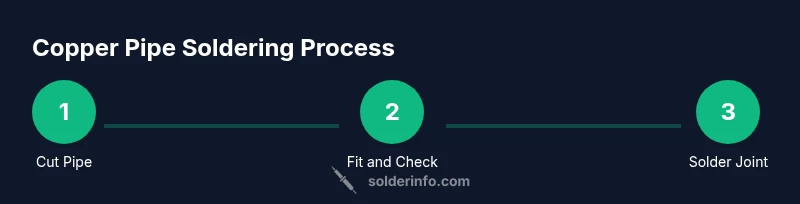
Measure the required length with a tape, mark squarely, and cut with the pipe cutter. Rotate the cutter gradually for a clean, square end. Ensure you cut past any marking to account for fittings and seating depth.
Tip: Keep the cut perpendicular to the pipe axis to avoid misalignment. - 2
Deburr and clean ends
Use a deburring tool to remove the inner burrs and file the outer edge until smooth. Wipe with a clean cloth to remove metal dust and oxidation. Clean outside of pipe and inside of fitting with emery cloth until bright.
Tip: A burr-free end seats evenly and reduces the risk of leaks. - 3
Dry-fit and align
Insert the pipe into the fitting by hand to check seating depth and alignment. Adjust as needed so the pipe fully reaches the fitting without forcing. A proper dry-fit saves rework after heating.
Tip: Mark the seating depth on the pipe for repeatable accuracy. - 4
Apply flux
Brush a thin, even layer of flux on both the pipe end and the inside of the fitting. Flux helps prevent oxidation and improves solder capillary flow during heating.
Tip: Avoid over-fluxing; excessive flux can create messy joints. - 5
Heat and apply solder
With the joint in view, sweep the torch around the joint forming a uniform temperature. Touch solder to the joint seam, not the flame, until the seam fills. Remove heat once filled.
Tip: Keep the flame moving; direct heat can scorch copper and cause weak joints. - 6
Cool and wipe
Allow the joint to cool naturally for several minutes. Do not quench with water or metal tools. Wipe away flux residue with a dry rag; flux residue can corrode if left in place.
Tip: Cooling too quickly can cause stress; patience yields stronger joints. - 7
Inspect and test
Visually inspect for a continuous bead around the joint. Perform a leak test by pressurizing with water and applying soap solution to the seam. Rework any suspected leaks with proper heating and flux.
Tip: If you see dull or cracked solder, reheat and re-solder the joint. - 8
Record-keeping and cleanup
Store flux and solder properly, and note any peculiarities from the job for future reference. Clean your workspace and inspect nearby joints for proper finish.
Tip: Keep a spare set of scrapers and rags for cleanups on future projects.
Quick Answers
What is the best flux for copper fittings used in drinking water?
For drinking-water copper joints, use a flux recommended for potable systems, typically a rosin-based flux or paste flux designed for plumbing. Always follow manufacturer guidelines to ensure safety and code compliance.
For drinking water, choose flux designed for potable systems and follow the product instructions for safe use.
Can I solder copper outdoors in cold weather?
Outdoor soldering is possible, but cold weather can affect flux work and solder flow. Warm the area, keep joints clean and dry, and avoid freezing conditions that make joints brittle.
Yes, but make sure the area is warm and dry and the flux isn’t freezing before you start.
What if a joint leaks after cooling?
If a joint leaks, reheat the joint, re-apply flux, and add more solder, ensuring the joint is heated evenly. After cooling, re-test with water pressure or soap solution.
If it leaks, reheat and re-solder after applying fresh flux, then test again.
Do I need to solder every type of copper connection?
Soldering is standard for plain copper piping and most fittings. Some connections may use compression or mechanical fittings; follow local codes and manufacturer instructions.
Solder is common for copper piping, but some joints may use other fitting types per code.
How long should the joint cool before testing?
Allow the joint to cool for several minutes, typically until the metal is no longer hot to touch. Then perform your leak test as described.
Let the joint cool for a few minutes, then test for leaks.
Is lead-free solder necessary for potable systems?
Lead-free solder is recommended for potable water systems to avoid lead exposure. Check local codes for any specific requirements.
Lead-free solder is usually required for drinking water systems; confirm with local codes.
Watch Video
Top Takeaways
- Prepare clean cuts and smooth ends for strong joints
- Flux and lead-free solder are essential for reliability
- Heat control prevents overheating and leaks
- Leak testing confirms joint integrity before use
- Maintain safety and documentation for future maintenance