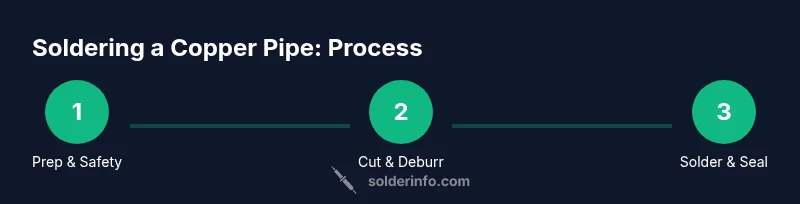
Solder a Pipe: Step-by-Step Plumbing Guide
Master copper pipe joints with a proven soldering method. This SolderInfo guide covers tools, prep, flux, heating technique, leak testing, and safety for DIY plumbers.


This guide will show you how to solder a pipe reliably, from preparing the pipe and choosing flux to applying heat and testing the joint. You’ll learn essential safety steps, the right solder and fittings for copper plumbing, and how to avoid common cold joints. By the end you’ll have a solid, leak-free connection ready for pressure tests.
Safety and planning before you solder a pipe
According to SolderInfo, the most reliable pipe joints start with careful planning and strict safety practices. Before you strike a flame, shut off the water supply, drain the line, and keep a bucket handy for any residual moisture. Work in a well-ventilated area and wear eye protection, heat-resistant gloves, and a long-sleeve shirt. Plan your cuts, dry-fit your assembly, and confirm that all fittings match the pipe diameter. A deliberate setup reduces the chance of accidental burns, water damage, or a failed joint after testing. Take a moment to review local plumbing codes and ensure your chosen solder and flux are approved for potable water lines.
Brand note: The SolderInfo team emphasizes preparedness as the foundation of quality soldering and leak prevention.
Tools and materials selection for plumbing soldering
Choosing the right tools and materials is half the battle. Use a copper pipe cutter for clean, square cuts and deburr with a file or sandpaper. You’ll need a propane or MAP-Pro torch with a steady, adjustable flame, lead-free copper solder, and flux (paste or liquid). Pipe fittings should be compatible with the pipe size, and a fitting brush helps apply flux evenly. A dry rag, emery cloth, and a small brush round out the kit. For safety, keep a fire extinguisher within reach and never leave a lit torch unattended. Planning ahead with a materials list saves trips to the hardware store and keeps the project moving smoothly.
Surface preparation and pipe cleaning
Surface prep is where many leaks begin. Dry-fit the assembly first to ensure everything sits properly. Use emery cloth or a dedicated pipe-cleaning pad to remove oxidation and bring the copper to a bright, clean shine. Wipe away dust and moisture, then lightly chamfer the pipe ends to encourage solder flow. If you’re joining multiple segments, deburr any rough edges on cut ends. A clean, dry surface improves capillary action and produces a stronger bond when heat is applied. According to SolderInfo analysis, consistent cleaning reduces post-solder leaks and helps joints withstand pressure swings.
Flux application and tinning copper pipe
Apply flux evenly around the outside of the pipe end and the inside of the fitting. Flux prevents oxidation during heating and promotes solder flow through capillary action. For easier soldering, lightly tin the pipe end by applying a small amount of solder while it’s still cool, then reapply flux. Keep flux away from any areas you don’t intend to join. If you’re using water-soluble flux, wipe away residues after cooling to avoid corrosion. A well-fluxed joint heats more evenly, resulting in a cleaner, stronger connection.
Heating technique: how to apply heat efficiently
Begin heating at the joint, not the middle of the pipe. Move the flame in a slow, circular pattern to avoid concentrating heat on one spot. Once the joint reaches the right temperature, you should see the solder melt and flow into the joint by capillary action. Maintain a steady, modest flame; overheating can anneal copper and warp fittings, while under-heating yields a dull, ineffective joint. If the flux burns away before your solder flows, reapply flux and reheat. This balance minimizes waste and ensures a reliable seal.
Solder application and joint formation
Feed the solder wire into the joint from the side opposite your hand to avoid burning it. As the joint heats, the solder should melt and flow into the gap, creating a uniform ring around the inside of the fitting. Stop applying heat as soon as the solder flows fully around the joint; excessive heat can push flux residue into the hose or degrade the pipe. Wipe away excess flux with a clean cloth and allow the joint to cool undisturbed for a few minutes. A properly formed joint will darken slightly as it cools and will not be brittle or brittlely cracked when flexed.
Pressure testing, leak checks, and cleanup
After cooling, slowly reintroduce water to the line and inspect for leaks. A gentle pressure test, rather than a full blast, helps reveal slow drips without scalding you or damaging fixtures. If you see any leaks, dry the joint, re-flux, reheat, and apply more solder. For air tests, fill the line with air and listen for hissing sounds at joints. Once you’re confident, clean any flux residues, dry the area, and turn on the water again. Adhering to proper cleanup practices reduces corrosion risk and keeps access areas tidy for future maintenance.
Troubleshooting common issues and how to fix them
Common problems include cold joints, overheated copper that becomes soft, and flux residue that causes corrosion. If you suspect a cold joint, reheat and apply more solder until the joint is continuous. If you observe a dusty surface after cooling, it may be flux residue; rinse with water and wipe dry. Always test the system after any repair, including a re-test after tightening fittings. These steps help ensure long-term reliability and leak-free performance.
Tools & Materials
- Copper pipe cutter(Cuts copper pipe cleanly and squarely; use the correct diameter for your pipe)
- Adjustable wrench(Used to tighten fittings without bending the pipe)
- Emery cloth or sandpaper(Preps the pipe surface for soldering; remove oxidation)
- Propane or MAP-Pro torch(Provide a steady, controllable flame; keep flame moving)
- Lead-free copper solder(Use for potable water lines; avoid lead-containing solders)
- Flux (paste or liquid)(Facilitates solder flow and protects the joint from oxidation)
- Pipe deburrer(Optional; smooths cut edges for a clean joint)
- Copper pipe fittings (couplings, elbows)(Match pipe size and type; dry-fit before soldering)
- Safety gear (eye protection, gloves)(Protect eyes and hands from heat and sparks)
- Fire extinguisher(Have on hand as a precaution when using a torch)
Steps
Estimated time: 45-60 minutes
- 1
Prepare workspace and safety gear
Set up your workspace with good ventilation and a clear area. Put on safety glasses and heat-resistant gloves. Turn off the water supply and drain the line to remove any standing water. Gather all tools and materials before you start to avoid interruptions.
Tip: Keep a fire extinguisher accessible and a bag of sand nearby for emergencies. - 2
Measure, cut, and dry-fit the pipe
Measure the section to be replaced, cut squarely, and remove burrs. Dry-fit the pipe and fittings before soldering to ensure proper alignment and a leak-free joint. Re-check that the pipe ends are clean and dry.
Tip: A tight, square cut ensures better solder flow and joint strength. - 3
Clean and deburr the pipe ends
Use emery cloth to remove oxidation from the cut ends and inner walls of fittings. Deburr edges so the pipe slides fully into the fitting. Wipe down with a clean cloth to remove dust and moisture.
Tip: Dry fit again after cleaning to confirm fitment. - 4
Apply flux and tin the pipe ends
Brush flux evenly around the outside of the pipe and inside the fitting. Lightly tin the pipe end by applying a small amount of solder while it’s cool, then re-apply flux for a clean joint.
Tip: Flux lasts longer on clean copper; don’t over-apply. - 5
Heat the joint and begin soldering
Hold the torch slightly away; heat the joint evenly, not the middle of the pipe. When the flux reacts, touch the solder to the joint edge and let capillary action draw it in.
Tip: Keep the flame steady and move it in small circles to prevent overheating. - 6
Seal the joint with solder
Feed solder to the joint as heat persists until the solder flows fully around the joint. Remove the heat and let the joint cool naturally without disturbance.
Tip: Do not move the joint while it’s cooling to prevent cold joints. - 7
Inspect, test, and clean up
Turn the water back on slowly and check for leaks. If needed, rework the joint with flux and solder. Clean flux residues and wipe the area dry to prevent corrosion.
Tip: Use soap bubbles or a soapy solution to spot leaks easily. - 8
Pressure test and verify reliability
Perform a light pressure test and visually inspect for any damp spots. If there are no leaks after a short test, you’re ready to resume normal service.
Tip: Always document the repair in case future maintenance is needed. - 9
Document and store materials
Return unused solder and flux to their containers and label any repairs for future reference. Store tools safely and in a dry place to extend their life.
Tip: Keep a small toolkit with spare flux and solder for quick future repairs.
Quick Answers
Can I solder a pipe without turning off the water?
No. Always shut off the water supply and relieve pressure before starting. A wet joint cannot be soldered cleanly and may fail.
Always shut off the water and relieve pressure before you start, to ensure a clean, leak-free joint.
What type of solder should I use for copper pipes?
Use lead-free solder designed for plumbing copper pipes. Check local codes for compatibility with potable water lines.
Use lead-free plumbing solder and follow your local plumbing code for compatibility with drinking water lines.
Do I need flux for copper pipe soldering?
Yes. Flux prevents oxidation, helps solder flow, and reduces the chance of cold joints. It’s essential for clean, strong joints.
Flux is essential; it helps the solder flow and prevents oxidation, ensuring a solid joint.
How can I test for leaks after soldering?
Slowly restore water and inspect joints for leaks. Use soapy water to spot air leaks or wet spots; rework any suspect joints.
Test joints with water pressure and look for bubbles with soapy water to confirm leaks.
Is safety gear really necessary for soldering?
Yes. Eye protection, gloves, and proper ventilation reduce the risk of burns and fumes. Never bypass safety gear.
Safety gear is essential to protect your eyes and hands from heat and flux fumes.
What if a joint leaks after cooling?
If a leak appears, reheat the joint, reapply flux, and add more solder. Allow to cool and re-test before use.
If a leak shows up, rework the joint with flux and solder, then retest.
Watch Video
Top Takeaways
- Prepare safely and plan the order of operations
- Use clean, dry copper and flux for reliable joints
- Apply heat to the joint, not the pipe, and feed solder consistently
- Test for leaks before finalizing and clean flux residues
- The SolderInfo team recommends lead-free solder for potable-water piping