How to Solder Copper Pipe: A Practical Step-by-Step Guide
Learn to solder copper pipe confidently with a practical, step-by-step guide. This SolderInfo tutorial covers prep, tool selection, technique, leak testing, and safety for plumbing projects.


To solder copper pipe, cut and deburr the pipe, clean joints, apply flux, heat evenly with a propane torch, and feed lead-free solder into the joint until capillary action seals it. Secure fittings and test for leaks. Use proper safety gear and work in a well-ventilated area.
Why this skill matters for DIY plumbers
If you want to master how solder copper pipe, you’ll learn to prepare, heat, and seal joints reliably, avoiding leaks. This plumbing technique is essential for repairing corroded sections, adapting supplies, and building dependable water lines in homes and workshops. Proper soldering reduces the need for repeat fixes and is a foundational skill for any DIY plumber. SolderInfo has found that consistent joint sealing depends on clean surfaces, appropriate flux, and controlled heat. In practice, you’ll start with measurements, cut cleanly, and proceed through cleaning, fluxing, heating, and testing. This section lays the groundwork: reliable joints come from disciplined prep and deliberate action, not guesswork. In the sections that follow, we’ll move from theory to hands-on steps, with checklists, visuals, and safety reminders to keep you safe and successful.
Safety and code basics
Working with torches and hot metal requires respect for safety and local plumbing codes. Always wear safety glasses, gloves, and long sleeves; work in a well-ventilated area to avoid fumes. Propane torches produce open flame, so keep children and pets away and turn off the gas when not actively heating. In many jurisdictions, potable water lines must use lead-free solder and approved flux; check your local codes before starting. Solder joints that carry drinking water should be tested and certified; leaks can cause mold, water damage, and wasted energy. SolderInfo recommends using a dedicated work surface, keeping a fire extinguisher nearby, and never attempting to solder when the pipe is under pressure. For home projects, plan your run so you can move from joint to joint without re-heating the entire length. As you gain experience, you’ll recognize safe heat levels, the right flame size, and how long to hold the flame to prevent scorching the surrounding material.
Essential tools and materials for copper pipe soldering
To achieve strong joints, you’ll need a few reliable tools and materials. A quality pipe cutter gives clean, square cuts; a deburr tool removes burrs that can trap flux or cause leaks. A sanding pad or abrasive cloth helps remove oxidation. Flux (rosin-based or water-soluble) prepares the metal surface for solder and prevents oxidation during heating. Lead-free solder with a rosin core is commonly used for potable water; for non-potable lines, standard alloys may be acceptable depending on code. A propane or MAP-PRO torch provides portable heat; a heat shield or stand helps protect nearby materials. Safety gear includes eye protection, gloves, and a fire-resistant mat. Keep rags or a damp cloth handy to wipe flux and solder—cleanliness matters for reliable joints. Spread plans and dry-fit fittings before heating to ensure proper alignment. Finally, have a bucket of water nearby for quick cooling if you suspect overheating.
Cleaning and prepping pipe joints
Preparation is the difference between a good joint and a leak. Start by cutting straight and square ends, then deburr the inside and outside of the pipe to remove sharp edges. Use a wire brush or abrasive pad to remove oxidation and copper oxide from the cut surfaces. Wipe the joint surfaces clean with a lint-free cloth; any oil or moisture can hinder solder flow. When parts are dry-fit, you should see a uniform gap of a few thousandths of an inch between pipe end and fitting; this gap helps solder fill the joint evenly. If you’re working in a humid environment, dry-fit briefly and dry surfaces before applying flux. For long runs, check for straightness with a level; skewed joints are harder to seal and can create stress points over time.
Flux, solder, and alloys: choosing the right materials
Flux is essential for preventing oxidation and helping solder flow into tight gaps. Use a flux appropriate for copper and potable water applications, and apply a thin, even coating to the pipe end and inside the fitting. For potable water lines, select lead-free solder—usually a tin-copper alloy with a flux core; follow local code requirements. When choosing solder, consider the joint size and the environment; small-diameter joints can use rosin-core solders that flow quickly, while larger joints may require pastes or thicker wire. Do not mix flux types with incompatible solders, and never reuse flux that has dried out. Keep solder strands dry and melt at the right temperature—overheating can burn flux and degrade the joint's seal. Finally, consider using a heat sink or clamps to protect nearby plastics and heat-sensitive components.
Assembly and fit-up: alignment and dry fit
Before heating, assemble components on a dry-fit basis to confirm alignment and joint coverage. Support pipes with stands or clamps so they don’t shift during heating. Make sure fittings are fully seated; any gap allows solder to flow into the joint but can compromise the seal if misaligned. If you have to rotate a joint during soldering, do so gently and recheck alignment often, as movement during heating can create a cold joint. Use masking tape or clamps to hold delicate lines in place. Dry-fit also helps identify awkward angles that would require bevels or different fittings, reducing rework after you begin heating. This step minimizes waste and ensures you’ll spend less time re-heating joints.
Heating technique: heat control and solder application
Heat evenly around the joint, avoiding direct heating of the solder; move the flame in circles to distribute heat and prevent scorching surrounding material. When the flux begins to bubble and the copper glows a dull red, touch the solder to the joint tip—if it melts and flows into the joint, you have achieved capillary action. Stop feeding solder as soon as the joint is full; excessive solder can flood the joint and create a weak point. Keep the flame away from hands and tools; use a heat shield for nearby plastics or insulation. After applying solder, let the joint cool naturally for a minute or two; resist the urge to disturb the joint while it sets. If the joint doesn't flow properly, stop, re-clean the surfaces, and try again with fresh flux.
Troubleshooting common issues
Cold joints often occur when the joint cools too quickly or heat was uneven; reheat the joint after cleaning and reapply solder. Leaks may arise from incomplete cleaning, poor flux, or gaps; rework by disassembling the joint, cleaning, and re-soldering. If solder extrudes beyond the joint, you likely had too much solder or overheated; wipe away excess and ensure proper capillary action. Dull, milky flux residues can indicate improper rinsing after cooling; wash the joint with clean water and dry it thoroughly. In some cases, a tiny amount of flux on the exterior can replace chafing; however, too much flux can corrode over time. Always test joints using pressure or water to verify leak-free performance.
Finishing, testing, and cleanup
When joints have cooled, inspect the seams for uniform bead of solder and a smooth finish. Perform a leak test by pressurizing the line with water or air and applying a soap solution to detect bubbles at joints. At the first sign of a leak, damp-wipe, re-clean, re- flux, re-solder, and re-test. After successful testing, wipe joints with a clean cloth to remove flux residues and protect against corrosion. Store tools in a dry place, keeping solder and flux sealed and labeled. A well-maintained toolbox reduces time spent on future repairs and ensures you’ll be ready for the next project.
Maintenance and upgrades for long-term reliability
Ongoing care is crucial for copper piping systems. Periodically inspect joints along runs for signs of oxidation or looseness. Maintain an organized system so that future repairs are simpler; label segments and keep spare fittings. If you’re replacing sections, consider upgrading to larger-diameter pipe or adding access panels for future maintenance. For seasonal homes or outdoor runs, protect copper from freeze-thaw cycles by insulating exposed sections. By keeping joints clean, dry, and correctly sealed, you’ll extend the service life of your piping and reduce the chance of leaks—saving you time and money over time.
Tools & Materials
- Copper pipe(Choose the correct diameter for fittings and the run length)
- Pipe cutter(Cuts clean, square ends)
- Deburring tool(Deburr inside and outside edges)
- Abrasive pad or sandpaper(Remove oxidation and clean surfaces)
- Flux(Use flux appropriate for copper and potable water)
- Lead-free solder(Choose a suitable alloy for potable water)
- Propane torch(Portable heat source with regulator)
- Heat shield or stand(Protect nearby materials)
- Safety glasses and gloves(Personal protective equipment)
- Pipe supports/clamps(Keep pipes steady during heating)
Steps
Estimated time: 45-60 minutes
- 1
Measure and Cut Copper Pipe
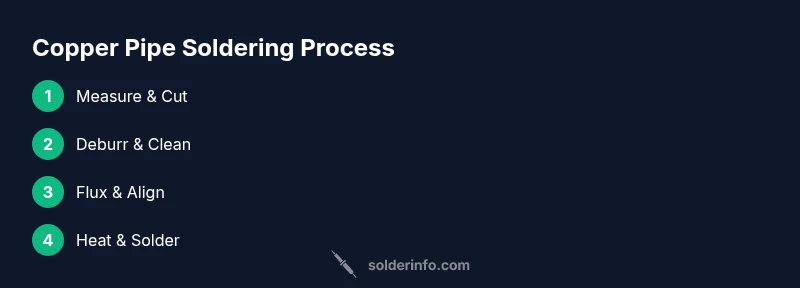
Measure the required length and cut straight, square ends using a pipe cutter. Deburr the cut edges to ensure clean insertion into fittings. This initial action reduces bulges and ensures capillary flow when soldering.
Tip: Use a scrap piece to test fit before committing to the final cut. - 2
Deburr and Clean
Remove burrs from both the pipe end and the fitting socket. Clean oxidation from the ends with a brass brush or abrasive pad. A clean surface is essential for good adhesion and reliable capillary action.
Tip: Wipe away dust and oils with a lint-free cloth before fluxing. - 3
Dry-Fit and Align Fittings
Mock-assemble the joint to verify alignment and seating. Use clamps to hold the pipe and fittings in place as you progress. The dry-fit helps prevent misaligned joints that could leak after heating.
Tip: Check that there is a small gap around the joint to allow solder to flow in. - 4
Apply Flux
Coat the pipe end and inside the fitting with a thin, even layer of flux. Flux prevents oxidation during heating and guides solder into the joint. Avoid over-fluxing, which can cause drips and residue.
Tip: Heat-sensitive plastics nearby may require shielding when flux is applied. - 5
Heat and Apply Solder
Heat the joint evenly with the torch, not directly on the solder. Touch the solder to the joint after the copper glows red; let capillary action draw the metal into the seam. Stop feeding solder once the joint is filled and rounded at the edges.
Tip: Move the flame slowly around the joint to prevent overheating one spot. - 6
Cool and Inspect
Allow the joint to cool naturally for a minute or two before handling. Inspect for an even bead and a smooth finish. If you see gaps or dull areas, re-clean and re-solder the joint.
Tip: Avoid wicking heat away with a cloth; use air or natural cooling. - 7
Test for Leaks
After cooling, pressurize the line with water or air and apply a soapy solution to joints to look for bubbles. Address any leaks by repeating cleaning, fluxing, and soldering steps as needed.
Tip: Always test the entire run, not just individual joints. - 8
Cleanup and Stow Tools
Wipe flux residues from joints, dry the area, and store tools properly to prevent rust and corrosion. Label sections and keep spare fittings handy for future repairs.
Tip: Return flux and solder to their containers immediately to avoid contamination.
Quick Answers
What type of solder should I use for copper pipe?
For potable water, use lead-free solder with appropriate flux. Always check local plumbing codes for compliant alloys. Non-potable lines may permit different solders as permitted by code.
Use lead-free solder for drinking water lines and follow your local codes for other applications.
Is flux always necessary when soldering copper pipe?
Flux is strongly recommended. It prevents oxidation, improves heat transfer, and helps solder flow into the joint for a durable seal.
Yes, flux is essential for reliable joints and easier solder flow.
Can I solder copper pipe without a torch?
A torch is the common heat source for copper pipe soldering. Alternative methods exist, but torch-based soldering is standard for most home plumbing jobs.
A torch is usually required for copper pipe work.
How can I test a solder joint for leaks?
Seal the system and apply water or air pressure, then use a soap solution to check for bubbles at joints. Wipe and re-test if any bubbles appear.
Seal and test with soapy bubbles to find leaks.
What safety gear should I wear?
Wear eye protection, gloves, and ensure adequate ventilation when using flux and torches. Keep a fire extinguisher nearby in case of emergency.
Protect your eyes and hands, and work in a well-ventilated area.
Watch Video
Top Takeaways
- Plan joints before heating to minimize rework
- Flux and cleanliness drive reliable seals
- Heat control prevents damage to nearby materials
- Leak testing is essential for safety and reliability
- Maintain tools and follow local plumbing codes