Solder Necklace: A Comprehensive Step-by-Step Guide
Master the art of soldering a necklace with a clear, practical guide. Learn tools, materials, safety, prep, heating control, finishing, troubleshooting, and advanced tips for professional results.


Learn how to solder a necklace safely and effectively. This guide covers prep, heat control, and finishing to create a durable, professional-looking jewelry piece. You’ll use a jeweler’s torch, flux, solder wire, tweezers, and safety gear, then follow a step-by-step process to ensure strong joints and a clean finish.
Jewelry Soldering Basics: Understanding the Solder Necklace
Jewelry soldering is a precise craft that fuses metal components using a filler metal and heat. For a solder necklace, the joints are tiny and delicate, so heat control, surface cleanliness, and flux choice are critical. According to SolderInfo, success hinges on planning the joint geometry, selecting compatible metals, and preparing surfaces for a clean bond. You’ll encounter different solder alloys—hard, medium, and easy—and you’ll decide which to use based on the metals and the desired final look. With careful technique, a necklace connection can be nearly invisible, offering strength without bulky hardware. As you build confidence, you’ll learn how alloy composition, metal thickness, and polishing influence the final aesthetic. This section lays the groundwork for safe, repeatable results while highlighting common mistakes to avoid in the first attempts.
Essential Tools and Materials: Your Solder Necklace Toolkit
Before you begin, assemble a dedicated workspace and gather the core tools and materials. A well-lit, ventilated bench with a heat-resistant mat is essential. The core toolkit includes a jeweler’s torch (or micro-torch), a pair of non-magnetic tweezers, flux (rosin-core or paste), solder wire (appropriate alloy and gauge), a soldering block, and a small pickle or finishing solution for cleaning. You’ll also want a polishing cloth, a clean brush for flux residue, and safety gear such as eye protection and a fire-proof container for hot pieces. For alloy compatibility, keep a small reference of common metals (sterling silver, gold-filled, copper) and select solders that match or are compatible with those metals. This groundwork reduces surprises during heating and ensures cleaner joints.
Metal Preparation and Joint Planning
Planning begins with the pendant, clasp, and chain you intend to join. Inspect all components for nicks or oxidation; file and sand as needed to create smooth, flat joining surfaces. When possible, design the joint to sit flush, so the solder can flow evenly without excess buildup. Remember that gold and silver behave differently under heat, so you may need to adjust torch intensity and dwell time. For a clean finish, degrease surfaces with isopropyl alcohol and ensure there is a small gap that solder can fill without excess bridging. Keep notes on which surfaces you plan to solder and in what order you’ll assemble parts. This prevents rework and reduces thermal shock to delicate links.
The Soldering Process: Heat Control and Joint Creation
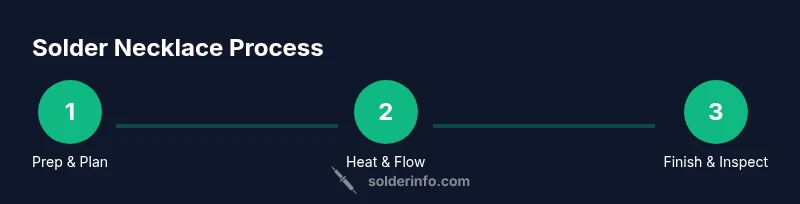
With joints prepped, apply flux to the joining surfaces to prevent oxidation and promote solder flow. Position pieces using tweezers and a third-hand tool if available. Start with a light tack weld or a minimal flux-assisted contact to hold parts in place before full heating. Use a micro-torch with a steady, even flame to bring the joint to the solder’s flow temperature, watching for a slight bead as the solder melts and is drawn into the joint by capillary action. Avoid overheating, which can melt solder too aggressively or anneal the metal undesirably. Once the joint looks uniform and the solder has flowed, quench or cool gradually depending on the metal and solder type. Finishing steps afterward reveal a clean seam rather than a visible solder line.
Finishing: Cleaning, Polishing, and Inspecting Joints
After cooling, remove flux residue with water and a soft brush, then rinse and dry the piece. Gently polish the joint with a brass or nylon brush, taking care not to remove the solder bead. If necessary, re-roughen the surface for better polish and apply a light patina if the design calls for it. Inspect the joint for uniformity, bonding integrity, and alignment along the necklace. A good finish hides the solder and preserves the aesthetic of the chain. In this process, SolderInfo emphasizes the importance of controlled heat and meticulous cleaning to ensure the final necklace looks cohesive and professional.
Troubleshooting Common Issues and Avoiding Hazards
Common issues include cold joints, overheating, oxidation on the metal, and solder flash on the chain. Troubleshoot by re-cleaning surfaces, re-applying flux, and reflowing the joint with a controlled heat source. If you encounter a cold joint, reheat while gently moving the pieces to encourage solder flow. Always work in a ventilated area and have a fire-safe setup; never leave a torch unattended. If flux residue remains, polish after cleaning to restore the metal’s shine. Remember safety: hot pieces can cause burns, and fumes from fluxes and solders require proper ventilation. This section aligns with the practical guidance from the SolderInfo team for safe, effective results.
Advanced Techniques for Professional Results
As you gain experience, experiment with different alloys to increase joint strength or achieve a particular color. Consider alternative joining methods for complex designs, such as phase joints, partial soldering, or using jump rings to connect components for a semi-hidden seam. Practice on scrap pieces to refine your heat control and joint geometry before working on a final piece. Advanced techniques may involve controlled cooling to influence grain structure or patination that enhances the visual appeal of the necklace. Always document what works best for future projects and share learnings with the community to improve overall craftsmanship.
Quick-Start Checklist: Ready-to-Solder in 5 Steps
- Confirm metal compatibility and select the right solder alloy
- Clean and degrease all joining surfaces
- Flux and tack components in place
- Apply even heat and allow solder to flow into the joint
- Cool, clean, and finish to a professional shine
BONUS: Safety and Workspace Best Practices
Establish a dedicated, well-ventilated workspace with a clear fire-safe zone. Store torches, flux, and solvents in ventilated cabinets away from flammable materials. Use eye protection and heat-resistant gloves, and keep a first aid kit and water handy in case of splashes. Regularly inspect tools (tips, torches, clamps) for wear and replace damaged parts promptly. Consistent safety practices keep you productive and reduce the risk of accidents.
Tools & Materials
- jeweler's torch or micro-torch(Butane-fueled, with adjustable flame and flame-safety shutoff)
- flux (rosin-core flux or paste flux)(Choose flux appropriate for the metal type; store in a dry place)
- solder wire (soft, medium, or hard alloy)(Match metal alloy and thickness; use rosin-core solder if needed)
- soldering block or briquette(Heat-resistant surface; helps prevent fire hazards)
- tweezers and pin vises(Non-magnetic; for positioning small parts)
- safety gear (goggles, respirator or fume mask, heat-resistant gloves)(Ventilated area essential; use PPE at all times)
- pickle or finishing solution and brushes(For cleaning and restoring metal surface after soldering)
- polishing cloths and brushes(To finish the joint and restore shine)
- water bottles and sponge for tip cleaning(Keep tips clean to maintain heat transfer)
- optional third-hand tool or helping hands clamp(Helpful for holding components securely)
Steps
Estimated time: 60-90 minutes
- 1
Prepare workspace and safety gear
Set up a well-ventilated area with a heat-resistant mat. Put on eye protection, gloves, and a mask if fumes are present. Have a damp sponge nearby to clean the soldering tip and a fire-safe container for hot pieces.
Tip: Never leave a torch unattended; keep children and pets away from the area. - 2
Identify metals and select solder
Assess the chain and pendant metals for compatibility (e.g., silver to silver, gold to gold). Choose a solder alloy that matches the metal’s melting point and the desired strength of the joint.
Tip: When in doubt, start with a lower-musing solder (easy or medium) to avoid overheating. - 3
Clean and prep surfaces
De grease surfaces with isopropyl alcohol and lightly sand or file mating surfaces for a flush fit. Wipe clean to remove oil and fingerprints, then dry before fluxing.
Tip: Even a small amount of oil can prevent solder flow. - 4
Tin the joints and apply flux
Lightly tin the joint areas with a small amount of solder first, then apply flux to the surfaces to prevent oxidation and encourage capillary action.
Tip: Keep joints free of excess solder to reduce cleanup later. - 5
Position pieces and heat gradually
Arrange components and apply heat with a steady, even flame. Allow the solder to flow and fill the joint, watching for a smooth bead without gaps.
Tip: Move heat around the joint, not directly at one point, to avoid warping. - 6
Cool, clean, and inspect
Let the piece cool naturally or quench as appropriate, then clean flux residue and inspect the joint for evenness and strength. Polish to reveal a clean seam.
Tip: If the seam looks dull, re polish gently to even out the surface.
Quick Answers
What solder should I use for jewelry, and how do I choose it?
For jewelry, choose solders labeled for jewelery use (hard, medium, easy) based on metal type and desired strength. Silver and gold often require specific alloys; always match the metal family and thickness. Practice on scrap pieces to dial in heat and solder flow.
Use jewelry-specific solders and match the metal; practice on scraps to learn heat control.
Is it safe to solder with a torch indoors?
Soldering indoors requires good ventilation and a fire-safe workspace. Use a fume hood or external ventilation, wear PPE, and keep a fire extinguisher nearby. If you’re unsure, solder in a well-ventilated area or outside.
Yes, but only with proper ventilation and safety gear.
Can I attach a pendant to a chain in one joint, or should I use a jump ring?
For a clean look, you can solder the pendant directly to the chain if joints align and heat is controlled. In many designs, a jump ring provides flexibility and reduces heat transfer to the chain. Evaluate your design and test-fit both options.
You can solder directly or use a jump ring for flexibility, depending on the design.
What causes a cold solder joint and how can I fix it?
A cold joint occurs when the metal isn’t heated enough for complete solder flow. Reheat the joint with even heat, remove oxidation, and allow solder to flow to fill the joint fully. Avoid over-stressing the part during reflow.
A cold joint happens when it’s not hot enough. Reheat and reflow the joint.
Do I need to anneal the metal before soldering a necklace?
Annealing helps soften metal and prevent cracking in some designs, particularly with sterling silver or gold. This step depends on metal type and project; consult material guides and test on scrap pieces.
Annealing can help with hard metals, but check your metal type first.
How do I improve the final finish after soldering?
Clean off flux, polish the seam, and avoid over-polishing adjacent areas. A gentle abrasive or polishing compound tailored for the metal type yields the best results without removing the solder joint.
Clean, polish, and don’t over-polish near the joint.
Watch Video
Top Takeaways
- Plan joint geometry before heating
- Use compatible metals and solders
- Maintain steady heat to avoid overheating
- Clean surfaces thoroughly for strong joins
- Finish with careful polishing for a professional look